
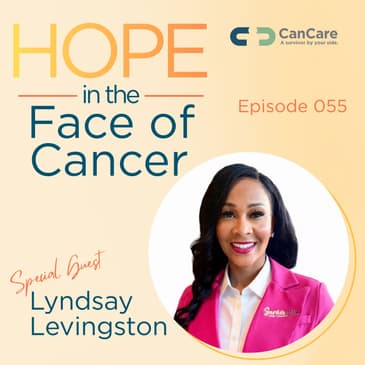
How do you turn a life-changing cancer diagnosis into a mission that helps thousands of others?
At 37 years old, Lyndsay Levingston was building a successful career in television news in New York City when she discovered a lump that would change the course of her life. The diagnosis was stage 2B triple-negative breast cancer. What followed was a journey through treatment, difficult decisions, and unexpected challenges that ultimately led her to a greater sense of purpose. Today, Lyndsay is a breast cancer survivor, advocate, speaker, and founder of Survive Her, a nonprofit dedicated to education, support, and empowerment for women affected by breast cancer.
As Lyndsay reflects on her diagnosis, she shares how faith, family, and community became her foundation. What began as a desire to tell her story during the pandemic grew into SurviveHer, a nonprofit dedicated to breast health education, support, screening awareness, and survivorship. She discusses the growing number of young women facing breast cancer, the importance of knowing your family history, and why every survivor's story matters.
This conversation is a powerful reminder that hope is medicine, support changes lives, and purpose can emerge from places we never expected. Lyndsay's story offers encouragement for anyone facing cancer and a call to use your voice, your experience, and your compassion to help others along the way.
Highlights:
· Learn why knowing your family history can be a critical part of early cancer detection.
· Discover how support systems can impact both treatment and recovery.
· Understand the unique challenges younger adults face after a cancer diagnosis.
· Hear how faith and mindset can help people navigate uncertainty and fear.
· Learn how personal adversity can become the foundation for meaningful service and advocacy.
Mentioned Resources:
CanCare- www.cancare.org
SurviveHER – https://www.imasurviveher.org/
About the Guest:
Lyndsay Levingston is a breast cancer survivor, nonprofit founder, and tireless advocate for women navigating their breast health journey. After her own diagnosis, Lyndsay turned lived experience into lasting impact, building SurviveHER into a vibrant sisterhood offering education, financial assistance, wellness resources, and access to life-saving screenings for uninsured and underinsured women. Since 2020, SurviveHER has supported more than 3,000 women and received national recognition, including acknowledgments from the United States Congress. Her work has been featured in ESSENCE, Oprah Daily, NBC News, and Yahoo!.
Love the podcast? You’ll be moved by the book. The Hope in the Face of Cancer book shares inspiring, real stories from survivors, caregivers, and healthcare heroes. Raw, uplifting, and full of heart—for anyone seeking hope and connection. Get your copy: cancare.org/hopebook.
About Our Host:
Darcie Champagne Wells is the President and CEO of CanCare, Inc., a nonprofit dedicated to providing support to the cancer community by pairing cancer patients with survivors. Since joining in November 2020 as the third President & CEO, Darcie has driven significant growth, increasing one-to-one support matches by 45% and healthcare referrals by 66%. In 2022, she initiated the Impact Acceleration Initiative to further expand support for cancer patients and caregivers. Her leadership has earned her recognition as a “Most Admired CEO” and “Woman Who Means Business” by the Houston Business Journal, and national “Fundraiser of the Year” by RAISE. Darcie holds a BS in Business Administration from Louisiana State University and an MBA from the University of Houston.
https://www.facebook.com/CanCareInc
https://www.instagram.com/cancare_inc
Thanks for tuning in to Hope in the Face of Cancer!
We’re so glad you’re here. If this episode moved you, inspired you, or brought you a little bit of light, please share it with someone who might need it. Just hit the share button on this page or spread the word on social—your voice helps us reach more hearts.
🎧 Never miss an episode!
Subscribe on Apple Podcasts, Spotify, or wherever you get your favorite podcasts to get updates as soon as new episodes drop.
⭐ Help us grow with a quick review
If you’re enjoying the podcast, leaving a review on Apple Podcasts goes a long way. It helps others discover the show and reminds us that these stories matter. Take a moment to leave a review—we read every one!
📖 Enjoy the podcast? You’ll love the book.
Check out our book, Hope in the Face of Cancer—a powerful collection of real stories from survivors, caregivers, and healthcare heroes. It’s uplifting, raw, and full of heart. Get your copy at cancare.org/hopebook.
[00:00:08] Welcome to Hope In The Face of Cancer, a survivor by your side. Here we share hope and support to anyone in their cancer journey. I'm your host, Darcie Wells, CEO of CanCare and a cancer caregiver. Whether you're a patient, caregiver, survivor, or healthcare provider, we are your cancer support community. Together, uplifting each other every step of the way. No one should face cancer alone.
[00:00:38] Welcome to Hope In The Face of Cancer, where we share real stories of courageous people in their cancer journey. Today's conversation is one I am so grateful for. Our guest is Lindsay Levingston, a breast cancer survivor, advocate, speaker, and the founder of SurvivHer. Lindsay brings a voice that is honest, thoughtful, and deeply rooted in lived experience.
[00:01:03] Through speaking and nonprofit work, Lindsay creates a space for women to feel seen, supported, and reminded of their strength. SurvivHer has become a vibrant platform and sisterhood, offering education, community, financial support, and encouragement for breast health and survivorship every day of the year. This conversation is about resilience, support, faith, purpose, and what can grow from moments we never would have chosen.
[00:01:34] Lindsay, thank you so much for joining us today. Thank you, Darcie, for that beautiful introduction. So heartfelt. I'm so honored to join you for this podcast interview. Well, thank you, and congratulations. You're like my sister in this work. So I consider you my sister in this work, this necessary work. That is so true. I mean, it takes a village, right? And we're all doing our little piece. And your piece is growing, and I can't wait to share more about that.
[00:02:02] And congratulations, celebrating your five-year anniversary of SurvivHer. It's so exciting. So we're going to dig more into that soon. Thank you. Thank you. Lindsay, I would love for our audience to learn a little bit more about your background, because you really have an amazing background that has really lent itself to the work you're doing today. So tell us about what life was like before cancer.
[00:02:27] So I'm a native Houstonian, and I attended the University of North Texas, where I majored in communication studies, dual minors in secondary ed and dance. Returned to my alma mater to teach speech communication, and then was bitten by the journalism bug. Transitioned from the classroom to the newsroom. Started my career working for Fox 26, writing for the morning news. Pivoted to Channel 2, where I was a reporter for a year. Moved to Tulsa, Oklahoma.
[00:02:55] And then I stepped out on faith and moved to New York City in 2011 to work in the top media market. And with no plans, I just landed there and pounded the pavement and landed in television cable news. And I worked a very fast-paced career. It was competitive. It was challenging. It was rigorous. It was aggressive.
[00:03:22] And all the while, of course, I was going to the gym. I was physically fit. And I love spin class. Going for runs. But all of that really came to a screeching halt when breast health became a top priority in the summer of July 2019, when I discovered a lump in my right breast. So what were you thinking in that moment when you found that? Well, I was shocked and surprised.
[00:03:49] Initially, I thought maybe it was a cyst that could be aspirated. Oh, there couldn't be breast cancer. I mean, I didn't even think of that. Yeah. Because at the time, and this would be important later on, I didn't know of a family history. But I was just like, what is this large grape-sized feeling, lump size, you know, in my breast? I just didn't know what to think. Like, oh, no, this could not possibly be what I think it is.
[00:04:17] And I immediately took action, called my gynecologist to schedule a well woman exam. And she ordered what was my first mammogram at the age of 37. Wow. Well, I'm glad she did that. That was under the age that they usually recommend. So it's wonderful that she did that. Exactly. And Darcy, at some point in this conversation, we're going to talk about how I'm so furious about the mandate that women have to be 40 and up to get a mammogram. But that's another story.
[00:04:47] We could talk about that. So after my first mammogram, well, she conducted a clinical exam. And she said, okay, we've definitely got to get you a mammogram. Mammogram, breast ultrasound, MRI, a very, very painful biopsy because my lump was tender. That was another sign that something was wrong. So just imagine sticking a needle in something that's already tender. It was very uncomfortable. Tears were streaming down my eyes. I'll never forget that moment.
[00:05:13] And about a week later, I received a phone call. Actually, the radiologist left a voicemail that I needed to call him back. So what do you think? Right. Never leave a voicemail, providers. Leave a voicemail to call your patient. Oh, my goodness. And I called him back and he said, I'm sorry, Lindsay, it's breast cancer. And this was a Friday. It was like July, I think July 11th. It was a Friday. And I was just like, what a way to start the weekend and to receive that news.
[00:05:43] And I'm like, okay, what's next? He said, well, you need to talk to your gynecologist and talk about your options. Okay. It was very matter of fact. Yeah. At that point, I mean, because you're in New York and you don't have family there, right? At the time. So, you know, what do you do when you hear those words? You have cancer. So at the time I was married. And so my husband at the time and I met with the, sat down with the doctor and Skype was very popular.
[00:06:13] And so I Skyped my mom in. So she was on an iPad. So she'd be part of that meeting. And mom at the time, because I was operating in shock and auto, I was on autopilot and mom was the voice of reason. She was very calm and focused. And she asked the doctor, could Lindsay, can she come home to Houston for treatment? It made sense. At the time I was like, okay, whatever, whatever I need to do to get treated and to be cured and healed and whole, I'll do it.
[00:06:43] So mom said, you know, can she come home to Houston? So we had a family meeting. And in the next few days I was on a one way back home to Houston. And the thought behind that was that I would meet with Dr. Jamie Terry, a phenomenal breast surgeon with Texas breast specialist who happened to be a family friend. And so when I was first diagnosed, mom reached out to Dr. Terry and she said, listen, Dr. Terry, Lindsay just received this diagnosis.
[00:07:13] Can you help consult her and about next steps? So I got on in one way, met with Dr. Terry and she said, you have triple negative breast cancer stage to be, it's aggressive. We need to start treatment right away. Okay. So this was a Thursday. She said, I'm going to send you to an oncofertility specialist first, before we even insert your port and start chemo, because I know that you desire to become a mother. And I was like, okay.
[00:07:43] So I went to an oncofertility specialist, Darcy, and I was able to. Preserve my fertility and harvest eggs. That took a week. The following week, port inserted. The following week I was starting chemotherapy. And that's when it really hit me. When they gave me a tour of the chemo suite, tears streamed down my eyes. Like this is really happening. Like I'm going through breast cancer treatment. At the age of 37. So young. And to this day, I'll never forget that moment.
[00:08:11] And what it felt like to face the reality of a diagnosis. Yeah. And so you were staying with your mom at that time. Was she kind of your caregiver during that treatment journey? Yes. I moved back in with mom. And she was my, I don't say caregiver. She was my love giver. Love giver. Because there's nothing like a mother's love. That's right. And she did pour so much love into me. She said, Lindsay, I just want you to focus on healing and getting well.
[00:08:40] You don't have to worry about working or anything. We're going to make sure that you get to that pink finish line. And she attended my chemo appointments with me. Made sure I had everything I needed to get through that. And gosh, what a tremendous blessing that I have in my mother. And then I also, I shared the news with close friends and family, Darcy. Because I was on the news. I didn't broadcast. And at the time, I wasn't big, big on social media.
[00:09:09] But I shared it with a close group of family, friends, church members, sorority sisters who I could trust with the information. And they were part of that village of love and support. And it really did make a difference. I had this sweet nucleus of village of support and love throughout. And that helped me a lot to get to the pink finish line. Oh, I love that.
[00:09:33] At some point along the way, did y'all dig, dug a little deeper into your family history? What did you learn? Woo. So when I was initially diagnosed, Dr. Terry asked, do you have a family history, a known family history on your maternal side? And I said, no, other than a great aunt who was diagnosed at 77. And she lived to almost 99. Wow. Yes.
[00:10:03] On paternal side, not that I knew of. So it wasn't until I started chemo. And as I mentioned, I shared the news with close family and friends. A cousin from the paternal side of my family called me and she alerted me to the fact that breast cancer runs rampant on that side of the family. BRCA1 and 2 are very common. And she recommended I get a genetic test. So I did.
[00:10:30] So between rounds like four and five, I sat down with my nurse practitioner, Leslie Gutierrez. We mapped out the family history because I had to make some phone calls to these cousins and female cousins on my dad's side. And we mapped it out. Prostate cancer is also very common on my dad's side of the family. And after taking the genetic test, I learned that I was positive for BRCA1.
[00:10:55] So what I knew before going into that genetic test, Darcy, was that if I carried the BRCA1 or 2 gene mutation, that the doctor would recommend a mastectomy, a double mastectomy. So I'm thinking, oh my gosh, I'm going to have two scars across my chest. And I remember receiving the results of that test. And I just started crying and my mom embraced me. So I'm just thinking, I'm not going to have breast anymore. I'm going to have two scars. So it was just compounding. One thing after the other, diagnosed with breast cancer. It's triple negative. It's aggressive. You have to go through chemo.
[00:11:25] You're going to lose your hair. Oh, you're going to have to remove your breasts now because of this gene mutation. And on top of that, the oncologist recommended that I remove my ovaries and fallopian tubes to reduce my risk of ovarian cancer. It's a lot. It's a lot to cross. It was a lot. And I'm just thinking by the grace of God, I got through all of that. But it was a lot for a 37 year old. Yeah.
[00:11:50] And I know you are surrounded by your little army. But did you have anybody near you who had walked any kind of similar path that could really relate to what you're going through? Because I know I hear from so many people that you can be surrounded. But if there's not somebody that you can relate to, it can still be so lonely and so frightening. I had a few sorority sisters, actually two.
[00:12:19] One of whom recently, and she's under the care of Dr. Terry, recently completed her treatment. And I was able to call her when I was first diagnosed, ask all of my questions. And she was my sounding board and support supporter during my journey. And another sorority sister who was stage zero, very different process for her.
[00:12:44] But I was able to talk to them and ask those questions that mom or someone else couldn't answer because they hadn't gone through it. So I did have a few I could tap to ask questions and to lean on. That's wonderful. It made a difference. Yeah. I can't imagine going through all of your treatment. There had to have been so much thought, silent thought in your head about what does this mean for my future?
[00:13:16] Tell me a little bit about kind of those thoughts. And at some point in time, you became inspired to really adopt this space. And tell us a little bit about how you came along with that. You know, Darcy, I'll admit, I couldn't think past the present. Yeah.
[00:13:39] I was so focused on ringing the bell, getting through several procedures. It wasn't until COVID happened because of here. Here, here's the thing. I was diagnosed fall of 29 or summer 2019. COVID happened March 2020. Yes. I just completed my bilateral mastectomy and I was healing. COVID happened. And so I was forced into stillness and silence with the world.
[00:14:09] And it was actually kind of cool because I didn't feel so alone going through it because, no, I wasn't missing out on anything. Everyone was at home. There was no promo. It was like, yeah, no. And everyone was at home too. So it actually kind of worked out beautifully. But it forced me to think about at that time, what was I going to do? Was I returning back to New York? Well, I filed for divorce because I didn't have spousal support.
[00:14:38] The support I really deserved and needed during that time. So I knew I wasn't going back to New York. What was going to happen with my media career? Was I going to go back into TV? What did I really want to do? Okay. So I was thinking, let me start an IG lives. Everyone was on Instagram live during COVID, right? That was how we were telling our stories, staying in touch, staying connected. So I initially thought I'm going to start an IG live series in which I would interview celebrity breast cancer survivors.
[00:15:07] Use my media platform in that way to share my story and to hear their stories. So I share that with a friend and she's like, let's flesh it out a little bit more. Let's make this something bigger. Bigger. I said, okay. And it, I created this like 20 page deck, came up with the name and just start writing ideas about how I could help women. The spaces I could insert messaging, share my story.
[00:15:36] It was really just sharing my story and all of the facets and components and educating women who would otherwise be ignorant about breast cancer or breast health, or it wasn't on their radar. It just started with sharing, sharing, sharing, sharing, sharing. And then I said, okay, I want to bring women together. Let me, and I love hosting events. I did so in New York. Didn't realize that all of these skills were preparing me to start my own. Yeah. Relating to this. This is how God works.
[00:16:05] And I gave birth officially to survive her October 1st, 2020. Still in the midst of COVID. Right. Well, COVID, yes. In the midst of COVID. In the midst of COVID. And I initially was starting with sharing a lot of media interviews. Like, oh my gosh, this news reporter just completed her treatment for breast cancer.
[00:16:32] So that was like the headline news reporter turned now advocate. I said, oh, I'm an advocate now because I'm, I'm sharing and I'm helping. And then it evolved. It really, honestly, Darcy just naturally evolved into this thing, this incredible pink thing that would inform, inspire and empower women. So I can't have permission. Yeah, exactly. As I said, I want it. This is what I want to do. I want to inform them. I want to inspire them.
[00:16:59] I want to empower them to get screened, to do their self breast exams, to know their family history. Those are my goals. And then I said, okay, let me host some events, bring women together. I started a podcast. That was, we're going to talk about that. And just interview other survivors, hear their stories. What did they learn? What do they want to share? And it just evolved.
[00:17:21] And it's grown now to this incredible pink machine of programming and fundraising and support. I am so blessed and grateful. I should mention that I did return to news, but behind the camera, I was working remotely as a producer for several national news organizations because COVID. Yeah.
[00:17:48] And a lot of companies were remote at the time, but I was able to continue that work and still write for the news while I was running Survivor, same time. And I did that for about a year, two years. I was like, Lord, I can't do both. Something has to be released. And I know that my purpose is in this breast cancer advocacy space.
[00:18:13] And I stepped fully into this work last year, full time. Wow. And that allowed me to really commit to this work 150%. And I'm loving it so much. The best job and work that I've ever done because I know I'm impacting lives, Darcy. There's nothing else I could see myself doing. Yeah. Now you really, you stepped out on faith.
[00:18:40] And your spiritual journey has been a big part of this too. Tell us a little bit more about the role of your faith and the spiritual piece. Because people think about cancer and they think about the physical, but there's the emotional, the mental, the spiritual aspects of it too, that are all part of that equation. All of which play, I think, a pivotal role in a successful prognosis.
[00:19:09] I am a Christian. I am a believer. And I have a dynamic relationship with God. When I was diagnosed, we became besties. I really leaned on him and I depended on him to heal me. And I just kept the faith throughout. And I also had a lot of people praying for me, which was significant.
[00:19:34] But that level, your level of faith increases when you are faced with a life changing, life altering, chronic illness, life or death. And for me, I leaned into the positive. I leaned into the life that I would have after I get through the treatment and the surgeries. But my faith played a pivotal and integral part in my breast cancer diagnosis.
[00:20:03] I know for a fact that God healed me. And that's why I'm here today. Absolutely. Absolutely. When I love how you, in your organization, you really appreciate the fact that it's beyond just the physical healing. And, you know, you're lifting these women up. You're inspiring them. You're giving an example to them. I think, you know, there's such power in survivorship when someone can look at someone like you and say, wow, that could be me.
[00:20:33] Look, she's got that same diagnosis as me. That could be me one day. And that's what I hope to demonstrate just in my walk, right? My Christian walk, but in my survive her walk, as women are attending our events or they see me on an interview that they can see themselves in me and that I'm shining that pink light that I hope will radiate into their spirit and soul and give them that energy and encouragement
[00:21:01] that they can press through and be on the other side. And then however they choose to give back or volunteer and support women, that is also my prayer that they'll find those opportunities to help women pull through as well. Absolutely. And, you know, survivors and caregivers, they've got such power to give back and to support someone with that lived experience.
[00:21:27] I mean, that's just a treasure for someone else, you know, that they can be a comfort to someone like anybody else can. Exactly. You know, when you've gone through it and have that lived experience, it's just, and when you share an information with someone recently diagnosed or even talking to a caregiver and how they can best show up for their loved one, it just makes it even richer of
[00:21:57] an experience. And I think beneficial and advantageous in so many ways for those who are like recently diagnosed and to share, there's so much power in sharing and knowledge will carry us so far. If we're just sharing and caring and helping everyone, then this world would be a better place. This world would be a better pink place, but there's nothing like having that support.
[00:22:24] And I love that CanCare really leans into, you know, partnering survivors, survivor and survivor so that they have that person that they could talk to, walk hand in hand with, and know that they're not alone. You know, I'm so blessed that I was able to have that support I did. But for those who may, you know, may not have any family members around or they have moved
[00:22:50] to Houston or other cities, you know, solo, I can only imagine what that's like, but I want them to know that they can go to the CanCare. They can come to survive her to find whether it's a hug or resource or just know that they're not alone. We really try to stress that in our work. Well, and I, and I love being able to, to join together. And I love to see cancer organizations joining together because it takes a village.
[00:23:17] It takes all of us, you know, moving in the same direction. Absolutely. And, you know, we are not competitors in this space. We're partners because there's plenty of work to be done. There's so many people to help and support and assist and collaboration is key. Absolutely. Well, and you look at, you know, the American Cancer Society just came out with their latest report and survivability is going up, which is amazing news, but diagnoses are also going up too.
[00:23:47] So the need for support, whether it's, you know, financial or mental or emotional, whatever it might be, the need for support is only going to grow. It's going to grow. I think I receive a text at least two times a week of, oh, my cousin was recently diagnosed. Can you talk to her? Can I send her to survivor?
[00:24:12] Diagnoses statistics are just staggering Darcy and younger women are being impacted younger and younger. Yeah. 20s. How do we, how do we get to those young women in the families to educate and share the family history? That's where we can make a difference. Yeah. You know, I've been talking a lot more in the media lately about the diagnosis, you know,
[00:24:37] being younger and the dynamics around that are so different because, you know, you're talking about people who, and let's take women, women who may be in childbearing years, or maybe they have young children. They're also working full time. Maybe they have aging parents. And so this, you know, whole wave of young people being diagnosed, their lives are so much more complex than maybe someone in their 60s, 70s, 80s getting a diagnosis.
[00:25:07] And so that's a great concern to us and making sure that those individuals, those young people getting diagnosed have the support that they need. Absolutely. Absolutely. Absolutely. Absolutely. In every aspect, we look at how we can support the whole woman, the woman who desires to be a mother, the young mother, the working mother, or the working mom, the working, the working woman.
[00:25:32] But looking at every aspect and how we can support our mind, body, and soul, physically, emotionally, spiritually, all of those components are critical. I'm so glad that we all are doing our part to fill in those gaps and provide every resource we can to help women get through it. That's right. That's right. So I can only imagine celebrating five years with Survive Her that there's no way you could
[00:26:01] have imagined five years ago that, you know, you would be here. Like, can I be honest? I was just telling the team, I was like, I'm sad that we won't have Survive Her anymore. I really loved our year of Survive Her. Survive Her. I mean, I'm like, do we have Surten Her? But it was just perfect. It was such a phenomenal year.
[00:26:23] And I think it just spoke to the growth, the expansion, but the significance of the work that we've done, the impact we made. It was just such a blessed year, Darcy. We were able to really hit our fundraising goals. That means we're able to pay for more mammograms for women and provide more resources. But what an incredible milestone.
[00:26:49] And in the cancer world, you know that that number five is important. When you hit that five-year mark in survivorship, your risk for recurrence is much lower. So five was just magical for me personally and for the organization. That's beautiful. So what does the future hold for Survive Her? What's your vision? Because you dream big. I know.
[00:27:18] Wow. So one of my goals is to expand our resources so that we can screen women internally. That's a goal of mine. And I shared that with our board. How can we do that? That's one goal. Providing genetic tests in conversation with some companies so we can test those women
[00:27:46] and men, too, who will visit us at a health fair. So they'll walk away with something tangible and will be armed with that information. That's so important to me. And then just continued growth. We're our team is expanding and really looking at how we can just make that amazing impact here in Houston, supporting women who really need it and beyond.
[00:28:12] We are continuing our Treat Her tour, making our stops in Harlem, which is where I once lived, Martha's Vineyard. We're going back to the Essence Festival this year. So I'm just excited about the work that we are repeating from last year, but we're going to double and triple our numbers. That's the goal. Absolutely. One, I know you're inspiring people all over the country to see, look what you've done
[00:28:37] with a vision and heart and passion, inspiring others to do whatever they can to support their cancer community. It may not be starting an organization like you have, but everybody has the power to make an impact in this journey. And you're right. It looks like it doesn't necessarily have to be an organization. It could be volunteering. It could be sitting with women in the chemo suites.
[00:29:05] It could be sharing resources. It could be, you know, sharing your story, maybe at your church or finding those speaking opportunities. There are so many ways that you can make a difference in survivorship. And I always encourage women, listen, survivor did not happen overnight and we are still growing. I'm still learning how to serve women and in different ways we can do that.
[00:29:34] But there's just so many ways you can contribute. You can volunteer with CanCare. You can volunteer with Survivor. But I just want to tell women who are watching that we need you to step up to the pink plate and do your part. You know, fill in the gaps where we're needed and shine that pink light so that other women will be encouraged and uplifted and inspired. And share your story.
[00:30:00] You know, and I'm encouraged to see more and more women being very open about their cancer journeys. And I think social media has made that possible. But the more people share their stories out there, the more that someone who's sitting in that infusion chair can see that and be inspired and say, that's exactly what I was diagnosed with. Wow, look at her now.
[00:30:26] And that hope that's given by seeing another survivor is powerful. That hope is medicine. And so your story, you know, for all of those out there who are listening right now, who maybe you're a survivor, you're going through it. Your story is powerful. It has power. You have power. Absolutely. I love that you said that hope is medicine.
[00:30:51] And I also want to say to women who may diminish their diagnosis. I've heard women who are like stage zero, like my story is not significant. Yes, it is. A diagnosis is a diagnosis. And just know that there are other women who have been diagnosed at stage zero and stage one. But I think what's important is to share how you were diagnosed. Was it family history? Was it a self-exam?
[00:31:19] Was it, or is it stressing the importance of mammography? Every story counts and just know you matter and your story matters. Right. Well, and just getting a stage zero diagnosis, you still heard those words. You have cancer. Absolutely. That is life-changing, life-shifting, no matter what stage, you know, it's at. And I think those stories are critically important because you're right. I think women especially tend to minimize. Well, my cancer story isn't as dramatic as someone else's.
[00:31:49] No, but someone out there needs to hear it, you know, because they're, you know, sitting in that same shoe that, you know, you were in. So that's incredibly important. Something we ask all of our guests, and I know it can be sometimes an unexpected question, but I think you will appreciate this. It's what gift did cancer bring you?
[00:32:13] Obviously, no one ever wishes to go through the cancer journey, but oftentimes on reflection, there are blessings that come from that. What gift did cancer bring you? So my response will be multifaceted, Darcy. I often say that for me personally, my breast cancer diagnosis was a blessing in that it revealed
[00:32:45] the sacredness and sanctity of life. And it allowed me to reevaluate and gain a new perspective on how I was living. It gave me the gift of legacy because I now have survived her. I was not thinking at the time because I was, again, so focused on career. I really wasn't giving thought to the future and what my legacy would be on this world.
[00:33:13] What was the impact I was going to make? And what was the imprint I was going to make? But it really did give me the gift of legacy, if that makes sense. And leaning into that dash, you know, when you're born, it's your birth date, then there's that dash. And then we don't know when God will call us to heaven. But what is what I'm focused now on that dash and making it count more than anything. And I consider that dash, that hyphen, my legacy.
[00:33:41] So that's what my diagnosis gifted me. That's beautiful. I love that. And I mean, what a shift in your life too, because I think you were talking about how you were focused on climbing that ladder and the success of your career. And now, but for cancer, now your life is all about impact. You know, the impact that you're having on these women and the legacy that your work will bring.
[00:34:07] And but for cancer, you know, it makes you think, where would you be right now? Would you be having the impact that, you know, you're having now? I'm like, I think about that often. Like, would I be like on CNN? Would I still be in New York? Had I not discovered the lamp in my right breast? Yeah. Where would I be today? I don't know. But I'm so grateful for where I am right now. I'll tell you that. I've never been so happy. This work brings me joy, which is my middle name.
[00:34:37] Oh, how appropriate is that? And I, so I hope that this work also brings women joy, but I, I couldn't imagine myself doing anything else. And yes, while I did pivot from media, I still, if I returned to TV, it's with a purpose. Yeah. And that's to talk about breast health, breast cancer awareness and our programming and however we can, you know, help women.
[00:35:05] I leveraged the platform in that way with purpose now, but my diagnosis gave me the gift of legacy. Amen to that. I love that. Well, as we come to a close, I would love for you to speak to those listening who maybe they've recently received a diagnosis and are walking through their own cancer journey. What would you want them to hear from you today?
[00:35:34] If you have recently been diagnosed with breast cancer, I want you to know that you are not alone. You are healed in Jesus's name and lean into your faith and just know that you will cross that pink finish line. I love that. I love that pink finish line. I'm going to be borrowing that one from you. That's the only color I know.
[00:35:58] I have got to see your closet one day because I mean, how you find all these pink masterpieces. I don't know. So when you're in the stores and I see it, I just buy it or online. Yes. I love that. But I do have a section. There is a pink section in my closet. Thank you so much for sharing your story with us. And I encourage everyone to go check out Survive Her and the great work that Lindsay is doing. It's truly, truly incredible.
[00:36:28] And thank you to our audience for joining us for this episode of Hope in the Face of Cancer. If you or someone you love is facing cancer, CanCare is here to support you. If you're a cancer survivor or were a cancer caregiver, we would love to have you in our volunteer family. So visit us at CanCare.org to learn more. Until next time, remember there is always hope in the face of cancer.
[00:36:57] Thank you for joining us on this episode of Hope in the Face of Cancer, a survivor by your side. If you or someone you know is facing cancer or is supporting a loved one through their journey, we invite you to share this podcast. As a cancer survivor, your journey carries invaluable wisdom and insight. We would love for you to get involved in CanCare's mission of becoming a survivor by the side of someone facing cancer.
[00:37:21] Please visit our website at CanCare.org slash volunteer or click the link in the bio for more information on how to get involved. Our survivor volunteers have been a beacon of hope for so many. Thank you for your support and our efforts in the cancer community. No one should face cancer alone.