
What happens when one cancer diagnosis is followed by a second life-changing diagnosis before you’ve had time to process the first?
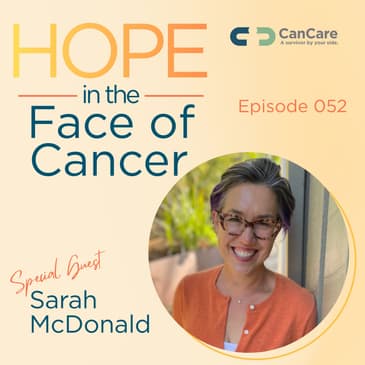
Sarah McDonald is a two-time cancer survivor, author, TEDx speaker, executive coach, and advocate for rare cancer research. While building a successful career at eBay and planning for motherhood, Sarah was diagnosed with a rare salivary gland cancer. Just weeks later, she learned she also had Stage 3 breast cancer after pushing for additional testing and trusting her instincts.
Sarah shares the emotional toll of facing two cancers at once, the uncertainty of rare cancer treatment, and the heartbreak of learning cancer treatment would change her plans for having a family. She reflects on the doctors who changed her life, the importance of self-advocacy, and how integrative practices such as meditation, guided imagery, yoga, and acupuncture helped her find calm during the most difficult moments. She also discusses the inspiration behind her books, The Cancer Channel and The Cancer Companion, and how her experience led her to become a speaker, mentor, and advocate for others facing cancer.
Sarah’s story is a reminder that even in the darkest seasons, hope can grow through connection, self-advocacy, and the decision to use your experience to help someone else find their way forward.
Highlights:
· Why trusting your instincts and asking more questions can change the course of your care.
· How to navigate the fear, uncertainty, and emotional weight that often follows a cancer diagnosis.
· The role integrative therapies can play alongside medical treatment during recovery.
· What it looks like to find purpose and meaning after a life-changing health crisis.
· How friends, family, and caregivers can show up in ways that truly help someone facing cancer.
Mentioned Resources:
CanCare- www.cancare.org
Sarah McDonald – www.sarahemcdonald.com
About the Guest:
Sarah McDonald is a two-time cancer survivor, executive coach, and fierce advocate for those navigating life's hardest seasons. Diagnosed simultaneously with a rare salivary gland cancer and Stage III Breast Cancer, Sarah faced the unimaginable and came out the other side with a mission. She is the author of "The Cancer Channel" and "The Cancer Companion," a TED Talk speaker, a champion for Cycle for Survival with Memorial Sloan Kettering, and a coach who brings decades of executive leadership experience to her work. Sarah continues to use her voice to help others move forward.
Love the podcast? You’ll be moved by the book. The Hope in the Face of Cancer book shares inspiring, real stories from survivors, caregivers, and healthcare heroes. Raw, uplifting, and full of heart—for anyone seeking hope and connection. Get your copy: cancare.org/hopebook.
About Our Host:
Darcie Champagne Wells is the President and CEO of CanCare, Inc., a nonprofit dedicated to providing support to the cancer community by pairing cancer patients with survivors. Since joining in November 2020 as the third President & CEO, Darcie has driven significant growth, increasing one-to-one support matches by 45% and healthcare referrals by 66%. In 2022, she initiated the Impact Acceleration Initiative to further expand support for cancer patients and caregivers. Her leadership has earned her recognition as a “Most Admired CEO” and “Woman Who Means Business” by the Houston Business Journal, and national “Fundraiser of the Year” by RAISE. Darcie holds a BS in Business Administration from Louisiana State University and an MBA from the University of Houston.
https://www.facebook.com/CanCareInc
https://www.instagram.com/cancare_inc
Thanks for tuning in to Hope in the Face of Cancer!
We’re so glad you’re here. If this episode moved you, inspired you, or brought you a little bit of light, please share it with someone who might need it. Just hit the share button on this page or spread the word on social—your voice helps us reach more hearts.
🎧 Never miss an episode!
Subscribe on Apple Podcasts, Spotify, or wherever you get your favorite podcasts to get updates as soon as new episodes drop.
⭐ Help us grow with a quick review
If you’re enjoying the podcast, leaving a review on Apple Podcasts goes a long way. It helps others discover the show and reminds us that these stories matter. Take a moment to leave a review—we read every one!
📖 Enjoy the podcast? You’ll love the book.
Check out our book, Hope in the Face of Cancer—a powerful collection of real stories from survivors, caregivers, and healthcare heroes. It’s uplifting, raw, and full of heart. Get your copy at cancare.org/hopebook.
[00:00:08] Welcome to Hope In The Face of Cancer, a survivor by your side. Here we share hope and support to anyone in their cancer journey. I'm your host Darcie Wells, CEO of CanCare and a cancer caregiver. Whether you're a patient, caregiver, survivor, or healthcare provider, we are your cancer support community, together uplifting each other every step of the way. No one should face
[00:00:34] cancer alone. Welcome to Hope In The Face of Cancer, where we share real stories of courageous people and their cancer journey. Our conversation today is with someone whose story carries courage, perseverance, and deep compassion. Sarah McDonald is a two-time cancer survivor. In 2012, while working in an executive role at eBay, her life took a sharp change when she received her first diagnosis.
[00:01:02] She was diagnosed with a rare salivary gland cancer. And then before she had time to process that reality, she was diagnosed with a second cancer, stage three breast cancer, two different cancers at the same time. Sarah went through treatment, through uncertainty, through identity shifts, and through the quiet internal work that cancer demands. Along the way, she found that what she
[00:01:27] needed most was emotional support and guidance. And when she couldn't find it, she began creating it. She's the author of The Cancer Channel and The Cancer Companion, two books that speak honestly, directly, and compassionately to what the cancer journey really feels like. She's also a mother, an advocate, a TED Talk speaker, a coach, and a champion for Cycle for Survival with Memorial Sloan Kettering. She continues to use her voice to help others move forward through their journeys. Sarah,
[00:01:57] thank you so much for joining the show today. And we're looking forward to this conversation. Oh, my goodness, Darcie, the honor is mine. Thank you so much for inviting me. What a journey you have had. So take us back to before the diagnosis. Tell us about Sarah in life. And what were you focused on? What were you up to? Yeah, you know, I live in the Bay Area. And like many people was working at a large tech firm. I was
[00:02:25] a super, super mission driven company that is trying to enable economic opportunity for all. And Darcy, I was totally bought into that. And still am. I still have a big crush on eBay, even though I no longer work there. But, you know, I was just really, really focused on doing the best work that I could. My husband was also in tech, and our lives were just consumed with our
[00:02:51] work. And then we would come home at night, have some pizza, go to bed and do it all again. Do it all over again. Yeah. And, and at the time of my cancer diagnosis, I had just been tapped to become the chief of staff to the new president of eBay, Devin Wenig. And Devin didn't grow up at eBay. So they asked me who at that point was an eight year veteran of eBay, to step in and help him bring him up to speed and then
[00:03:19] help him set his agenda for eBay. Oh, wow. And so what made you realize something's not quite right, I need to go get something checked out kind of what led you to ultimately what became the diagnosis? Yeah, well, prior to stepping into the chief of staff role, I had a really, really big, big role of a big team at eBay and found it all consuming. Like I traveled something like 40 weeks
[00:03:48] out of the year. It was, it was nutty. And I went from a large team to an individual contributor role as chief of staff. So I was in charge of me and occasionally Devin, you know, and I realized that there were some doctor's appointments that I had put off during the time that I had this role. And the first stop I made Darcy was actually at the dentist. And it had been three years since I had had a
[00:04:17] cleaning. And I think, I think my dentist was unhappy with me. She really, really gave me a really, really thorough cleaning. And a week later, I noticed a lump in the floor of my mouth. And I thought, oh, wow, I didn't notice, but she must have pierced, you know, with her, with her very angry tool, she must have pierced my mouth and I must have an infection. So I contacted her and I said, hey,
[00:04:43] I need to come in. And she said, you know, Sarah, there's a spectrum of things this could be. On the one hand, it could be the infection that you and I both know that it is. On the other hand, there's this super, super rare form of cancer. I'm sure that's not it. But this, but she said, I wanted you to go see a specialist. And this kind of kicked off a long
[00:05:09] line of tests and specialists that I thought until finally I received a diagnosis of adenoid cystic carcinoma, which is the rare salivary gland cancer you referenced. And in fact, the dentist had referenced. So I did in fact have that rare salivary gland cancer. What did you, I mean, how did you process this? I mean, this is not something obviously that
[00:05:37] was anywhere in your spectrum of possibility. It, you know, it was nowhere, you know, you don't kind of believe it when somebody is saying you have cancer. And I was 44 at the time. I was seeing a lot of doctors because even though I mentioned earlier that I was putting off doctor's appointments, the doctor's appointments, I wasn't putting off were fertility treatments. So my husband and I got married when I was 42. And so, you know,
[00:06:06] get thee to a fertility specialist if you want to have a family. And so we were busy pursuing all of that. So I was reeling from this cancer diagnosis. And because it was so rare, the diagnosing doctor actually didn't know that, that much about it. In fact, he read to me from a website. Wow. That's a little scary. Oh my gosh. It was, it was awful. You know,
[00:06:35] it was not the way you want. I, I don't think there's a good way to get a cancer diagnosis, but I have to say this was one of the worst. Yeah. Um, he was awful. The diagnosis was awful. And yeah, I just, I was numb. I couldn't believe it. And it didn't, I wasn't in any kind of pain. Um, I just had a lump and it seemed weird to think that this really, really aggressive cancer might
[00:07:01] actually end my life. I was kind, I was on this high, I was newly married. Um, we were planning a family. I was living in San Francisco. That was cool. And I had this new job that I thought was going to open all kinds of doors for me. And, you know, with the cancer diagnosis that all came crashing down. So I was, I was mostly numb initially. No kidding. I can understand that. That's
[00:07:26] certainly shocking with it being such a rare diagnosis. I mean, how did you navigate, you know, finding someone who can, who knows how to treat it? Yeah. Well, the, um, the doctor that, uh, diagnosed me, um, gave me the cancer. Yeah. Yeah, exactly. And on the phone, he had called me to tell me I had cancer. You have cancer. I don't know anything about it. Let me read from a website.
[00:07:55] And, um, yeah, he offered to introduce me to write a letter of recommendation to a specialist at his medical center. And I was like, this was 2012 Darcy. I was like, I'm sorry, like a letter of recommendation, like through the mail. And he was like, yeah. So I thought, um, wow, that's lame.
[00:08:17] Uh, so I, the next day went to that medical center, made copies of all of my reports and went and found that specialist and just kind of said, Hey, this is a matter of life or death. I need you to read my stuff and call me. And, um, his, uh, the scheduler said, um, you know, he'll call you in two weeks. And I was like, Oh my God, I need him to be, you know, uh, performing surgery now. Like we have to
[00:08:46] get this cancer out. So meanwhile, I, um, I contacted my fertility doctor and said, I know we were planning an IVF, but, um, gosh, we need to cancel everything because I now have cancer. And Darcy, that's when she reminded me, um, the distance between the mouth and the uterus. And she said, you know, Sarah, let's get through this cancer treatment. And then, um, and then we'll talk about
[00:09:12] having a baby, you know, um, let's, let's get through this. And, um, she said to me, would you like me, she was at Stanford and she said, would you like me to find out who the top head and neck doctor is at Stanford? And I was like, yeah, yes, please. Yeah. So she called me back with his name and she said, call his office, get an appointment and I'll call him. And, um, so I did that. And when
[00:09:40] I called the office, they said, it'll be six weeks before he can see you. I was like, Oh my goodness. And, um, Ruth called me, her name was Dr. Ruth. You can't make this stuff up. She's, she's a fabulous human, fabulous human. And I'm sure she got a lot of kicks out of that. Oh yeah. Um, she, uh, called me and said, um, okay, I've called Dr. Kaplan and he called me the very next day on a Friday, 5 30 at
[00:10:09] night after what I am sure was just a crazy week for him as a head and neck oncologist. And he said, Hey, um, you know, Sarah, it's Dr. Michael Kaplan calling you like world famous doctor calling me on phone. And he said, Dr. Ruth Lottie asked me to give you a call. So I'm calling. And he asked me, you know, tell me everything you know about your cancer. Um, and I did. And he said, you know what,
[00:10:38] Sarah, from what you're describing, it sounds like it's very small. So I'm hopeful that we have caught it early. And he said, you know, Sarah, this cancer is incurable, but it's treatable. So we're going to do everything we can to treat you for this cancer. And he said, you and I are going
[00:10:59] to know one another over decades, which was such a tremendously kind promise he made to me that he couldn't make, but it was, it was kind. And then he said, um, I understand you have an appointment in six weeks. I've, I've moved my schedule around. I'll see you Monday. Wow. And I will tell you now
[00:11:23] that I know Dr. Kaplan over decades, um, that was not an unusual thing for him to do. So, um, I, you know, I was tremendously lucky. I had contacts. I had, I had privilege and access, all of which I pulled Darcy to try to help myself. But I will tell you, Dr. Kaplan was unbelievable.
[00:11:46] I, I waited in his office that Monday. He was behind by multiple hours. His schedule was behind by multiple hours. And I was listening to the other patients in the room and they were talking about how behind he is. And they said, this is just so typical of him. And we wouldn't have it be any other way. Like everyone in the room had been me at some point and they understood how devastating a
[00:12:13] cancer diagnosis is. And, um, anyway, just an unbelievable care by, by these two doctors, unbelievable care. When you heard him say the word incurable, um, how did you, process that? Well, unfortunately I was familiar with that word because I had gone to the website
[00:12:37] that the diagnosing doctor had told me. And so I read a little bit about this, um, cancer and one of the first words, um, on the website says incurable. And then here's the worst word, relentless. And I was like, Oh man, a relentless and curable cancer. Like,
[00:13:01] what do I do about that? And, um, I have to say, you know, like the tremendous amount of stress, um, because at that point, nobody can tell you what your story is going to be, what your prognosis is. Um, so it was a time of just tremendous, devastating uncertainty. Yeah. That's how I
[00:13:25] described it. It was dark, dark moments. I can only imagine. Absolutely. So what does treatment look like for this type of cancer? What did you go through for that? Well, I, I will tell you, um, um, adenoid cystic carcinoma, salivary gland cancer. Not many people get it. It's super duper rare. And, uh, unfortunately, well, great that not a lot of people get it. So let me start there.
[00:13:55] Huzzah. Um, but the problem is because not a lot of people get it. This is not where research is focused. Um, there just aren't the research dollars, um, going toward, uh, figuring out treatment for super, super rare cancers. Like, you know, and you get it. You want, you know, research focused on the cancers that impact the most people unless and until you're somebody who
[00:14:24] has the rare cancer or you love someone who has the rare cancer. And, and, um, you know, the, the reality is there are, you know, over 200 cancers out there and, and most of them are rare. So I'm, I, I feel myself moving down the path of doing a commercial for cycle for survival. I'm going to come back to that. It's, it's why I'm an advocate and active participant in, in cycle for
[00:14:50] survival, which is run by Memorial Sloan Kettering, because what they're trying to do is raise money for rare cancer research, but let's put a pin in that Darcy. Um, let me come back to, um, um, the treatments, uh, currently for adenoid cystic carcinoma are, um, uh, surgery. So cutting it out
[00:15:10] and radiating, burning it. And there is, um, there has been, there's not currently a chemo or an immunotherapy for salivary gland cancer. Like those are amazing things that, that other, uh, cancers have as treatment options. Um, but currently ACC doesn't have that. Um, so I, uh, you know, two weeks after
[00:15:39] meeting with Dr. Kaplan, I had surgery to remove my, my lump, my tumor. And two weeks after that, after it was semi healed, I went back to see Dr. Kaplan to discuss radiation. And some, some salivary gland cancer patients don't actually have to do radiation. Um, if the doctors feel they
[00:16:03] have, um, achieved clean margins, there aren't pesky cancer cells, you know, looking, uh, looking to travel, looking to metastasize. But in my case, they were worried that there was perineural invasion. So there was a nerve, um, right by where my tumor was. And they thought that they saw cancer cells making their way toward that nerve. And if they get into that nerve, they go up into the brain.
[00:16:33] And so a lot of, um, like the places that ACC like to metastasize are to your lungs and your brain, unfortunately. Um, so anyway, I was there talking to the doctor about radiation and I did do radiation. Mm-hmm. To my mouth. Yeah. Somewhere in this time of treatment,
[00:16:56] you discovered another diagnosis. Right. Well, so in speaking with Dr. Kaplan at this, um, at this meeting where he was describing radiation to me, um, you know, I went to the meeting with a whole list of questions, um, typed up on my iPad and I had my husband stand sitting next to me, furiously taking notes as I asked the question, just little, um, you know, uh, little call out to
[00:17:26] people who are newly diagnosed. It's a great idea to bring someone else with you because it's so overwhelming and you can't possibly process and hear all the things the doctor is saying, or at least I wasn't able to. Um, so as I'm talking to Dr. Kaplan, my last question to him,
[00:17:45] I said, um, you know, Dr. Kaplan, eight years ago, I found a lump in my breast and we did a mammogram. The doctors were a little nervous about it. So we did a surgical biopsy of this lump and I was told it's not cancer, but I said, gosh, I don't, I don't really know how cancer works. And so I don't know
[00:18:11] when the doctors were doing the surgical biopsy, they were looking for breast cancer. Is it possible that this was metastatic adenoid cystic carcinoma? Is it possible that, that the cancer that's in my mouth had already spread to my breast? I don't know. And I just didn't notice the lump. I don't know. And he's like, yeah, that's not how it works. He's like, you know, had they found something they would
[00:18:38] have, they would have realized it was a different kind of cancer. He said, um, and that's when he told me about, you know, Hey, ACC likes to go to the brain or the lungs. Um, he said, likely if you were to have cancer in your breast and he's like, and you got, you had a surgical biopsy from one of the top medical centers in the country in the unlikely event that you had cancer in your breast, it would
[00:19:07] likely be breast cancer. And frankly, we never see it in someone so young. And Darcy, I will tell you at that moment, I was like, I just been going through all these fertility treatments, right? I'm 44. And when I'm going through the fertility treatments, they're referring to me and tagging me as a geriatric mother. And I thought, well, at least somebody in the medical profession understands how
[00:19:34] young I am. Huzzah. I am young. But anyway, um, so, you know, you got to have laughter. I've been there. I've, I've, I've experienced that myself. It's like, you're like, take those words out of your mouth. I know. Geriatric. But, um, anyway, so he said, we never see it in someone so young. He's like, but if, if it will make you feel better, you should pursue it with your OBGYN. So I have to admit, I felt a little chastened. I was a little
[00:20:03] embarrassed. Here I am questioning this top medical center and, you know, who am I to, to say, gosh, maybe we should take a look at this again. I mean, they told me it was probably just a cyst. And there was something in your gut that made you raise it with him. Well, you know, yeah. I just thought, you know, gosh, while we're here, let's, let's check everything out. And, um, and I thought, gosh, I'm not going back to work for a little bit. Let me
[00:20:32] call my OBGYN. And I contacted her office, told them I had cancer and they're like, she'll see you in six weeks. I'm like, oh man. So I emailed her directly. And I said, Hey, I want to come see you. I have, I have cancer and I want to check that lump out again. And she said to me, um, wow, that's big. And I was like, okay. And she said, you've been getting a mammogram every year, right? And I was
[00:21:02] like, yeah, for the last eight years since we found the lump. And she was like, but you have dense breasts. Sometimes tumors don't show up on mammograms. You really need an MRI. I was like, why am I just hearing about this? Just hearing this. Yeah. You know, and, um, and I said to her, but I'm making a, I'm being a hypochondriac.
[00:21:26] I'm making too big a deal out of it because look, here's, here's my, you know, we did a surgical biopsy. Here's my scar. And she looked at me and she was like, Sarah, have you ever noticed how far that scar is from the lump? And she said, I'm not sure the surgeon biopsied the lump. Oh my goodness.
[00:21:53] And I was like, Oh, so, um, so I went and got an MRI that led to a fine needle aspiration and a core biopsy. And, um, I was diagnosed with stage three breast cancer. So I had been
[00:22:13] misdiagnosed and, um, where I count myself super lucky is that it was not super aggressive breast cancer. And another way of reframing it, um, is also that this cancer, the salivary gland cancer in
[00:22:34] many ways saved me from the breast cancer because while, um, you know, while I didn't receive that diagnosis, it had been, you know, eight years ago, it had been eight years and the cancer was slowly moving forward. It was stage three. Um, that, which means that, you know, it was in my lymph nodes,
[00:22:57] but it hadn't gone into my other organs. So, um, so I got super duper lucky, super lucky. Well, yeah. I mean, that tenacity that you had about, you know, just checking everything out, um, you know, it's saved you for sure. Yeah. And it's a hard thing to do, right? Cause you're like, you think, Oh, I don't want to question the doctors by the same token. It turns out Darcy,
[00:23:25] doctors are human and they make mistakes. Like, like the surgeon that didn't biopsy my lump. I mean, uh, she's great. She has a tremendous reputation, tremendous. She made a mistake and I'm, I'm lucky. I'm lucky that, um, that it wasn't worse. So I feel, I feel, uh, very lucky and grateful.
[00:23:51] Absolutely. So now you're faced with breast cancer treatment. Yeah. So tell us about how on the world all this is working with both. Yeah. Well, um, so the doctor, so a couple of things, uh, the doctors then have to coordinate care and, you know, they don't normally see this. So I'm introducing doctors
[00:24:15] to one another. So that's funny. And, um, and remember I'm going through fertility. So my fertility doctor is involved as well. So that's funny. And, um, the doctors also are like, is there a larger story here? So they introduced me to the head of genetics at Stanford, um, Dr. Jim Ford, who is lovely and, you know, Dr. Ford is taking vials of blood and they're doing, you know, um, genetic
[00:24:44] sequencing at as best. I think they were looking. So, so it's 2012, like Q1, 2012. And, um, they're looking at like eight genes and they're like, okay, you're not BRCA positive. Don't, you know, you don't have, I think it's called P53. That's the all cancer all the time gene, which leads to things like Lynch's syndrome, um, where people just keep getting cancers. That's that,
[00:25:12] that was the hypothesis. Maybe I had Lynch's syndrome, which I did not. I was also negative for that. Uh, so Dr. Ford is like, yeah, we're going to end his, uh, lovely team. We're going to hold onto your, you know, we're going to hold onto your blood. And as we figure out more, we'll, we'll let you know. Um, but yeah, everybody, it was like all hands on deck and,
[00:25:36] and they were all amazing. Um, uh, so attentive, so willing to work with one another. Um, and I have to say, after I got the breast cancer diagnosis, um, my breast cancer oncologist, Dr. Telly called Jeff, my husband and me into the office. She's like, Hey, can the two of you come in?
[00:25:58] Um, and, um, you know, I'm sitting up there on the, uh, on the patient palette and she comes in and she walks up to me and she touches both legs. And I have to say, Darcy, I almost like, like jumped out of my skin. It was like such tremendous care coming in and, and, and Dr. Telly having this personal touch checking in with me, but I was, I was so on edge at this point. Like we,
[00:26:27] we hadn't started the chemo and the radiation. I had to do both at the same time. That's another story, but that was the coordination of care. The doctor's figuring out, you know, what can we do at the same time? But she said to me, um, wow, Sarah, you've had a lot to process over the last couple of weeks. And I said, Hmm. Yeah. A lot. And she said, and I understand you were here at Stanford
[00:26:53] pursuing fertility treatments, um, when you were diagnosed. And I said, yeah, I was. And she said, um, what have you heard about your fertility? And I said, well, it turns out my doctor tells me that there's distance between my mouth and my uterus. So, so we're all good. And like two years from now, when I'm past all this, you know, treatment for the salivary gland cancer and for
[00:27:21] the breast cancer two years from now, we'll take the embryos that we have on ice and we'll try to get pregnant. And Dr. Telly looked at me and she said, and I was like, um, what, what does that mean? And she said, well, when we finished the chemo and the radiation and the surgery, not in that order, but when we finished with all of that, I'm going to put you on a medication
[00:27:49] called Tamoxifen. And Tamoxifen blocks estrogen and progesterone because my particular kind of breast cancer was estrogen and progesterone positive, HER2 negative. Um, and she said, so I'm going to put you on a medication that will block those hormones that are really important to pregnancy. So she said,
[00:28:15] and I'm going to have you on it for 10 years. So you'll be 54 or 55 when you finish with that medication. And Sarah, you will no longer be a candidate for IVF. Oh, another. And then, you know, and then she said the kind, kind words, you know, there are a lot of different ways to have
[00:28:37] a family, which I appreciate. But I looked over at Jeff, you know, who was furiously note-taking and he had stopped and he just had tears, his first tears. And he was like, it's just too much. Yeah. So, you know, yeah. So that was a, that was a low moment that apparently I felt the need to
[00:29:02] share with you. No, I mean, it was, it was certainly, I mean, just blow after blow after blow. And yeah, I mean, excruciating for anyone to, to deal with emotionally. How did you deal with all of this emotionally? Well, two things and I'll lead with I'll lead with what my first reaction was,
[00:29:28] was I need to talk to these doctors about some sort of anti-anxiety medication. I had never taken something like this before. I was a little, if I, if I'm honest, I was a little embarrassed to ask like, why couldn't I handle it? You know, people get cancer diagnoses all the time. Why was I freaking out so much? But I was so in fight, flight, or freeze every moment of every day for like a three
[00:29:57] month extended period. And I just, Darcy, I thought, oh my God, I'm going to have a heart attack before either one of these cancers can kill me. I just, oh my God. And so I went to the breast oncologist and I said, is there something? So she, she diagnosed Ativan. And I think there are a whole bunch of different options out there, but Ativan is what I took. And, you know, it just helped take
[00:30:27] the edge off. It didn't numb me or, you know, take away my anxiety or stress, but it took the edge off. Um, that was helpful. And then at the same time, one of my very closest friends, someone I had met at work, um, she had left the corporate world to become a yoga and meditation instructor. And, um,
[00:30:50] she had invited me Darcy many times to her yoga classes. And I was like, I am too busy in my crazy life. I'm too busy to go sit there. Certainly to meditate. No way, no way. Um, but when I told her about the diagnoses, you know, she said, Sarah, you have some of the best Western medicine doctors
[00:31:14] in the world at Stanford. We're going to call them team one. She said, I want to be in charge of team two, which are the Eastern practices. And if you are willing, I'd like to introduce you to yoga and meditation and energy work and guided meditation. Oh my goodness. And acupuncture.
[00:31:39] And we're going to pursue all of those things. And if, again, if I'm honest, Darcy, I was like, I'm going to make my, my friend feel better by saying yes in this moment. But, um, I am skeptical, but I thought, well, I'm not working. Uh, you know, I, I had excused myself from work, um, at,
[00:32:04] at the, the great kindness of, of the executives at eBay. And, um, I, uh, I thought, well, they can't hurt doing these Eastern practices. And I have to say for the first time in my life, I made time and space for all of those things. And it was unbelievable. I, um, the, the guy I'm going to
[00:32:31] start out with guided imagery and just say guided imagery is kind of like meditation, but somebody talking you through it because meditation is so hard, your brain's going all off. So it's helpful to be able to key in on someone's voice. And I did guided imagery, um, with a woman named Bella Ruth Knappersink, crazy name, but she's, she seems to be the goddess of, of guided imagery. And when she
[00:32:58] would describe, when she would invite me to take a walk in my mind to another place, it unlocked something between my head and my body. And I was able to grieve. I was able, you know, like imagining
[00:33:19] walking among birch trees. I was, um, I was overcome with grief and wrapped with sobs. And I listened to her guided meditations multiple times a day for about two months until I kind of went through the wormhole. I broke through. I, and again, I was doing yoga and meditation and energy work and
[00:33:43] acupuncture. I was doing it all. And at some point I relaxed and I accepted that I had cancer and I understood I needed to do everything I could from a Western standpoint, but also from an Eastern standpoint, um, to heal myself. And I just became relaxed here and by extension here in my body.
[00:34:11] And all of the Western medicine worked, all of it worked. My doctors were like, this is textbook. Your body is doing everything we need it to do. And as a reminder, I had two cancers. So there's a lot going on. So I, I'm just, I'm a huge advocate now for integrative medicine. Um, you don't have to buy in to the whole woo woo thing. I recognize I live in Northern California. I am predisposed to it,
[00:34:40] but, um, boy, the, the mental and psychic relief that I received was just tremendous. I can't say enough. I can't say enough about it. Well, and, and you, your plan of attack, you know, it's, I'm going to do, I'm going to do everything I possibly can. And, um, it's beautiful to see that. I can imagine that
[00:35:04] moment when you kind of took that first breath, um, was so powerful. What do you, what happened with respect to like the emotional side of it? Obviously I think that, um, you know, more Eastern medicine was probably really more emotionally focused, but at the time, did you have anyone around you? Did you
[00:35:32] have, you know, anyone who really could relate, um, to unburden yourself with, or were you kind of keeping that inside? Um, you know, I wish can cares had been around at the time. I, you know, you know, we talked about how rare salivary gland cancer is only, only actually 15,000 people a year
[00:35:58] are diagnosed. And I think that's a global number. So there are just not that many people who have it. Um, I was, there was one Yahoo forum that I would go to, but a lot of the people who were in the forum, um, you get more extremes in the forums, you know, people who are, who are really struggling. And that was hard for me to listen to. I tried to, as best I could, when newly diagnosed people would
[00:36:28] come to the forum, I would reach out to them and I would offer to talk to them or exchange messages. And we did that, but I was afraid to talk to, to somebody who had gone before me. And I've only heard of one person who had both breast cancer and adenoid cystic carcinoma. And actually the woman who was facilitating the Yahoo group, who was the president of, um, an organization called adenoid
[00:36:56] cystic carcinoma organization, international ACCOI Pascal turns out her mother had had breast cancer and adenoid cystic carcinoma, not at the same time, but she's the only one I had heard of. Um, so I did a lot of talking to Pascal, but I didn't know who to talk to. And frankly,
[00:37:20] because no one else had my specific cancer, I, I just, I, I found it too overwhelming to talk to people about theirs. I, this is kind of a lame answer, but I honestly just didn't believe somebody else could, could totally understand what I was going through. But that's where, when I heard about mature organization, I was like, Oh my goodness, that is so helpful for people. Um,
[00:37:50] Yeah. Cause it's someone I want to introduce you to someone in my brain right now. Who's one of our volunteers is a salivary gland cancer survivor. Like, I mean, you're so rare. You guys need to, to know one another. We need to know one another. It's some, yeah. Cancer is such a, there, there's such a range of emotions and I'm sure people who come to your podcast speak about this. And strangely, there's, there can be a shame or an embarrassment of being sick or of,
[00:38:20] of possibly dying. There's, um, and because there's the possibility that you might die when people ask how you're doing, you do everything you can to shield them from it and to shield yourself because you don't, you don't want to lose your, lose your shit in front of people. Yeah. Because
[00:38:44] it will happen. Like you kind of went, I'm dying over here. I'm potentially dying over here. Um, and I'm trying to live as gracefully through my treatments and potentially into my death. I'm trying to do it gracefully. And so I, there are times you are maybe comfortable talking about it and times that you don't want to talk about it because you just, you have to have your private
[00:39:13] moments. So, um, yeah. So I didn't, I didn't have someone specifically to talk to about it. Um, um, Pascal, president of ACCOI. I talked with her a little bit and Tripti, my friend in charge of team two. I was super, I could be super vulnerable, um, with Tripti and then with my husband, Jeff,
[00:39:38] but that I was talking with other people, but those were the people I was probably being the most honest with. Yeah. Yeah. But no one who really could, could understand truly, truly understand, you know, and I don't mean to say people weren't sympathetic, but it's hard to empathize. Um, if you haven't been through it. Um, and this is maybe a good segue for me to, you know, to say,
[00:40:07] this is why I started writing the book. I was just about to ask you that. Like, at what point in your journey did you start to put pen to paper? And was that originally just a healing exercise or did you intend from the get go that it would be something that you would share with the world? Yeah. So I'm an executive coach now, right? So one of the things that coaches do is they have people journal. And I would love to tell you that this started as a
[00:40:34] journaling exercise. I would, because it would make me seem more legitimate as a coach. Taking your own medicine. Yeah. Right. But unfortunately that's not the true story. The true story is like, once I was diagnosed and I was going through treatments and I had kind of gone through the wormhole and, and was a little bit more Zen, quite literally more Zen about what I was going through.
[00:40:59] People started referring their friends and family and coworkers to me, people who were newly diagnosed. And I would get on the phone with them and kind of talk to them about what they were going through. And I tried to be that safe space for them, that safe space that I didn't find. And I found, I was telling these stories again and again, but some of the stories I've shared with you today.
[00:41:26] And I thought, gosh, there really should be a guidebook for people who are newly diagnosed. And, you know, when I was first diagnosed, I went to the library and online, I was trying to avoid online, but I went to the library and was looking for books that would tell me like, what does radiation feel like? What does chemo feel like? And, oh my God, how am I supposed to get myself emotionally
[00:41:52] wrapped around this? And I didn't find the book. And so I thought, well, maybe I could write this guidebook. So, I mean, I was, I was off work for a full year. So, especially in the second half, when, when I was just doing chemo, I wasn't doing radiation and chemo, I was just doing chemo.
[00:42:15] Um, I started writing down some of the stories and I started creating this guidebook to the newly diagnosed. And, um, my, your treatment came to an end and I said to the people at work, Hey, I'd like to come back. And they're like, are you sure you're ready? And I was like, yes, please let me come back. Cause I just wanted normal life again, normal life again. But I set the book
[00:42:40] down and I thought, Oh, I'll get to it on the weekends. Um, I would like to, again, I would like to say that I was this amazingly disciplined person and I was waking up at four in the morning to write the book. That is not what was happening. Um, but five years after treatment, I started getting lots
[00:43:01] of pain in here and I went to see Dr. Kaplan and, um, we both were worried it was a recurrence. So he sent me for MRIs and tests and, um, thankfully it came back that it was not a recurrence. And that was tremendous news for, because for a three week period,
[00:43:27] I thought the relentless incurable salivary gland cancer, I thought it was back. And I thought, Oh my God, you have become so lazy. You believed you were going to live again. You thought you were invincible again. You had a baby. What were you thinking? I mean, I was, it was so hard. And I thought, you know, if it's back, the thing I'm going to regret the most is not
[00:43:55] having written that book. So I went to Devin, um, the now CEO of camp of, of eBay. And I said, you know, I need to take a year off. I'm going to take a leave and, um, go write this book. And he was like, you absolutely should. You should. He's like, and maybe you'll discover
[00:44:20] you want to be a writer. I'm like, no. Well, I, so I finished writing the guidebook to the newly diagnosed in about six months. And I, you know, I had said, I'm taking a year. I finished writing it in six months. And then I tried to get it published Darcy. Yeah. Everybody's like, um, one, you're not famous or infamous lady. Um, two, no one is going to read a guidebook written by somebody who's not an
[00:44:50] expert, like a doctor, like as a patient, you're, and I was like, you do not understand this guidebook. But you know, the half a dozen people I spoke to in the publishing industry said, you have the most outrageous story. You should write a memoir that it's the most popular medium and you could be really helpful to people. And I said, Oh my God, that sounds so arrogant and
[00:45:14] self-absorbed. I can't, I'm like, I can't write a memoir. And they're like, again, this is how you could be helpful to people. Yeah. So I took the next six months and I wrote a memoir. I put this guidebook to the side. I pulled out the personal stories and I wrote a memoir and I published it. I self-published it because again, neither famous nor infamous, no one's going to take a chance on me.
[00:45:42] So I self-published it and I said, okay, it's going out into the world. And then people read it, people that I'd worked with at eBay and one guy, well, a gal who's, she's a comms person at a big tech company. She said, will you have lunch with me? I said, sure. And Karen said to me, you know, you should become a speaker, right? And I was like, no,
[00:46:09] I have done my thing. I've sent it out into the universe. People who need it will find it. And she's like, Sarah, you're neither famous nor infamous. People are not going to find this book. You need to become a speaker. And I was like, all right, thank you. Thank you, friend, kind friend for sharing this with me. Well, then a guy that I had worked with at eBay, who is now a VP at Microsoft, he contacted me. He said, I read your book. And he said,
[00:46:35] my wife just had breast cancer and we both found your book really helpful. He said, I'd like you to come speak at Microsoft. And I was like, I'm not going to be a speaker. And he was like, Sarah, I've seen you speak. You spoke at eBay regularly. I've seen you speak. I just want you to come tell your story. So next thing I find myself in Mountain View,
[00:47:03] I mean, the coolest campus, like such a connected campus. I am speaking to, I don't know, like 20 women in the room, but 850 women who were on the Microsoft Teams, of course, who are on Microsoft Teams. And the response was tremendous. I mean, the people who had cancer or who had care, you know, been caregivers for somebody who had cancer
[00:47:32] or who had questions because they felt they were high risk. I mean, it was just an unlock. And I thought, gosh, maybe this is what I'm meant to be doing. Um, so I started telling people that I had worked with, Hey, you know, I can come to your company and talk if you want. Um, and so I've probably spoken at, I don't know, two dozen corporations.
[00:48:02] I've now spoken at a couple of medical centers, um, at Duke, um, at the Ohio State University. Um, uh, a lot of different medical centers and then at cancer, um, cancer support groups. Yeah. And wow. Speaking at cancer support groups, um, not surprising. Those are my people.
[00:48:28] Um, it is just, it's a tremendous experience for me to witness my story to people who are in it or through it and watch them nod their heads or ask questions if they're going through it. It's, it's just, it is a great privilege of my life. Um, that I have, um, had the opportunity
[00:48:51] to share my story both in book on podcasts. Um, I've done kind of podcast and then, and then these, these talk and then somewhere in there, Darcy, I had promised myself that if the memoir did well enough that I would dust off that guidebook and write it. And so I did. Um, and the good
[00:49:21] people of American cancer society, they challenged me. They were like, Hey, um, can you get this done? Can you get this published by world cancer day last year? And I did. And, um, and I needed that little push. I needed that little push, a deadline, like, Hey, get this done and we will share it. Um, and so that's been, that's been tremendous. I have not marketed it as much as I should,
[00:49:46] you know, give me a break. I will get there. I mean, sadly, um, uh, cancer is an evergreen topic. It's not like either book is going to go out of style. It's not like they're only of the moment. Um, but, um, I am super proud of both books and I'm really happy that the cancer companion,
[00:50:11] the guidebook to the newly diagnosed is now out there. Um, and I'm hopeful through things like your organization, um, and other cancer support groups, I'm hoping that it can get it, it can make its way into the hands of people who are newly diagnosed and the people who love them because, um, the goal of the book is just to be a guidebook to help someone wrap their head and their heart
[00:50:39] around their diagnosis. Thank you for persevering and putting those out into the world. Thank you. Yeah. Again, it is my privilege. That is very clear to me. I am, I am very lucky. You've had quite the journey filled with trials. So the question I'm going to ask you next may feel
[00:51:06] a little out of left field, but we ask it of all of our guests and that is what were the unexpected gifts that cancer brought you? Yeah. Um, I love this question, Darcy, um, because, um, I know this is controversial, but a cancer diagnosis or
[00:51:30] a life shaking crisis is not always all bad. Like there are moments and lessons in it. There are moments and lessons in it. And for me, um, two things one, uh, yeah, I'm an extrovert.
[00:51:55] I love people. I love meeting people. I am grateful for the vast network of friends and family that I have. I always knew people were important always, but once I had a cancer diagnosis, I realized, oh, that was the only thing that was important. Like I spent a good, I don't know, 20 years of my
[00:52:22] professional life being so driven. I mean, in great part, because I loved it. It wasn't, I was having so much fun and I have so many dear friends who have come from that I've developed from my corporate career, but now I always prioritize people above anything else or, or I try to,
[00:52:48] I try to always prioritize. So what became so clear is if I had died that year, all I cared about was the time that I spent with those most dear to me. That's all I cared about. So that's the first kind of insight. And maybe half the people on the podcast are like, duh, of course, but for me, that was just, it was just, it was just, it takes a wake up, you know? Yeah, yeah, yeah. Absolutely.
[00:53:16] But the, but the kind of second thing was getting out of, you know, my singular focus on doing the best job I could at eBay and what was the next job? What was the next challenge? What was my next opportunity? I realized I could do different things. And so in, at the very beginning, January 1st,
[00:53:45] 2019, I made the really, really hard decision to leave eBay. Yeah. And I will tell you that as I wrote my resignation email and sent it, I had tears streaming down my face. I was, I was, I, you know, it was a relationship and I was breaking up with this company in this mission
[00:54:11] that I really believed in, right. That I really loved, but I realized I needed to go do other things now. I went and worked at a series of startups that was super fun. But then I also pursued my coaching certificate in order to start coaching other executives. And in having a more flexible schedule like that, I've been able to do things like write the cancer companion and do the
[00:54:39] talks I've been doing. Cause sometimes I traveled for those talks. I've had more flexibility and ability to meet with people who are newly diagnosed and that. So, so my mission has shifted and that is a great, you know, I seem to be avoiding the word blessing just because I think it, it can be overused,
[00:55:04] but it, it was a shift and it was a great gift. And I feel lucky and grateful that I'm, that I'm able to do that, that I'm able to help people hopefully who are in pain, help them to reframe, help to give them some assurance that they are not alone. You know, these are, these are, this is what now fills
[00:55:29] my life. And I am super lucky to have a partner, you know, my husband, Jeff, who is fully supportive of all of this. Yeah. So I'm just super lucky. That's awesome. I love, I love that. Before we wrap up today, I would love for you to talk about your advocacy work. I know cycle for hope means so much or cycle for survival means so much, um, to you. So tell us a little bit about what you're doing.
[00:55:55] Yeah. Um, so, uh, when I, uh, first got through treatments, um, the Avon breast cancer walk was, was still really, really big. And I thought, Oh my goodness, I, um, I need to become involved in this. And so with, um, you know, with all of my enthusiasm, I emailed everybody I knew and I raised a tremendous
[00:56:19] amount of money. Um, in my first year, I was the top fundraiser in the Bay area. Like, like what? I mean, and, and it was so much fun to do this walk, um, with, with other people. Um, I mean, my feet didn't appreciate it. I had, I had 13, I think I counted 13 blisters. Um, but I felt there was some way I was
[00:56:43] giving back to cancer research, but one of my very best friends, Ashley contacted me. She lives in the New York area and she's like, I just think it's tremendous what you're doing for breast cancer research. She said, do you, did you know there's something called cycle for survival? She's like, what if you took the same enthusiasm for raising money for research and instead focused it on rare
[00:57:11] cancers? And I was like, Oh my God, that's amazing. That I like, I just didn't even know about it. So I started, um, so that was 11 years ago. I think this is my 11th year raising money for cycle for survival. Um, I have come to know, um, so it was co-founders, um, Dave and Jen Lynn. They met at
[00:57:34] Harvard business school, um, and were married, um, both, both big athletes. And then Jen was, um, diagnosed with a really, really rare form of cancer. And I want to say it was endometrial cancer, but it was super rare. And she discovered, she and Dave discovered that there was, there were very few treatment options, very similar to, um, adenoid cystic carcinoma. And Jen was like such a, I never
[00:58:04] had the pleasure of meeting Jen, but, um, because the world is small. Um, I've met people who went to business school with her. I met a woman who grew up with her, who I worked with. I mean, it's just a small world. Right. But Jen was like, all right, it might not help me, but maybe we could do some fundraising to raise money for research for my cancer. And she started this and she kicked off
[00:58:29] this amazing movement that eventually, like so much of the research dollars were going to Memorial Sloan Kettering that Memorial Sloan Kettering took over and Memorial Sloan Kettering. I mean, amazing, amazing, amazing facility. I have had the chance to speak there. Oh my goodness. I, it's like, I am in Mecca. Oh my God. Um, but, uh, yeah, so I've had the great privilege of raising
[00:58:54] money for rare cancer research now for the last 11 years. And I will continue to do so for it because it raises awareness. Um, it helps fund the research that will save people's lives. And every year they have people come in, um, um, during the ride who speak to like, my life was saved because of the research dollars from cycle for survival. And I just think, Oh my goodness. If I had a small part
[00:59:22] in that amazing. Um, amazing. So I, I do that, um, cycle for survival every year. And then, um, I was super lucky. Somebody that I worked with at eBay said, Sarah, I know some of the people at American Cancer Society, would you like me to make an intro? It's like, Oh my God, that would be
[00:59:45] amazing. So I have met the team at American Cancer Society. They are unbelievable. Um, they have, I have spoken on their behalf. They had me actually, I emceed their volunteer leadership summit last year, which was such a privilege. Um, and I am their, um, uh, mission chair for CEOs against cancer. So I'm kind of like the face of cancer for the, for the CEOs and, and I can speak their language.
[01:00:12] I've worked with a lot of CEOs. I, I work with a lot of CEOs now. So, um, so I just feel super lucky that I was introduced to them and can help spread the word, um, about that. And then the third thing that, um, I don't think I told you about Darcy before, um, is I'm now involved in a movie, a documentary. Um, the, the working title is one in three, because of course the American Cancer
[01:00:40] Society tells us that one in three women will be diagnosed with cancer during her lifetime. And it's one in two men. So a dear, dear friend of mine who happens to be a documentary filmmaker, her first film is called the song in the shadow of Everest. And it's about the first Nepalese woman to summit Everest. And she gave her life doing it. Um, so my friend, my friend, Nancy made this movie
[01:01:08] about the song. Um, it is breathtakingly beautiful. It's, it's so well told. The story is so great. And Nancy went on the documentary, you know, the film festival circuit won all kinds of awards. I think you can now see it. I don't know if it's Amazon or Netflix, but if you look up the song in the shadow of Everest, you can find it. Anyway, Nancy came to me about a year ago and she said, I know what I want to do for my next movie. I was like, the first movie took you 10 years, Nancy.
[01:01:38] Why would you ever, why would you ever do it again? And she was like, well, now I know how to make a movie. Right. And she said, and I know people and, and she's such a gifted storyteller. And she said, um, I want to make a movie, an inspirational movie about cancer, one that people will want to go see. And so that's what she's doing. And she said, I need your help. She's like,
[01:02:02] first, I want to interview you for the movie. And I was like, Ooh, okay, I'll be brave. I'll be brave. I just, you know, I don't like myself on camera. Number two, she said, I want to meet all the people you've met. And, um, so I've been introducing her. The movie is going to be about integrative medicine and the impact it has on Western medicine. So my story, right? Like, wow. If you pursue some
[01:02:31] of these Eastern practices, you can have cancer patients can have better outcomes. At least that is what the research is showing. And you better believe as I've been introducing Nancy to some of these integrative doctors and, and well beyond me, she's now, she's meeting with all the top people. Um, they want her to tell their story. They're like the research, the research is showing that this
[01:02:58] helps and it gives cancer patients so much agency. I think you said earlier in our, in our conversation, like, like being able to do something to feel like you're helping with your own recovery and integrative medicine is one of those things, like paying attention to what you're eating, um, um,
[01:03:25] doing everything you can to relax your body and your mind so that it can accept the medicine. Anyway, I, I just, I'm so thrilled for what Nancy is doing. So the working title is one in three, one in three. And, and, um, anyway, you know, stay tuned because I will, I will be telling you and your, and your listeners more about it. Oh, that is so excited. I'm so excited for you.
[01:03:51] That is incredible. Well, one last question for you today. We have many people who are currently facing a diagnosis, um, and their loved ones listening and many survivors listening. What message of hope from your experience would you like to leave with them today? I will share with you one
[01:04:15] of the favorite things my breast oncologist ever said to me. And this was early in my treatment. She said, you know, Sarah, there's never been a better time to have cancer. I was like, I would still not wish to have cancer, but please say more. Yeah. And she said, Sarah,
[01:04:37] the rate of discovery in cancer right now is just unparalleled. And even though we have some very significant challenges with NIH funding. And I, I would, you know, I, I do, I, I would like to get on a soapbox about that. I will, I will say given some of the challenges, there are other people
[01:05:02] stepping up and raising money and ensuring that the cancer research is going on. There's never been more treatment options. Um, there have never been more survivors because there are more options. And so that is something to take solace in that, that the doctors have so many tools in which to treat your cancer. And if you don't like the doctor you're working with, go find another one,
[01:05:31] go find someone who will help you and listen to you. Um, so it's about self-advocacy. It's about understanding that there are options for you. There are treatment options. And then I'm going to kind of segue something that I would say for people who are saying, how can I, how can I show up
[01:05:53] for my loved one, my colleague, my friend who has cancer? What I would say is show up. Yeah. And I know it's hard. I know you're afraid you're going to say the wrong thing, but by saying nothing, the person with cancer feels more isolated and alone and unseen. So what I always suggest to people is like,
[01:06:21] you say, I am so sorry, you're going through this. It must be hard. And in doing so you are recognizing seeing the person who has cancer, but you're not saying, I know what it's like, or my, my aunt Darcy had cancer and this is what she did. No, you're just saying, I see that you're going through something. And I recognize it might be hard. I've even said to people, maybe you say,
[01:06:50] I am so terrified of saying the wrong thing to you. Yeah. But I want you to know that I see that you're going through something. It must be hard. And then I suggest to people just like, create the space for the person. The person might be having a moment where they don't want to talk about it. And that's great. Talk to them about things that don't relate to cancer, because they're
[01:07:15] not just cancer. Yeah, you know, talk to them about, you know, whatever. But show up for them. Like I my favorite way is text people. It's asynchronous communication. And it says, hey, I'm just checking in on you. Or hey, thinking of you today. Sending you a little love, or just a red heart. Those are all things that I do. And just every couple of days to let the person
[01:07:42] know that they are in your heart and in your head. And so anyway, I so appreciate the opportunity, Darcy. Thank you so so much for allowing me to come speak with you and speak with your your listeners. Thank you, Sarah. I mean, this has been so incredible. And I know we're all excited about what's next for you. And just how your journey continues to grow and support others. So thank you
[01:08:09] for what you're doing for so many. And thank you all for joining us for Sarah's story and her message of hope today. If you or someone you love is facing cancer, CanCare is here to support you to walk alongside you whether you're the one with the diagnosis, or loving someone facing a diagnosis. So we encourage you to reach out to us at CanCare.org to learn more. And if you are a cancer survivor,
[01:08:39] or we're a cancer caregiver, and you want to impact other lives like Sarah's impacting now, we encourage you to consider volunteering and being that survivor by the side of someone facing cancer. So reach out at CanCare.org. Learn more, we would love to have you in our family. Until next time, remember, there is always hope in the face of cancer.
[01:09:05] Thank you for joining us on this episode of hope in the face of cancer, a survivor by your side. If you or someone you know is facing cancer, or is supporting a loved one through their journey, we invite you to share this podcast. As a cancer survivor, your journey carries invaluable wisdom and insight. We would love for you to get involved in CanCare's mission of becoming a survivor by the side of someone facing cancer. Please visit our website at CanCare.org slash volunteer, or click the link in
[01:09:35] the bio for more information on how to get involved. Our survivor volunteers have been a beacon of hope for so many. Thank you for your support and our efforts in the cancer community. No one should face cancer alone.