
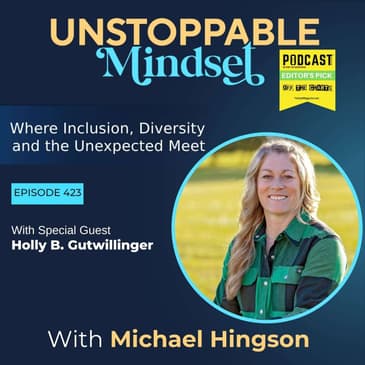
What if the creativity you’re searching for has been with you all along, just waiting for you to listen? I had the pleasure of speaking with Holly Gutwillinger, an author whose journey began in the quiet forests of northern Canada and grew through a life shaped by storytelling, solitude, and reflection. From her early days creating stories on her own to building a career while quietly nurturing her creative side, Holly shares how those moments helped form the foundation of who she is today.
As you listen, you’ll hear how Holly rediscovered her voice through writing, how her dogs unexpectedly became her greatest teachers, and why acceptance became a turning point in both her life and her work. We also explore the role of discipline, the challenge of staying present in a world full of distractions, and the importance of listening to your inner voice. I believe you will find this conversation both encouraging and practical, especially if you’ve ever questioned your own creativity or wondered if it’s too late to begin again.
Highlights:
00:10 Discover how early life and solitude shaped a lifelong creative mindset03:20 Learn why spending time alone can unlock creativity and storytelling14:27 Understand how to move past frustration and return to creativity20:16 Learn how walking, driving, and quiet time spark new ideas34:44 Discover what an unstoppable mindset really means in daily life53:57 Understand how acceptance can transform relationships and creativity Top of Form
Bottom of Form
About the Guest:
Holly B. Gutwillinger is an award-winning author, podcaster, and MFA student in fiction at the University of King’s College, whose work is defined by emotional honesty, curiosity, and a profound love for cats and dogs—those remarkable creatures who shape our lives in unexpected and transformative ways. She calls a small northern Ontario town home, though her journey has taken her through remote parts of northern Canada, experiences that have expanded her worldview, strengthened her resilience, and instilled a deep appreciation for the wide variety of foods, traditions, and cultures that define the Canadian human experience.
A self-made creative, Holly has built her literary and podcasting path from the ground up, navigating the challenges of the writing life with an unwavering commitment to telling the stories that matter most. Her determination has led to recognition, including the prestigious On Creative Writing Award, which she received in late 2025. Yet for Holly, accolades are never the endpoint; they are encouragement to keep writing, creating, and exploring new avenues of expression. She has no plans to stop, seeing every project—whether a novel, podcast episode, or painted canvas—as part of a larger, ongoing journey of curiosity and connection to others and to herself.
Although she was not always a writer, Holly’s creative process began at a very young age. She recalls quiet moments of tactile creation with anything she could gather around the house—storytelling to anyone who would listen or creating picture books in school. Those early experiences laid the foundation for a lifelong passion to craft stories that resonate deeply and honestly.
Holly’s debut novel, North of Broken & Furever Home, launched February 14, 2026, is an intimate exploration of a woman’s evolving relationship with her rescue dogs. The novel delves into themes of grief, healing, second chances, and the quiet but transformative power of animal companionship. At its core, it asks a question familiar to anyone who has loved a pet: who truly rescues whom? Holly’s characters are imbued with emotional complexity, drawing from her own experience as a mother, a pet owner, and a lifelong observer of human relationships. The story invites readers to witness the beauty and struggle inherent in loving fully, openly, and sometimes imperfectly. As the project neared completion, Holly realized this was no longer just a rescue story, but a narrative of acceptance between her and her dogs, Cash and Sully—their relationship evolving into a shared stillness and quiet companionship that brings her peace.
Family is central to Holly’s life and work. As the proud mother of two adult sons, she offers authentic insight into the joys, challenges, and heartbreaks of parenting as children step into independence. This maternal devotion extends naturally to the animals in her care, reflecting her belief that the relationships we cultivate, whether with children, partners, friends, or pets, serve as mirrors that reveal who we are, who we are becoming, and the values we hold most dear. Her fiction and nonfiction alike are informed by this awareness, portraying relationships with honesty, vulnerability, and a deep sense of empathy.
Currently pursuing her MFA in fiction, Holly is committed to honing her craft and exploring the intersections of character, voice, and emotional truth. Her academic training complements her innate storytelling abilities, allowing her to balance literary sophistication with accessibility and relatability. Whether in the quiet drafting of a manuscript or the dynamic dialogue of a podcast, Holly approaches her work with curiosity, rigor, and the understanding that art is a vehicle for both connection and transformation. She once stepped away from the voice she had worked so hard to develop, writing instead for what she thought the audience wanted, but the words ceased to flow. Returning to the style that made her heart sing reignited her literary tap, and all was well again. She encourages her peers to embrace authenticity and to hone their true voices, even when the path is uncertain.
Holly also hosts a podcast with her son, Rogan, exploring how animals influence and inspire the creative lives of people from all walks of life. Through conversations with writers, artists, entrepreneurs, and creators, she examines how pets provide comfort, motivation, and even discipline for those pursuing ambitious dreams. The show highlights the often-overlooked ways animals shape human creativity, offering insights that are both practical and profoundly moving.
For Holly, the podcast holds an additional personal dimension: it provides precious time with one of her adult sons who lives hours away, creating shared experiences that strengthen their bond while exploring themes of love, companionship, and creativity. The podcast’s casual conversational format often leads into deeper, more meaningful discussions, with questions that invite reflection on how her animals influence her creative process and who she is as their human companion.
Artistic expression extends beyond writing in Holly’s life. She loves to dabble in drawing, painting, and yarn art, finding visual art a complementary form of storytelling and self-exploration. Whether sketching, experimenting with color, or simply observing the world through a brush or pencil, Holly approaches art with the same curiosity, courage, and playfulness she brings to her writing. This creative versatility allows her to explore emotion and narrative from multiple perspectives, enriching both her fiction and her podcast work.
Living in remote parts of northern Canada has profoundly shaped Holly. These experiences expanded her cultural awareness, exposed her to unique foods, traditions, and practices, and deepened her empathy for diverse human experiences. The solitude and vast landscapes of the North provided not only inspiration but also perspective, fostering resilience and the ability to observe life with nuance and care. These insights permeate her storytelling, helping her craft characters and narratives that feel authentic, layered, and universally resonant, intimately connected to the great white north.
Community and mentorship are integral to Holly’s philosophy. She serves on the board of her local writers’ guild and volunteers in literary organizations supporting emerging voices, fostering collaboration, and advocating for equity in publishing. She believes in creating opportunities for others while continuing to carve her own path, reflecting her self-made approach to the creative life. Holly’s involvement in these groups underscores her commitment not only to her own work but to the broader literary ecosystem, cultivating spaces where writers can thrive, share, and grow together.
At the heart of Holly’s work across novels, podcasts, and visual art, is an enduring exploration of love, connection, and transformation. Her stories reveal that the relationships we cultivate, whether with humans or animals, shape the core of who we are. They highlight resilience in the face of challenge, the quiet courage required to open one’s heart, and the unexpected ways vulnerability can lead to growth. Whether speaking about the craft of writing, the role of pets in creative lives, the joys and trials of parenthood, or the ongoing journey of self-made artistry, Holly brings warmth, insight, and grounded authenticity to every conversation.
Despite recognition, awards, and a growing readership, Holly remains humble and curious, always ready to explore new creative avenues. She views life as an ongoing narrative, one in which personal, fictional, or podcast-shared stories serve as threads connecting individuals, communities, and generations. Her work reflects a conviction that storytelling is not just an art form but a form of stewardship—preserving experiences, fostering empathy, and inspiring others to embrace the creative life with courage and curiosity.
Holly B. Gutwillinger’s journey is one of heart, persistence, and a lifelong commitment to creation. She has built her career on her own initiative, cultivating her voice with passion and care. From the rugged landscapes of northern Canada to the intimate spaces shared with her family and rescue dogs, Holly’s life and work embody the transformative power of love, creativity, and resilience. With every novel, podcast episode, and painting, she continues to explore the questions that have always driven her: How do we connect? How do we grow? And, ultimately, how do the creatures and people we love most help us become the truest versions of ourselves?
Holly’s debut novel, North of Broken & Furever Home, and her podcast offer readers and listeners a window into this world—a place where relationships, art, and compassion intersect, and where every story has the power to illuminate, heal, and inspire. As a self-made creator who refuses to stop exploring, Holly remains committed to creating work that matters, sharing space with others who care deeply about the human and animal experience, and continuing to craft stories that touch hearts, spark conversations, and celebrate the quiet courage of living fully, lovingly, and creatively.
Looking ahead, Holly aspires to create a mentorship program for emerging writers who feel unsure where to start or struggle to balance a writing life with a busy schedule. Although the program is not yet in place, she hopes to establish a supportive platform where individuals feel comfortable unleashing their words on the page and finding their authentic voices in a welcoming community.
Ways to connect with Holly**:**
@rambling_from_the_little_shed
Website:
www.ramblingsfromthelittleshed.com
Substack:
Https://https://substack.com/@hollybgutwillinger
About the Host:
Michael Hingson is a New York Times best-selling author, international lecturer, and Chief Vision Officer for accessiBe. Michael, blind since birth, survived the 9/11 attacks with the help of his guide dog Roselle. This story is the subject of his best-selling book, Thunder Dog.
Michael gives over 100 presentations around the world each year speaking to influential groups such as Exxon Mobile, AT\&T, Federal Express, Scripps College, Rutgers University, Children’s Hospital, and the American Red Cross just to name a few. He is Ambassador for the National Braille Literacy Campaign for the National Federation of the Blind and also serves as Ambassador for the American Humane Association’s 2012 Hero Dog Awards.
https://www.facebook.com/michael.hingson.author.speaker/
https://www.youtube.com/user/mhingson
https://www.linkedin.com/in/michaelhingson/
accessiBe Links
https://www.youtube.com/c/accessiBe
https://www.linkedin.com/company/accessibe/mycompany/
https://www.facebook.com/accessibe/
Thanks for listening!
Thanks so much for listening to our podcast! If you enjoyed this episode and think that others could benefit from listening, please share it using the social media buttons on this page. Do you have some feedback or questions about this episode? Leave a comment in the section below!
Subscribe to the podcast
If you would like to get automatic updates of new podcast episodes, you can subscribe to the podcast on Apple Podcasts or Stitcher. You can subscribe in your favorite podcast app. You can also support our podcast through our tip jar https://tips.pinecast.com/jar/unstoppable-mindset .
Leave us an Apple Podcasts review
Ratings and reviews from our listeners are extremely valuable to us and greatly appreciated. They help our podcast rank higher on Apple Podcasts, which exposes our show to more awesome listeners like you. If you have a minute, please leave an honest review on Apple Podcasts.
Transcription Notes:
Michael Hingson 00:00
Access Cast and accessiBe Initiative presents Unstoppable Mindset. The podcast where inclusion, diversity and the unexpected meet. Hi, I'm Michael Hingson, Chief Vision Officer for accessiBe and the author of the number one New York Times bestselling book, Thunder dog, the story of a blind man, his guide dog and the triumph of trust. Thanks for joining me on my podcast as we explore our own blinding fears of inclusion unacceptance and our resistance to change. We will discover the idea that no matter the situation, or the people we encounter, our own fears, and prejudices often are our strongest barriers to moving forward. The unstoppable mindset podcast is sponsored by accessiBe, that's a c c e s s i capital B e. Visit www.accessibe.com to learn how you can make your website accessible for persons with disabilities. And to help make the internet fully inclusive by the year 2025. Glad you dropped by we're happy to meet you and to have you here with us.
Michael Hingson 01:20
Hi everyone, and welcome to you wherever you happen to be. We're really glad that you're joining us here on unstoppable mindset. I'm your host, Mike hingson, or you can call me Michael. I don't really care which, but we're glad that you're with us wherever you are, and we appreciate you tuning in today. Tuning in. That's an old word from radio and some television, but more more radio than television, but I actually heard someone today use the term don't touch that dial. So there you go. But radio is radio and podcasts are podcast anyway. We're glad you're here now that I got that out of the system, but I'm glad that we have a chance to be here with you today, and today, our guest is Holly Gutwillinger. Gutwillinger, I want to make sure I do it right. And Holly is an author, and she's got a lot of other endeavors that she's done over the years, and is going to continue to do. So I'm really looking forward to hearing all that she's got to say, and we're going to get right to it. So Holly, welcome to unstoppable mindset. We're glad you're here.
Holly Gutwillinger 02:27
Thank you so much, Michael, I I like that saying tuning in. And in fact, I went a bookstore just the other day, and she had what looked to be an old transistor radio, but I know it was probably just, you know, a newer speaker that was made to look like a radio.
Michael Hingson 02:45
I still have an old transistor radio. I haven't used it a lot lately, but I have it, and it has a dial you can turn to for volume, and another dial for tuning in different stations, and a button to go from am to FM. So there you are.
Holly Gutwillinger 03:05
Yeah, yeah. I have many of them, like I had, I should say, not have, but yes, very familiar with them.
Michael Hingson 03:13
I I collect as a hobby, old radio shows, and so I do a lot of things with radio, and it's a lot of fun to to do things. I collect a lot of different kinds of shows. And there's a show I think it's, it's blondy Blondie and Dagwood, the comic strip. And there's always starts, ah, don't touch that dial. So there you are. But, but you know, old radio is fun and it's interesting to listen to history from the perspective of what happened on a lot of those radio shows, especially in the time of war like World War Two, just how radio helped pull so many people together, it was pretty fascinating. I agree. I wish we had more of that today, but that's the way it is. Well, why don't we start, as I love to do, tell us kind of about the early Holly, growing up and all that stuff. And I know that you live in Canada, you're in what, northern Toronto, Northern Ontario, rather not Toronto. Northern Toronto isn't very far. You were, you weren't very far. But anyway, Northern Ontario. Well anyway, so tell us about kind of the early Holly.
Holly Gutwillinger 04:27
Goodness. Early Holly
Michael Hingson 04:28
just long time ago
Holly Gutwillinger 04:30
in a galaxy, long time ago Holly. Early Holly loved to be she's just a younger version of who she is now. And she loved to do so many things. I remember going, you know, collecting wood with my father in the forest. That's what we did every weekend to collect for the winter, just spending so much time outside, creating. And what I realized in the last week or so, I had a one of those aha moments. Somebody asked me if I always. Love to write. And I said, Well, not that I can recall, but now that I think about it, I was always a storyteller, and some of those memories are coming back to me, where I used to create screenplays, almost in the basement, I'd have restaurants and school classrooms, but I did spend a lot of my time outside with my father, and he built old cars, so street rods and we would hunting for old car skeletons in the in the back bush. So that's a lot of what younger Holly's life was like. And then, of course, school and high school, and I was always creative. But yeah, why do you think
Michael Hingson 05:43
that is that you were always creative and always writing and doing other kind of innovative things like that? Do you have any notion as to why were you encouraged to do that?
Holly Gutwillinger 05:53
Or I was not, but I think I love that question, Mike, because now you're making me think again and I'm going in and mining for those old memories. But I think it's because my siblings were much older than me, and so by the time I was seven, they were gone, and then it was just me. So, you know, I live in rural northern Ontario, there weren't a lot of kids in the neighborhood, so a lot of time, a lot of my time was spent alone, and I think that I just needed to entertain myself, and I did. So. I think that's one of the reasons why I was so I became so creative because I just kind of kept myself company,
Michael Hingson 06:33
kept yourself company, and you kept busy. Well, yes, what did your parents think of all of that?
Holly Gutwillinger 06:39
Hmm, I don't know. I come from a time when, you know, kids did. Kids were sort of to the side and quiet. My parents were my father was like in the garage building his cars. And if he wasn't building cars, he was mining. My mother was working. And, you know, they had already had two children. And I was a unexpected surprise, I suppose. So I don't really know what they thought about that, but my mother's still here, so maybe I'll have to ask her that question.
Michael Hingson 07:06
I'll have to ask her, what kind of work did she do? She
Holly Gutwillinger 07:09
worked at like a real retail store here called Canadian Tire, which is, I don't know if you've ever heard of it, but your equivalent would be kind of like a Home Depot, but more centered towards cars. Cars, yeah, yeah, which my father loved, because he got parts at a discount.
Michael Hingson 07:26
I was just going to ask, did, did that relationship and that employment benefit his his car fix? Oh, yeah, definitely. And what's happened to all the cars over the years?
Holly Gutwillinger 07:39
Well, my father built so many cars. I remember every week, a new car rolling into the driveway, whether he was fixing it or selling one and buying another building for another person. Over the year, over the span of about 13 years, he built a 1934 Ford three window coupe from the frame up, and my sister has it now in her barn. And he also gifted her like a 52 Ford pickup. So she has both of those because she has the space and she has a husband who's able to keep them running, which is important, yeah. So yeah, they had the cars came and they went. Well, vehicles too much around here?
Michael Hingson 08:22
Yeah, well, you know, lot of lot of fascination with cars and hot rods and all that sort of stuff. So I understand the the DMV, the Department of Motor Vehicles here, won't let me get a driver's license. And as I point out to people, given the way most people drive around here. I don't see why I shouldn't be able to get a license just as well as anybody else, because I don't think that they're watching what they're doing anyway.
Holly Gutwillinger 08:47
So I agreed, I think
Michael Hingson 08:49
so you went through high school. Did you go to college or university?
Holly Gutwillinger 08:53
I did. I went to college. I you know, I was that kid that was supposed to go to university, but I just didn't have the money, nor did my parents. And so I did go to college, but I got a job right out of while I was in college, actually got a full time job, and they allowed me to finish my schoolwork at home, and I started working at 19, and never stopped. But I did go back to school in 2018 and got my degree and kept pushing. So there I was with my two my own two sons, in university, and I was in university, so it was an expensive time.
Michael Hingson 09:31
So what is the difference between college and university in Canada?
Holly Gutwillinger 09:35
So college, you will receive a diploma, and it's more hands on, whereas University is very theoretical and academic, so not as much hands on, and so you'll get like a Bachelor of Arts, three or four year Bachelor of Arts and lots of essays, but college, you do a lot of hands on, so skills more.
Michael Hingson 10:00
Skills and technical things. Yes, yes. So what was this job that you got at the age of 19?
Holly Gutwillinger 10:07
It was for a chartered accountant's office, and I was the receptionist, and that's right, when computers were coming in. So it was very interesting time. And I worked there for 10 years, and they became my family. But then we moved north, my husband and I, so I had to leave that work family and move on to a very remote town in northern Manitoba, and I just took on jobs. I just sort of incrementally got different jobs that were just a little bit, you know, a step up in higher pay, in a sense, and just kept building on those skills.
Michael Hingson 10:42
And while that was going on, were you showing creativity in any way, or did you kind of have to put that by the wayside for a while?
Holly Gutwillinger 10:50
I was always dabbling at home. So I would work during the day, do my job, and then when I returned home, I was always creating something. It could be knitting, scrapbooking, letter writing, you name it, I've tried it, and it was just how I spent my time. And yeah, there wasn't much to do up north, so it was important for me to have that outlet somehow, well,
Michael Hingson 11:18
but I guess, I guess you would say definitely, though, that it kept you busy, which is kind of one of the things that you wanted to do,
Holly Gutwillinger 11:27
absolutely and it also is a conversation starter. Doesn't matter if it's a small town or a big town, but if you can find that link with someone, it's a it's a way to make connections with people, friendships. And I found that it came in handy. You know that the smaller towns tend to have a lot of groups or meetings of sorts, where creatives come together, whether they're knitting circles or crafting circles. And so that was an important part of my life, because it was very difficult for me to be away from my family.
Michael Hingson 12:03
So as you think about Tell me, tell me a story of one time that being involved in that and going that that route really helped you as you move forward.
Holly Gutwillinger 12:14
That's a good question. So I can remember a time when I lived in Yellowknife, which is in the Northwest Territory, so further up north. We moved up there after northern Manitoba, and it was an even smaller place, but I had found a group of women who made cards, like greeting cards, and so every month. And I can't quite remember how I got myself into this group, but I'm, I suppose I'm known for, you know, popping in and saying, Hi, I'm Holly, you know, nice to meet you and try to get myself involved. But every month, we go to a different person's house, and we'd make these greeting cards, and then we'd share them. So you'd make 12 of the same kind, and then you'd share them with the other people that were there, and we'd have snacks, and it just created community. And that was very important in a northern, isolated northern community such as that one.
Michael Hingson 13:12
So the sense of community was in and I gather, near, needless to say, is still very relevant to you. Did? Did you keep in touch fairly well with your family, with your parents and all that,
Holly Gutwillinger 13:24
or as much as you could, because that was at the dawn of Facebook time. So it was old school rotary phones that we Yeah, landlines and we would call every week, but really that was one of the only ways that we communicated. And so it was that was probably the most difficult part, was being away from my family and having my my two children, be away from their grandparents.
Michael Hingson 13:52
Yeah. What? What was the reason that you moved well up to northern Manitoba and then up into Yellowknife
Holly Gutwillinger 14:01
because I had a husband who was in mining, and so we made the decision it was a great opportunity to for a young family to find work there. Well, not fine. The job came to him. And so we moved there and made a life for ourselves there. And then we saw an opportunity return back to Northern Ontario, which is where we're from, so that we could help our parents, as they were going through health issues, have our kids have the opportunity to know their grandparents as well.
Michael Hingson 14:33
Well, there's a lot of merit to that, needless to say. But through all of that, were you always a writer? Did you always write things? And if you have, you kept a lot of your early writings? If that were the case,
Holly Gutwillinger 14:48
I wasn't a writer of stories as much as I was of notes and love letters. I used to love having a pen pal, and I don't. Have journals or anything like that, but what I have found are all the cards that I used to make for my parents, and I'm grateful that they did keep that because it I don't know. It takes me down memory lane, and I can see where it all began. I have memories of sitting behind the wing back chair in the living room and creating out of paper towel rolls or whatever supplies I could find around the house, but those cards really mean a lot to me, because it it's still who I am, and I do enjoy writing someone a letter or a note.
Michael Hingson 15:37
Yeah. Yeah. Do you find that sometimes the creativity just seems to shut down, or it isn't coming through? And if, if that's the case, how do you how do you deal with that?
Holly Gutwillinger 15:52
I creativity is not something that has shut down for me. Now, that being said, I have shut it down when I am not successful at something. You know, when you get frustrated and you're trying to learn something but you can't quite get it, I'll be the one to break off with the with the hobby at hand. So let's take crochet, for example. If I just couldn't get that one stitch, I would get frustrated, and I'd put it to the side, and I move on to something else. But I feel like I've evolved when it comes to that aspect of my life. I persevere a lot more now, and I'm not filling my life with as many creative mediums. I'm really trying to focus on the ones that give me meaning, such as writing.
Michael Hingson 16:46
Well, when when you put something aside just because it wasn't working out, did you ever find that you went back to it and and had success, or did you not?
Holly Gutwillinger 16:56
I did, yes, yeah, after some time now, that was if I didn't throw everything out in the process. Because I've been known to do that. When you get frustrated, you're just like, oh, you know, you shake your head, and you give everything away. Because, like, I'm never doing that again. And so I have done that on a few occasions, but not in the last few years. And yes, I have returned to knitting, for example, color work was something that I struggled with, but I went back to it, and I think that sometimes it's about being in the right moment for whatever that may be. Maybe it's a book you're reading, maybe it's a movie you're watching, maybe it's something you're working on. And now I have no issues with color work, so I just I found the rhythm that I needed to get through it.
Michael Hingson 17:46
How do you find that technology, as we advance with that is affecting your creativity and then the different things that you do? Good?
Holly Gutwillinger 17:57
Question, as far as hobbies go, I think that digital is helpful because I'm able to access more living here in a place where I may not be able to access supplies or patterns, but I don't find that. You know, like the the computer world has affected much else in my life. I am able to navigate it. That being said, I think that keeping up with social media is a time stealer, and I know we all feel we need to do it. I know I put pressure on myself for that, and I'm not even really sure how much that advances anything. I suppose I need to do my own study on my my own social media. But as far as it goes, that I think is it's a time thief,
Michael Hingson 18:54
yeah, well, I think there's, there's merit to that. I think it is a time stealer in a lot of ways, and I think that it is leading us down some paths that probably are really better left alone. We were too sensitive to social media. We're just too heavily involved with it, and it's taking us away from a lot of personal and interpersonal reactions and and involvement with other people, which is too bad I, you know, I've, I've heard about families driving somewhere and the kids are in the backseat of the car texting back and forth. Yes, you know, in the car they don't talk to each other. And I heard one of the reasons. I asked somebody once, why is that? And they said, well, they also don't want their parents to hear what they're talking about, but, but still, it's a challenge. We're being
Holly Gutwillinger 19:47
in a restaurant and seeing a family at a table, but the kids are on the phones or on a on an iPad watching a movie. And I'm thinking, wouldn't you be taking these moments to talk to one another? The phones were never. Loud at my dinner table. That's the one thing, and it sticks to this day.
Michael Hingson 20:04
Yeah, well, and, and it's not just the kids. Oftentimes, parents are doing it, that's right. I personally think that, like a smartphone is a is a good tool, but I don't focus on it all day. I don't do that and won't because I don't think it's necessary, and it's not adding a lot of value to my life to do that. If there's a game that I want to play, I can play that game, but I don't spend all day on the phone and oftentimes like especially when I'm doing a podcast like this, it all gets silenced so that we don't get interrupted, because the last thing I want is for something to interrupt what we're doing. But it's not just doing a podcast. I think it's important that we all take more time to be involved with others around us directly.
Holly Gutwillinger 20:59
Yes, I agree wholeheartedly with that.
Michael Hingson 21:02
Michael, that's my opinion. But I, you know, I think that everybody has an opinion that's okay, and some, and there will be people who disagree with that, and that's, that's fine. We'll see how it all works. But so, but you, you do a lot of ideas and create and so on. How do you channel your ideas?
Holly Gutwillinger 21:26
Well, I channel them through walking and through running and driving is one of the greatest funnels that I have. So yesterday, I was on a seven hour drive, and I absolutely love it, because I listen to podcasts, audio books, and then I just drive in silence. If I if an idea is coming through, I'll just drive in silence and let the thoughts swirl, and I get to sort of sit with them. And sometimes I've even pulled over and and made notes or recorded my thoughts so that I don't lose them. But, you know, channeling them through things that I read, conversations, podcasts, I find, are a huge gift when it comes to creating because it could be a conversation someone is having and they'll just say that one word that triggers something in your thoughts that you know, unleashes something new for you.
Michael Hingson 22:29
Yeah, I think there's a lot of value in podcasts, and there's so many of them. It has definitely been a very successful thing. It's one of the things that Apple has done that has changed a lot of of what we are and what we do in the world, and if it's a way for people to be able to to get out and interact, that's great. It still is. Though you're you're typically listening to someone, unless you get involved in the podcast or doing your own podcast.
Holly Gutwillinger 23:02
Yeah, I agree. I I've always enjoyed podcasts, although I haven't been listening to them right from the beginning, but for several years, for sure, and I love that there's such a variety now there's something for everyone, whether it's a story you want to listen to, or meditation or having a great conversation. I've even learned so much about the craft of writing through podcasts.
Michael Hingson 23:27
Have you ever thought of doing your own podcast?
Holly Gutwillinger 23:30
I have, and I, I, I've recently started one with my son. We started back in November, and it's, it's going very well, and we're having a lot of fun.
Michael Hingson 23:41
Tell us more about that. Yeah, I'd love to
Holly Gutwillinger 23:43
it's called ramblings from the little shed because I'm sitting here in the back of my garage and but I call it my shed, and it's, it's a room on its own, and it's surrounded in cedar planks or pine, pine, my apologies, pine planks, and I have the wood stove beside me, so that's why I we ramble from the little shed, and my son is in Toronto. So we connect over video and we in we have conversations with creative individuals about their pets and their animals. So first, we talk about how they believe their animals or their pets influence their creativity. And then we shift over to who they are as creatives, but it's just conversational. And then my son and I, once the guest has left, we ramble on about things during the week and our favorite things, and yeah, we wear flannel shirts and drink warm coffee.
Michael Hingson 24:42
There you go. What What prompted you to focus on having the discussions around animals?
Holly Gutwillinger 24:51
Definitely, because my book is solely focused on my two dogs, and I thought if my dog. Can have so much influence on my creativity, and I thank him for the gift of giving me the story, then I believe that other people do as well. There's been such a shift in the way that people value their pets or treat them, and I feel that there's more, right? And people love talking about their pets. So I thought, Hmm, wait a minute. There's so many creative people out there. Surely they want to talk about their pets. And we have met chefs, food photographers, tarot readers, fortune tellers, authors, people of all walks of life. We're having a grand time,
Michael Hingson 25:44
dogs, mainly, or other animals as well,
Holly Gutwillinger 25:47
other animals as well. In fact, I just met a woman, a mother and daughter, who have an alpaca farm, and they have 36 alpacas in their backyard that they've, you know, they raise and they they they shear them. They draft, not draft. What's it called? They card, the the wool. And then they, I'm sorry, I'm trying to think of all the terms here that go with, with what they do. And then they draft it, and then they spin it, and then they knit their garments out of the alpaca wool al packable, and they have a beautiful storefront. And I'm thinking, My goodness, that is so inspiring. First of all, to start something of that caliber. And so their animals have a direct influence on their creativity. I mean, it goes hand in hand for them. So not just dogs and cats. Can be any kind of animal.
Michael Hingson 26:43
Well, I'm I'm limited here. We just have a dog. Well, not just but I have my guide dog, Alamo and a cat. Stitch, and they keep me company since my wife has passed, so they keep me company and and smash up against, well, stitch the cat smashes up against me when we sleep at night, and she likes that, so I make sure that I don't roll over on her or anything like that, and Alamo sleeps on his own bed right by ours. So it works out well, and everybody seems to be pretty happy here. So that's a good thing. It's fascinating. And it's amazing how many people have done so many things with with regard to animals. Years ago, my wife discovered a website called craft sea. Have you ever heard of it?
Holly Gutwillinger 27:32
Yes, I have. Yeah. I joined it a few times, yeah.
Michael Hingson 27:35
And when she was looking at Craft c1, time, she found a company in Ohio called litter one, and litter one makes cat litter, but they make it out of pine kernels, and they put them in a disposable box. So you you put the box out, the cat uses it. And for, for me, specifically, we put a box out, and it'll last a week, and then we just throw it away and put up another box. And I find that I'm spending about the same amount with litter one that I would if I were just buying cat litter any other way. But it's it's clearly a lot more well, biodegradable, degradable, if you will. And and stitch seems to like it, so that's good.
Holly Gutwillinger 28:20
I wonder if that's something I can get up here.
Michael Hingson 28:24
I would check the website is called litter one. I would bet you can.
Holly Gutwillinger 28:29
I definitely am going to check into that.
Michael Hingson 28:32
Yeah, and like I said, stitch likes it from the first time we got it. And, you know, for a while, every week, of course, you got the scent of essentially fresh pine kernels, which also helps but, but I've got to really talk with them. I love to learn sometime the history of how that came to be, because it's just fascinating that they came up with this creative thing. And I wonder why and how that occurred. But there's got to be a story there.
Holly Gutwillinger 29:02
You know, Michael, when I go visit my son in Toronto, we do spend some time at the dog parks, just sitting there. My dogs aren't even with me, yeah, just because I find it very calming and fun, you know? And I'm not stressed out about my dog chasing another dog, I just get to sit there and observe. But one thing I've noticed is in these parks, and there are, like, I almost call them bougie parks, because they're so fancy and the dogs are so well behaved, but they have wood chips all over and so I wonder, you know, I've often wondered, like, how do you what's the word I'm looking for? Like, how do they does the does the scent get absorbed? Or do they have to rake it all the time? Like, I'm not sure.
Michael Hingson 29:52
Oh, it's raked a fair amount, and and wood chips are replaced as they need to. Be I've never been a fan of taking dogs to a dog park. Actually, I've seen some dogs that have been very seriously injured by other dogs at a dog park and so on. And I just personally tend not to, but I like the idea of just going in and being there, but yeah, I would not want to take my guide dogs there. I want to keep them as healthy as possible, so their lives are a little bit more sheltered, if you will. But that's okay, don't they do it's a team effort, and they're part of it, and it's my job to to make sure that that they stay healthy and get to be healthy. I was in New Zealand once, back in 2003 and I visited the the guide dog organization down there. What's really fascinating is they have a one square mile piece of property that is entirely fenced, and the guide dogs can can run free. So we actually, that's when I had my, my fifth guide dog who was with me in the World Trade Center, Roselle. And we let Roselle run around in there, and she was the only one at the time. But those dogs are really well behaved, and so nobody's really worried about them interacting in a negative way. But this huge, one square mile piece of property was just fascinating. The dogs can just run and romp and have a good time.
Holly Gutwillinger 31:29
Nice. Yeah, I like the thought of that.
Michael Hingson 31:33
So you guys do the podcast. When did you start it? You said, November?
Holly Gutwillinger 31:37
Yep, we started beginning of November with I put out a small trailer because I was trying to, you know, get comfortable with the whole concept and step out of my my own fear, I suppose. And having my son there is just such a delight, because I love spending time with my sons, of course, and he's quite good at it, and he's got the voice, you know, and he does streaming on his own time, but it's, we've been doing it weekly, and it's just working. We record, you know, once, once a week. I don't overburden my my schedule and just having the best time i i do tend to when I fall into conversations with creatives. I sort of, I may be gathering information to see if they would be, you know, a likely guest. And if I feel like they are, then I, I'll ask them the question, you know, are you interested in podcasts, and would you like to be a guest? And it's not for everyone. And although no one has said no at to this point, but it's I suppose, not that I hand pick people, but I certainly I like to feel their connection with what I'm trying to say.
Michael Hingson 32:52
I can appreciate that it's important to really have a conversation, which is why this podcast is much more conversational than interview ish, because I really want people to relax. And I don't remember whether I mentioned to you what the one hard and fast rule about being on this podcast is, you got to have fun. I like that. Yeah, you know. And I've had a couple people who said, Well, I can force myself to do that. And of course, they're being sarcastic, because everybody, everybody appreciates it, and that's the way it should be. It should be fun. It's not intended to be antagonistic or to make life difficult in any way. And having fun is important,
Holly Gutwillinger 33:31
I agree, and it should find joy in the things that you do. And I mean not everything is joyful and brings happiness, but we should at least strive to find some joy, right?
Michael Hingson 33:42
Well, yeah, we should do that. So do you have a word for the year? I do. Do you have a different word every year?
Holly Gutwillinger 33:51
I do. I've been doing it for a few years because it really does give something more to my life, like it brings me joy. I mean, that's cheesy, but it really does. I have sticky notes right above my computer, and every now and again, I really do sort of spend time looking at those notes, and have to come back to the Word. So it's something that works for me. It's like, ready for my word. Sure, it's unstoppable.
Michael Hingson 34:22
That's this year, huh? Yes, that's this year. And why?
Holly Gutwillinger 34:30
Well, I mean, I took on writing this book. I never expected to have a beautiful paperback sitting in front of me, but I did do it, and I thought, hmm, I have always strived and pushed myself to do more, to try things. Never limit myself. You know, there's there have been many, many moments of fear of digging my heels in the sand. But I thought. Wow, look what I've accomplished in the last couple of years. And I thought, what else can I do? So I stepped out of the fear with the podcast, and I'm really finding my passion. And so it's not, you know, the word unstoppable is not meant to be arrogant. You know, ego centered. It's just, it's, it will continue to drive me forward, especially in those moments when I might falter someone and feel, whether, you know, if I'm questioning something, I just want to remember. I want to come back to no remember, you can do this. You're unstoppable, and you are the one who has created this for yourself. No one else. I've had help and I've had guidance, but at the end of the day, I I am the creator of everything I've done.
Michael Hingson 35:54
So when I started this podcast back in August of 2001 I was trying to think of a title, a name for it, and I'd heard unstoppable a few times, but I didn't hear it nearly as much as I hear it now. And I heard other words like amazing and other things like that, and resilience that gets so overused, but unstoppable hadn't quite graduated to that place yet, and so I adopted it, but I also made an unstoppable mindset, and I think it's it's so important, because it led me to realize that what I wanted to do was to give anyone who had a story that they wanted to tell. Sometimes even people were brave enough to come on and say, Well, I don't think I have an interesting story, but I convinced them to come on the podcast, and we've had great times. But the idea is that, in reality, I think everyone on the planet has a story to tell, and I think that everyone on the planet has had challenges that they have overcome in their lives, and so for my purposes, and my opinion is that I want to give people the opportunity to come on and tell their stories and help encourage them to do that. And I think it's been very beneficial for a lot of people to be able to do that. But they do come on and they tell their stories and they talk about things they've done, and and they go away realizing, yeah, I'm not really as bad as I thought I was. Which is, which is really part of what it's all about. Because I think that the reality is, we all totally underrate ourselves Anyway,
Holly Gutwillinger 37:35
yes, and in fact, you have taken me down a couple of memory lanes of my own right, with with some of your questions and and I appreciate that, because when we're done here, I'll get to reflect on some of those memories that I thought maybe that I had lost, and like a vision appeared in in my thoughts, and like, oh, okay, that's that's nice. Okay, so maybe that is where my origins are, and I just didn't remember. So thank you for that.
Michael Hingson 38:06
Well, thank you. You know I think, I think we all have lots of memories, and I I think that the more we think about our ourselves and our lives and in a positive way, the more we do self analysis and introspection, I think that's a very important thing. I talk to people a lot about listening to their inner voice, and in my newest book, live like a guide dog, which is subtitled true stories from a blind man and his dogs, about being brave, overcoming adversity and moving forward in faith. The The idea is that, in reality, when we listen to our inner voice and when we really work at thinking about what happens every day, we are developing our as I call it mind muscle. And the reality is that that if we think about on any given day, if, like, before we go to sleep, we start to think about what happened today, what didn't work, what did work, what didn't work like we thought it would what worked, and how could I make it better? But really taking the time to do that, and then listening to our minds, which are always going to give us the right answer, if we truly listen, the fact is that we will get what we need to know. And for me, one of the greatest and strongest examples of all of that is for years, I've done a lot of reading, and I've done a lot of thinking, and I record every speech that I give, and when I listen to, well, not everyone, but most, most of them, when I can, I will listen to them. And I always said to people, I'm my own worst critic. If I listen to the speech, I'm going to figure out what needs to be done if I listen to it objectively. But over the last couple of years, just because of things I've read and heard, I realized I'm approaching this all wrong. I'm not my own worst critic, but. Because one of the things that I've learned is no one can teach me anything. I'm the only one who can truly teach me something. People can present me with information, but I have to accept it. I have to absorb it. I have to teach it to me. And so what I've learned is I'm not my own worst critic, I'm my own best teacher, and I approach what I do with that as a concept somebody, as you can tell, it's a much more positive way of looking at it. It's a less threatening way, but it opens up so many opportunities and so many doors.
Holly Gutwillinger 40:32
Wow, that is incredible. I really to sit with that because I've given my inner critic a name, and I have tried to shift my perspective on my inner critic. When she's chirping loudly in my head, I shifted to She's driving me forward. She just doesn't have the right language to begin with, and so
Michael Hingson 41:00
well she does. You're just not listening. Yeah, yeah. Because what I have, what I have found, is that that that inner self observed everything and has absorbed anything that you've experienced so they know the answers. And again, it's something I talk about a lot on unstoppable mindset. So I hope people don't get too bored of the example. But the game Trivial Pursuit. How many times do you play that game and somebody reads a question on a card, and you immediately think of an answer, and then you go, Oh, that's can't be the right answer. That's too easy. So you think about it, and you choose a different answer, and it turns out that first answer was the correct answer. All the time. We don't pay attention to our inner voice nearly as much as we should.
Holly Gutwillinger 41:46
No, you're absolutely right about that, and we don't also, I think this is just my opinion. We don't listen to our own bodies.
Michael Hingson 41:55
Yeah? Part of the same thing, but you're right. We don't, yeah? We tend
Holly Gutwillinger 41:58
to ignore the signs, yeah? Because sometimes, like, I know for myself, I have actual physical, outwardly signs that I should have been listening to. And sometimes, like, what like, sometimes I'll have, well, you know, the the one that comes to mind first is the the upset stomach, but I also get like, a tingling sensation at the top of my head sometimes, or a tingling in on the top right corner of my cheekbone. And I know now what those mean, but I didn't for a long time, so I just need to listen and embrace it and just move through it.
Michael Hingson 42:38
Yeah. And the reality is, your body will tell you when it's not happy with something, and you need to deal with that too. And the other part about it is there's so much in medical science, so sometimes you may not get any clue about something that's going on. And so it's always good to take advantage of all the opportunities that medical science provides to be able to keep up with what's going on with your body.
Holly Gutwillinger 43:09
Agreed, and but these podcasts are so helpful because you can listen to so many different conversations, like I was saying before, and somebody will say something, and you might resonate strongly with that, but you just know it was it needed to have someone say it out loud in order for you to hear it right.
Michael Hingson 43:33
But then it's not only hearing it, but it's then paying attention to it and thinking about it and then doing something with it, yes, which is really the issue paper
Holly Gutwillinger 43:44
and pen around. Sorry, that's why you should always carry paper and pen around to take notes.
Michael Hingson 43:49
There you go. Yeah, lot of good reasons for doing that. So what's a in in a perfect world, what would your writer's life look like,
Holly Gutwillinger 44:01
Oh, I think about that a lot more these days, since I'm nearing retirement. But a perfect writer's life would be, you know, waking up in the morning reading for a while to fill that cup. No pun intended. I guess I would need a cup of coffee there as well, and then I would write, or actually I would probably go for a run or a walk right after that to get things moving. And that is one of my channels for being creative. And then I would write for quite some time. My husband would cook me a meal. This is wishful thinking, right? So I'm allowed to dream here, and then I might write a little bit more in the afternoon, but we would then go out for a walk in the late afternoon, and then just relax in the evening, because I'm an Early To Bed kind of person,
Michael Hingson 44:57
yeah, me too. What time do you go to bed? I.
Holly Gutwillinger 45:00
Oh gosh, 839 I prefer to be up at five,
Michael Hingson 45:03
so I go to bed usually by eight, if I can, and I'm up at like 430 because my wife was always a later riser. But I'm so used to being in environments where, like from the West Coast, I would be selling to the East Coast, that I needed to to be able to take calls by 6am our time. But now I just find it relaxing to get up and get dressed, take Alamo the puppy dog out and let him do his business. Actually, we have a fenced yard so that works out feed the kitty cat who insists on being petted while she eats most all the time. So gotta go time to what you gotta do, and then have my own breakfast. So I usually don't get in the office now until around 630 unless then there are a couple of times that it happens somebody schedules a meeting really early in the day, which which can be done. But I know what you're saying, and when I do that, and I get at least eight hours of sleep, though, I am good for the whole day,
Holly Gutwillinger 46:09
yes, I agree. And I do love my sleep. I find, do you find that those wee hours of the morning are just so peaceful? Yeah?
Michael Hingson 46:18
And I think that's really important, yeah. I agree. I agree. You know, I I don't spend a lot of time well, thinking or worrying about things. Thought comes up, a thought comes up, but I don't worry. It's a time to relax and be peaceful. And after Alamo goes out, he comes in and he wants attention, so we sit on the floor and talk for a while. He's always happy with that and and the kitty tolerates us both, so it works out so
Holly Gutwillinger 46:51
same time,
Michael Hingson 46:53
and whenever she wants to eat, I have to definitely pet her. That's the usual time that she gets attention. And so, yeah, she definitely wants to be petted when she eats, and if I don't, she'll yell at me until I do. Well, we're not happy if we're not getting the attention that we want. She's not spoiled at all, is she Mike? No. Dogs have masters and cats have staff, and that's all there is to it. I like that. Yeah, that's the way it is so. So does your husband cook?
Holly Gutwillinger 47:23
Oh yes, yes, we both cook. Its because he keeps saying, when he retires, which is before me, He'll prepare all the meals and I'll just have to work, and he'll have my lunch ready and my supper ready. And I said, That sounds lovely. When are you retiring? Yeah, hurry up.
Michael Hingson 47:41
So is he still doing mining?
Holly Gutwillinger 47:43
Yes, yeah, he works in the mining industry. And he's got another year our son, our oldest son, is still in school. He's in Michigan, going to Ferris State for Optometry. And so, you know, we just want to remain employed, just in case he needs a little bit of
Michael Hingson 48:00
help and or once you both retire, then you can talk to him about being supported in the manner that you want to become accustomed to, because he's working. That's right, yeah, gotta deal with the important things. And what work do you do these days?
Holly Gutwillinger 48:15
Well, I work in administration, but it's with the Correctional Service of Canada. It's here in Canada that is our correctional with public safety. So I work on corporate reports and all the very exciting pieces of reports, hopefully, but I thought it's just not very entertaining or exciting.
Michael Hingson 48:38
Is that something you do remotely? Yes, ah, it
Holly Gutwillinger 48:42
wasn't in this I changed jobs, you know, a few times, but this is where I am right now,
Michael Hingson 48:49
but nowadays with computers and so on. So you do it from home, which, which is, which is a good thing too. And I'm used to working from home, or when I was in New York, I was in an office in the World Trade Center, and I had people who worked for me and so on. And I've had other jobs where I work remotely, so sometimes it was from home and and sometimes not. But it's also about developing a discipline, because you've still got to get the work done. And no matter what your your job is, you still gotta do the work,
Holly Gutwillinger 49:25
I think yet you, you read my mind there, Michael, because for me, when I had to, you know, hunker down and get my Bachelor of Arts done in 2019 started in 2018 I needed discipline. Because I've, I worked full time throughout the whole process, had kids, and so I needed to really focus. And I think, I believe that that helped me for these times, because I do have the discipline I'm I have a separate space. I enjoy it, in fact, because my work has always been I've always. Been surrounded with people, and I used to call myself the bartender, because everybody would come to me and unload on me, and I'd be like a vault. And now I just, I get to focus on my work and get to shut the door. You know, my goal was always to have my own window, my door, and bring my dog to work.
Michael Hingson 50:17
Well, yeah, yeah. What kind of dog?
Holly Gutwillinger 50:22
So I have two mutts, as we call them, but we believe one is a box or pointer, we're not quite sure, and the other one is a shepherd mix. So the two rescues,
Michael Hingson 50:34
that's cool.
Holly Gutwillinger 50:36
Yeah, they're they're in their senior years now that we think they're around 12.
Michael Hingson 50:41
Well, my guide dog, Alamo, will be 10 in May, and we rescued stitch from some people who were going to take her to the pound. And we didn't think we were going to to keep her. We said we would find her a home, until I learned that her name was stitch. And then I knew that this cat was going nowhere, because my wife has been a professional quilter, ever since 1994 quilter giving up a cat named stitch ain't gonna happen. No, no, no, no, and stitch is very happy with that.
Holly Gutwillinger 51:09
Oh, that's nice. What kind of cat does it like? What color?
Michael Hingson 51:14
Well, she looks like a calico, calico cat, but people tell me she's a small Maine Coon cat. Oh, she doesn't she's not that very large, though. She's only about 1011, pounds, but lots of personality, which is fine, yes. So tell us about your your first book that you wrote. How long did it take? And just tell us all about that.
Holly Gutwillinger 51:40
So I would say, three solid, full, packed years. It took me from from beginning to now. Like I said, it started out with my my dogs, and kind of gifting me with the story, because I've always had dogs, but these two in particular have their own set of issues, you know, anxieties, fears, and I've always tried to fix them, and so over the years, I've tried so many different things, like dog behaviorists, obedience classes, dog parks, no dog parks, socializing, all of it, and it just, you know, they're great dogs, and I love them, but one is much more assertive than the other. So we got the other one to keep the first one company. Oh, my goodness, so many things. And that day when Sully came bounding towards me and sort of said to me, like, I'm okay, you don't need to change me or fix me. Just accept me and just the way I've accepted you. And that's when it started for me. So like, I started writing more and more and more scenes, more chapters, until I had this full story, which started out as my story, but then I thought, well, I could have some fun with this. I could give Sully a voice so he could tell people his story. And that's when I created a protagonist who was younger than me. She has a lot of my traits, of course, but she is her own character now. But the two dogs in the story are cash and Sally, and they are my dog. So everything that happens to them did happen in real life.
Michael Hingson 53:16
How'd you come up with the two names for the dogs?
Holly Gutwillinger 53:20
So that was a sign for me for cash. That is when I went to the pound and he told me his name, and he said his name was cash. And I said, Well, I want a dog with a gangster name like cash. He said, No, no, no, it's Johnny Cash. And I that was it. Sally came with a different name. It was rugger, and I just find that name so difficult to roll off the tongue. Yeah. So my husband named him Sullivan, ah.
Michael Hingson 53:49
And so it's Sully for short,
Holly Gutwillinger 53:52
yes, cool, Sullivan, when we mean business like, yeah, yeah,
Michael Hingson 53:58
yeah, I understand, like parents the world over use the long version of a child's name when they're trying to really get the child's attention.
Holly Gutwillinger 54:10
That's right, yeah, yeah. So what's your Holly? And there's no long or short form,
Michael Hingson 54:17
they don't call you Hall for short or anything like that well, but then it's how you say it. You know, it's Holly as opposed to Holly. That's right, that's right. They still have ways.
Holly Gutwillinger 54:28
Yeah, yeah. So what's your second book about? My second book is starting to work on Yes, it's a sweet romance, and it's a meet cute that takes place in the dog park. So there will be a lot of dogs in this story as well. But my hope with this book is there's been a history of you know, the guy rescues the girl all the time in these romance stories, and there will be some of that, like he will come to her rescue at times, but there will be momentum. Event where she will have to rescue him. That's fair.
Michael Hingson 55:06
Yeah, it goes both ways. That's right. So what do you want readers to take away from the works that you write?
Holly Gutwillinger 55:17
Well for this book, in particular, north of broken and in forever home, I started out as a way to get to know my dogs, even though I had already had them for over 10 years, but I was trying to find a different way to understand what was going on, and what I thought was, you know, that sticker, that bumper sticker, who rescued, who turned out to be more of a story of acceptance. And so I needed to realize that once I accepted them for, you know, their their personalities, their issues, then we could move into a different part of our relationship, because they accepted me from day one with all of my, you know, Holly isms and quirks and and so it was only fair that I did the same. Now that being said like they're dogs, and I'm a responsible dog owner, and I, you know, they had behavioral issues, but we always made sure that people were safe or they were safe, and so I, I don't want this to be interpreted like I just let them get away with things. No, it was more of the way that I needed to accept who they were and sort of, you know, move in line with that instead of fighting it all the time. So what I'm asking readers to take away, well, first, I'm asking them to put aside their judgment, because there's a talking dog. But second is just, you know, accept what you cannot change, and work with it. You know.
Michael Hingson 56:48
Well, you said that you did a lot of different things, like obedience training and animal behavior, and obviously you worked with, I would assume, professionals and a lot of that. What did you learn from all of that?
Holly Gutwillinger 57:02
Well, I did learn how to behave around a dog and how to observe the dog, looking for key signs, their eyes, their ears, their tail, their body language, something I never really paid attention to before, because the dogs I've always had never really had these types of issues. And so it was always it taught me how to almost be a step ahead of them in the sense that, like, if we were going for a walk, well, maybe I needed to just shift my body weight or be a little bit more assertive in my stance. So it was just learning how to take notice and to read my dogs instead of reacting.
Michael Hingson 57:44
For a number of years, we lived in Northern California, in a town called Novato, and just down the street, well, about a mile, not quite a mile away, was the marine Humane Society, which is one of the foremost organizations of its kind in this country, and we were over visiting and talking with people one day, and one of the things that they said was that, in reality, when people bring their dogs in to say, we need this dog trained and so on, 90% of the training is human, and only about 10% is really the dog, which makes a lot of sense, given The way people typically view dogs and so on, and they don't accept them for what they are nearly as much as as they should, which doesn't mean that dogs shouldn't behave and so on. And the reality is that dogs want to behave. They want to know what you want the rules to be, but you have to learn how to set the rules and set the expectations and develop that trusting relationship.
Holly Gutwillinger 58:48
I agree with that, and I think that dogs know how to behave with one another, but we are asking them to shift to the way we live. Yeah, so naturally, there's going to be some behaviors there and some changes. So I agree, it's training the
Michael Hingson 59:06
human Yeah, and the reality is, you can get them to accept a lot of the things that we want and do but, but there's a way to do that, and that's what, what people don't do. Well, if you have a choice, do you want to live or be spend a week on the beach reading or in a cabin writing off in the wilderness somewhere.
Holly Gutwillinger 59:25
Definitely the second I thought cabin in the woods even. I'll even take it in the winter with snow, put me beside and peace nature, birds, animals, any day. I'm not a heat worshiper and I well, I suppose it comes with with who I am. You know, I was, I was born in northern Ontario and lived in northern Canada, so it's part of my DNA.
Michael Hingson 59:52
Now we need to learn, collectively as humans, that there's nothing wrong with quiet and. Silence time, and that communing with ourselves is a good thing,
Holly Gutwillinger 1:00:08
definitely, and that's why I look forward to some of those long drives now too.
Michael Hingson 1:00:12
There you are. Who's someone that you
Holly Gutwillinger 1:00:17
looked up to that is, gosh, it's not that I'm drawing a blank. It's just that, you know, there are a lot of people that have guided me along the way, and I'm trying to pinpoint, but I would say, recently, I have a friend now. We've been we've become very good friends, and I feel like she gave me the permission this, this may come across not the right way, but what I'm trying to say is, one day she looked at me and she said I was questioning whether I could write, and I called myself a writer from the heart, and I didn't believe I belonged. And she said, Well, I think you're already a writer. And it was like a switch just flipped on. And it's like she gave me permission to really step into that, that label that, you know, those shoes, and I feel like it was always meant for me, but I didn't believe in myself enough to do it. And so I really looked up to her. I look up to her. She took me under her wing, and she taught me a lot about the craft of writing, and now we've become such good friends. And yeah, at this point, but there are many people who have guided me along the way, but I would say recently, strong woman who stood in her own who stands it well in her own feet? Yeah, has really helped me through this part of my journey.
Michael Hingson 1:01:47
If somebody came up to you and said, I I just feel stuck. I can't create. I don't know how to create, or I want to write, and I'm having a hard time doing it. What kind of advice would you give them?
Holly Gutwillinger 1:02:02
I would I would say immediately, just, how about we go for a walk in the woods for because for me, that's that helps. Doesn't even have to be the woods. It could be wherever you are, right? But I think that if you're I'm a I'm a lover of trees, and so I feel like when you surround yourself with the things that you love or that give you strength or peace. The ideas will come, but you just need to quiet your mind long enough for for the thoughts to filter into those spaces of your mind. There you go. So much stuff, so you have to, almost like work off that excess energy. So I say move, move your body.
Michael Hingson 1:02:44
So you are involved in some local writers organizations and so on, aren't you? Yes, I am and so on. So if somebody wants to reach out to you and talk about writing and talk about what you do and learn from you, how can they reach out to you? What's the best ways to do that.
Holly Gutwillinger 1:03:01
I'm on a lot of the social media platforms, Instagram, Facebook, and I do have a website, ramblings from the little shed, and you can email me. I would love to give back what was given to me. And so I would love to support other writers in their journey, in the beginning not to say that I have all the answers. I certainly don't, but I'm not afraid to ask questions, and I think that talking it out with people, sometimes it's even just bantering back and forth about a story idea and the importance that what can come out from a good old conversation if you tune in.
Michael Hingson 1:03:40
So is it? Ramblings from the little shed. Calm, that's correct.com. Okay. And if people find you on social media, how do they do that? What do they look for?
Holly Gutwillinger 1:03:53
Ramblings from the little shed, okay, yep. And I try to keep it fairly steady across the board.
Michael Hingson 1:04:00
That's fair. Well, Holly, I want to thank you for being with us today. This has been fun, and I want to thank all of you who are out there for tuning in today and and being with us. We appreciate it. Wherever you are. I'd love it if you'd give us a review on the podcast talk about, hopefully, all good things. We'd appreciate a review, because people who are exploring listening to podcasts, check those reviews out. Certainly. If you'd like to reach out to me, I'd love to hear from you. It's easy. It's speaker, S, P, E, A, k, e, r at Michael hingson, M, I C, H, A, E, L, H, I N, G, s, o n.com. And if you know anyone who you think ought to be a guest on our podcast, Holly, including you, we'd sure love to hear from you or introduce us to them, and we'll go from there. Because I, as I said, I believe everyone has a story to tell. But again, Holly, I want to thank you for being here. This has been absolutely fun.
Holly Gutwillinger 1:04:58
It has been amazing, and I can't believe. Believe our time is over. It just it's like we just started chatting. So that's that says a lot about how comfortable this is. So thank you, Michael, I really appreciate
Michael Hingson 1:05:15
You have been listening to the Unstoppable Mindset podcast. Thanks for dropping by. I hope that you'll join us again next week, and in future weeks for upcoming episodes. To subscribe to our podcast and to learn about upcoming episodes, please visit www dot Michael hingson.com slash podcast. Michael Hingson is spelled m i c h a e l h i n g s o n. While you're on the site., please use the form there to recommend people who we ought to interview in upcoming editions of the show. And also, we ask you and urge you to invite your friends to join us in the future. If you know of any one or any organization needing a speaker for an event, please email me at speaker at Michael hingson.com. I appreciate it very much. To learn more about the concept of blinded by fear, please visit www dot Michael hingson.com forward slash blinded by fear and while you're there, feel free to pick up a copy of my free eBook entitled blinded by fear. The unstoppable mindset podcast is provided by access cast an initiative of accessiBe and is sponsored by accessiBe. Please visit www.accessibe.com . AccessiBe is spelled a c c e s s i b e. There you can learn all about how you can make your website inclusive for all persons with disabilities and how you can help make the internet fully inclusive by 2025. Thanks again for Listening. Please come back and visit us again next week.