
What if the hardest thing you ever face becomes the experience that shapes you into a stronger leader?
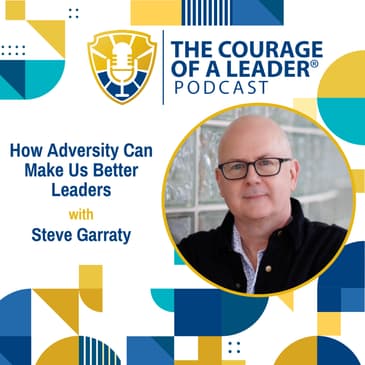
Steve Garraty shares how a cancer diagnosis at age 18 became one of the most defining experiences of his life. Through a season marked by uncertainty, loss, and physical hardship, he discovered the power of perspective, resilience, and gratitude. Steve reflects on how adversity can shape us, not by avoiding difficult emotions, but by choosing how we respond and what we learn along the way.
In our conversation, Steve offers practical insights for navigating challenges with courage and intention. He explores the importance of leaning on support systems, moving beyond a victim mindset, and finding meaning in life's hardest moments. We also discuss how these lessons have influenced the way he leads others, helping him approach leadership with greater empathy, patience, and appreciation. His story reminds us that while adversity is unavoidable, it can become a powerful catalyst for growth, perspective, and purposeful leadership.
Key Takeaways:
- Reframe difficult experiences to build resilience and long-term growth.
- Crest a support system and lean on others, even when people are disappearing from your life.
- Acknowledge hardship without becoming trapped by it.
- Authentically practice gratitude and transform the way you lead others.
- Make past struggles a source of confidence and strength for future challenges.
Resources
The Inspire Your Team to Greatness assessment (the Courage Assessment) - In less than 10 minutes, find out where you’re empowering and inadvertently kills productivity, and get a custom report that will tell you step by step what you need to have your team get more done. Get it here: https://courageofaleader.com/inspireyourteam/
You don't need to have all the answers to lead well. Get your copy of the Clarity Kit for just $17 to learn the five practices to bring more clarity, confidence and courage into your leadership - https://courageofaleader.com/the-clarity-kit/
Get your copy of Steve’s book, Greatfruit: How Cancer Led to Living a More Fruitful Life - https://a.co/d/0bG6NVcZ
About the Guest:
Steve Garraty is a cancer survivor, husband, and father of two beautiful children he was told he would unlikely ever have due to chemotherapy. He has a finance degree from the University of Georgia. He’s been in sales and leadership roles for thirty years and has hired, trained, and coached hundreds of people. Steve is passionate about coaching and mentoring others to achieve their goals and accomplish more than they ever imagined. His experience battling cancer led to him being a better parent and leader with a new perspective to live a better, more fruitful, and wonderful life.
About the Host:
Amy L. Riley is an internationally renowned speaker, author and consultant. She has over 2 decades of experience developing leaders at all levels. Her clients include Cisco Systems, Deloitte and Barclays.
As a trusted leadership coach and consultant, Amy has worked with hundreds of leaders one-on-one, and thousands more as part of a group, to fully step into their leadership, create amazing teams and achieve extraordinary results.
Amy’s most popular keynote speeches are:
- The Courage of a Leader: The Power of a Leadership Legacy
- The Courage of a Leader: Create a Competitive Advantage with Sustainable, Results-Producing Cross-System Collaboration
- The Courage of a Leader: Accelerate Trust with Your Team, Customers and Community
- The Courage of a Leader: How to Build a Happy and Successful Hybrid Team
Her new book is a #1 international best-seller and is entitled, The Courage of a Leader: How to Inspire, Engage and Get Extraordinary Results.
http://www.courageofaleader.com
https://www.linkedin.com/in/amyshoopriley
Thanks for listening!
Thanks so much for listening to our podcast! If you enjoyed this episode and think that others could benefit from listening, please share it using the social media buttons on this page.
Do you have some feedback or questions about this episode? Leave a comment in the section below!
Subscribe to the podcast
If you would like to get automatic updates of new podcast episodes, you can subscribe to the, podcast on Apple Podcasts or Stitcher. You can also subscribe in your favorite podcast app.
Leave us an Apple Podcasts review
Ratings and reviews from our listeners are extremely valuable to us and greatly appreciated. They help our podcast rank higher on Apple Podcasts, which exposes our show to more awesome listeners like you. If you have a minute, please leave an honest review on Apple Podcasts.
Mentioned in this episode:
The Inspire Your Team to Greatness Assessment (The Courage Assessment)
https://courageofaleader.com/inspireyourteam/
Paul, welcome to the Courage of a Leader podcast. This is where you hear real-life stories of top leaders achieving extraordinary results, and you get practical advice and techniques you can immediately apply for your own success. This is where you will get inspired and take bold, courageous action. I'm so glad you can join us. I'm your host, Amy Reilly. Now, are you ready to step into the full power of your leadership and achieve the results you care about most. Let's ignite the courage of a leader. Welcome, Steve, to the Courage of a Leader podcast.
Steve Garraty:Thank you for having me, Amy.
Amy Riley:Thank you. I'm excited to have this conversation, and for all the listeners to learn from your experience, we're going to talk very candidly about adversity today. It's always been part of the human experience, and I feel like there is a good deal of adversity that's going on right now. People are carrying some heavy challenges, personally, professionally, emotionally, mentally. So, the question isn't whether we will face adversity in our lives. It is who will we be and who will we become as a result of that adversity. So, today we're going to be talking about what does it look like, how can we move through hardship in a way that transforms us for the better. So, Steve, you have experienced adversity in a deeply personal and life-changing way with the news that you got at the young age of 18 that you had cancer, stage three, Hoskins, and then, of course, you had your treatment protocol, as you call it, a year of absolute hell.
Steve Garraty:Yeah,
Amy Riley:what did that year, what did that season teach you about adversity and how it can shape us rather than just simply break
Steve Garraty:us. Yeah, I guess to set the stage, Amy, that's probably the big, the first big adversity I had in my life. I mean, we moved a couple times as a family, which was tough, but for the most part I grew up with great parents, they were married, have remained married for 60 years now. I had two great siblings, so I like, I was really fortunate growing up, and the first time I really got punched in the face, so to speak, was about a month after graduation. I had this mass removed out of the side of my neck, and it ended up being cancer, and so they found it in my neck, chest, and stomach, which made it stage three, and so because it was stage three, they recommended chemotherapy. This also, I'm 58 now, so this was 40 years ago, it was almost, almost 40 year anniversary of being diagnosed coming up, but back then the treatment for side effects wasn't very good, and so I was usually throwing up by the time the drugs finished entering my body, and I would end up puking and just violently sick for about 12 hours, and I went this about every two weeks, lost my hair, lost most of my friends, because you know, at 18, who wants to hang out with a cancer patient, they were all going off to college, and
Amy Riley:sure,
Steve Garraty:living their life. Lost my girlfriend, and just ended up with a number of other physical side effects. And then mentally, I would say that was probably the toughest part, because this went on for about nine and a half, 10 months, where every two weeks I would go in and repeat this process, and it just kept getting worse and worse, so that's kind of, you know, what took place. I think at the time I had a good, a small but a good support system of really seven folks that helped me get through it. My perspective on adversity and what I went through probably morphed over time. When I first found out, again, probably any of your listeners. If you think about the worst thing you've been through, you're usually mad that it happened, and I was mad at everybody. I was mad at God. I would, a victim, why me? Why is this happening to me? A
Amy Riley:month after graduation, right? You're supposed to be looking forward, doing much different things,
Steve Garraty:100% Yeah, 100% And so you know, when I was going through it, there was nothing I appreciated about the experience. I think I was just trying to get through it, and there's a number of ways that I got through it, but I think more to your question on the adversity and how it helped me in the way that I approach adversity. Funny enough, about six months, eight months after I. Finished chemotherapy, so I finished up in the spring of what would have been my first year in college. Ended up spending that summer, my hair grew back. Got ready to go off to college at a different college than I would have gone to, because things changed during that process. Went off to the University of Georgia, which you and I talked about, and I really wanted to just forget about cancer, forget about the experience. I wanted to just go live a normal life. I didn't really tell anybody at school that I had just been through this year of hell and
Amy Riley:cancer-free. Steve, yeah,
Steve Garraty:yeah. And so that Christmas I went home, Amy, and for the first time ever I watched the movie It's a Wonderful Life, and was bawling my eyes out watching it, because it really resonated with me. For your listeners who haven't seen it, in a nutshell, it's about a guy in a small town, raising, I think, three or four kids, his wife, he's got great family, friends, everybody in the town knows him, but he's really frustrated and angry because he wants to go off and experience the world and do all these big things, and one thing leads to another. He's not able to do that, and then something happens where he's, you know, basically facing jail time for something he didn't do. And so this angel comes in, grants him his wish that he had never been born. In the second half of the movie is kind of him waking up to the blessings and all the positive things that happened in his life, that movie started getting me thinking and looking back on cancer and the adversity I went through in a different way and a different perspective, and so really how I view and how I viewed going through cancer started with my perspective changing, that was kind of phase one or step one in looking back at cancer on how can I grow from it, how can I grow from this adversity, and how can it lead towards living a better life. I'll pause there. Does that make sense?
Amy Riley:Yes, I want to ask more about it. The two things I would underscore about what you said to date, and I'm hearing like during the cancer treatment, and that journey, it was like you were just getting through, but I did hear you leaned on your support system, right, and you had friends and girlfriend that left the picture, right, but let's lean on who we do have, acknowledge and appreciate that, and then the other thing that I wrote down as you were talking is that our mindset can shift, right? So, even if we're in a moment of like hopeless, this doesn't look good, like my future's messed up, like people are leaving my life, I'm physically ill, like this is not great, not a great mindset, and that is not the mindset that you hold today. We can just know that, even if we're, you know, not in a great mental space, that doesn't mean that we won't be in the future,
Steve Garraty:correct?
Amy Riley:Okay. Perspective changing, so now you, now you're in an inquiry. How can I grow?
Steve Garraty:Yeah,
Amy Riley:because of this,
Steve Garraty:yeah, so my perspective changed, and I think I started trying to.. well, one thing I learned in going through cancer, I had done some reading on this, and had seen it firsthand with a couple relatives, is that there's a lot of studies out there that your mindset and your positive, having a positive attitude and being optimistic affects number one, affects your health, and number two, it affects your ability to fight when you do get sick, and you are fighting something like cancer. It also improves your odds and your probability of getting better. So, I learned a lot about that, and once I, once my perspective started to shift, I started looking at just, I want to make sure I have a positive mindset, and ended up going into sales, and then leadership. I found that that was huge, right? It's having a.. I've seen this a million times in sales, where the one person takes the, you know, the bad territory, and they've got a great attitude, and they do.. they do face adversity when they go in there, they've got customers frustrated, they've had multiple sales people, and there's just the salespersons facing a lot of there's not much opportunity, there's, you know, there's a lot of reasons you could get frustrated and maybe blame the company and the territory, and then you see somebody that, and a lot of people do that, and then you see somebody, though, that has that glass half bowl, and I'm going to work hard, and the grit and leverage people that can help me at the company, and they come in and turn that territory into one that everybody wants, and so I think having a positive mindset was was one that I kind of learned during cancer, and it was hard to be positive during cancer, it was hard to have a positive mindset, but I tried to. I used some visualization tools. I leaned on, you know, friends and family. I had seven people, really, that that helped me, and I leaned on my faith, but I did kind of learn that having a positive mindset was
Steve Garraty:extremely important, and so I would go jogging. Mentioned before we started here, you do a lot of running. I ran track, and so I would go through this process of being really sick one day, the next day I was feeling a little bit better, but queasy. Well, then, like, I'd go 12 days, where it's kind of living a normal life to some degree, and I could go jogging, and I could go running, and I would visualize like the chemotherapy attacking the bad cells, and so really I was trying, I was trying to have a positive mindset, which was very difficult, but once I got post cancer, I just really have tried to live my life as trying to look at, and there's days that you run into things, COVID was a tough time to be positive for all of us, but there were positive things that came out of COVID, and I really just, I went through that year of trying to, trying to focus on what positives that come out of this, and how can I leverage this to improve my life.
Amy Riley:Yes. Okay. Great. I have some follow-up questions on that, but first, I want to tell listeners a little bit more about you, Steve. So, as you've been hearing, Steve Garrity is a cancer survivor, a husband and father of two beautiful children, he was told he would unlikely never have due to the chemotherapy that he went through. He has a finance degree from the University of Georgia. Steve and I have been talking about that because my daughter just finished up her freshman year there, pursuing the same degree. Steve has been in sales and leadership roles for 30 years, and has hired, trained, and coached hundreds of people. He's passionate about coaching and mentoring others to achieve their goals and accomplish more than they ever imagined. His experience battling cancer led him to being a better parent and leader with a new perspective to live a better, more fruitful, and wonderful life. Steve is also the author of the book Great Fruit: How Cancer Led to Living a More Fruitful Life, and we will make sure that the link to that book is in the show notes. Thanks again for sharing your story and what you learned from your experience with us, Steve.
Steve Garraty:Thanks, Amy. I appreciate that.
Amy Riley:So, first of all, I'm totally with you that our mental, physical, emotional health is all tied together, integrated, and I think having that intention of having a positive mindset gets us on the lookout for right, what's positive, what is going on right? Like, how can I keep looking for that yet? I also want to ask the question, because we don't want to, like, wax positive when it's not genuine. How do we authentically get there? What can you tell us from from your experience, right, so we don't just feel like, oh, I'm trying to pretend like I'm in a good space, right? Like, how do we authentic, authentically get to the positive mindset?
Steve Garraty:Yeah, that's a great question. You know, I think what has helped me over the years since I went through cancer is I always try to think, I always try to compare what I'm going through today to the worst thing I've ever been through, which thankfully in my life so far there's been nothing worse than cancer. There's probably been a couple things close to that. That's number one. And then during that year, Amy, my book actually starts - the first chapter is my rock bottom - and so cancer was bad, but there was a moment, or a day specifically, where I went in for treatment, and it was rock bottom. I wanted to quit. I didn't think I could go on anymore. I broke down. I basically told my mom I couldn't go in. We were at the doctor's office in the parking garage, and I basically said I can't do this, and so I asked her to go inside and give me some time. It ended up being about an hour that I sat in the parking garage crying, and, but that was rock bottom. And I, it's often that I think back to my experience. There's probably not a day that goes by that I don't think about my experience with cancer, but that day in the parking garage is something I use when I'm going through something tough, to say to your point, not to ignore that I'm going through something tough right now, or deny it,
Steve Garraty:but
Steve Garraty:I try to anchor on that fact that hey, and this is a little bit of self-talk, you've been through worse, like you sat in that parking garage and you thought about kind of giving up, right, and you thought
Amy Riley:continuing with treatment that was designed to save your life,
Steve Garraty:yeah, and you know, I'm sure there'll be something worse than that day that'll come along before, before my time on this earth ends, but for most things, and most days, when I'm going through something bad, or months, or like whatever it is I'm going through, anchoring back on that helps again, going back to perspective, it gives me a little perspective that hey, you can get through this, you've been through worse, you showed grit and determination, and you got through something pretty horrific, and it's always just a good reminder of how I got through that, and it gives me hope and optimism that I'm going to get. Through whatever I'm facing currently, I don't know that that works for everybody, but it's.. it's been something that I've.. I always go back to my worst day that I've ever faced, and I use it to give me perspective and hope and encouragement that I can get through where I'm facing.
Amy Riley:Yeah, I think it gives everybody a place to look. Right? I think we've all had different moments that were perspective setting for us, right. My daughter was just stressed out about finals and what was going on, and she found out that someone, another student, had left campus and gotten in a bad car accident, right.
Unknown:Yeah,
Amy Riley:and her sister and her grandmother were like all in the car together, everybody's going to be fine, but it was scary, and she's like, "Oh, Ryan, I was feeling so stressed about my finals, right? Or there's something, right? I mean, we don't have to look too far in the news or somewhere to see something that can help us set our perspective on the day that we're having, and let's like, how do we want to show up for ourselves and for the people around us as we're experiencing whatever we're experiencing, I also wrote down as you were talking, because you talked about rock bottom, right? If we've ever put ourselves on a learning journey, I'll sign up for significant endurance events, and I know, like, when I do that, I'm setting myself on a journey that's going to have breakdowns, it's going to have bad days and breakthroughs, I'm going to break down some muscles, quite literally, and build them back up, but right, like, that's a journey, and how can we make sure that breakdowns do lead to breakthroughs. It has a lot to do with our perspective in those moments, and you can also go for might not be a runner, but how do we move right? Like, how do we get some dopamine going in our system?
Steve Garraty:Yeah, I like how you said that. The breakdowns leading to breakthroughs. I think Charles Swindles has a famous quote, Amy, of, you know, life is 10% what happens to us and 90% how we respond, and I think that's my favorite quote. I've got that in something one of my backpack that I carry with me when I'm traveling for business. I remind myself that too, that you said this at the beginning of the call in a different way, but like bad things, it's not a question of if something bad is going to happen in our life, it's a question of when we all go through, may not be cancer, it may come in some other form, divorce, job loss, whatever, car wreck, like you just mentioned, but we are going to face things, and so it's how do we respond to that? I also always look at it from that 10% is something that happens to us that often we don't control, sometimes we do, but our reaction to it and what we take from it, we always control that.
Amy Riley:It's really easy to feel a victim, right? If there's a disease diagnosis, if there's just like supply chain issues going on. There's a disruption in the marketplace, and all of a sudden all of our customers are calling up and screaming at us, right? Because product's not getting to them, or we're having to pass along, costs increase, right? Team members are getting let go. There's things that we can very easily say, like, I did not choose for this to happen, right. And now I'm dealing with chaos in my days. Yeah, very easy to feel like it's happening to us, right. We are victims, and I know you're often asking the question, like, How is this happening for me instead of to me. How would you encourage folks to shift, even in some moments, away from that victim mentality?
Steve Garraty:I think one, Amy, it's okay to be a victim initially, right? When something happens, and something happens, like what you described to the friend of your daughter, it's okay to say this sucks, and take a moment to feel bad about it, feel upset about it.
Amy Riley:Get your empathy from your support group, right? Get some people like validate it, means so much to hear, like that's hard.
Steve Garraty:Yeah,
Amy Riley:it really sucks.
Steve Garraty:Yeah, but some people get stuck there, right. That's the difference. How do you get out of it? And I think I think you have to pretty quickly kind of start to say, okay, what am I going to, you know, let's say it's you lose your job, right? You're not going to go home excited, and what's.. but spend a few days, but then I think it's time to start focusing on what's next, like where do I go from
Amy Riley:here,
Steve Garraty:and then. and that's updating your resume, that's reaching out to recruiters, but taking some, you used the word action earlier, it's taking action on how do I fix this, how do I, what's the next step, and then I think you can start to look at like what's the positive that came out of that, like maybe something better is going to come with. The next job you can ask yourself, I'm using job as an example, but what did you not like about the last job that maybe you can kind of fix in the next one, and so just trying to look at that glass half full of and take on a perspective of this could lead to something better, but I do think it's okay to be a victim for a short period of time, he is not getting, getting stuck in that mode, which some people do.
Amy Riley:Yeah, actually, actually, like those. Here's how I wrote it over here: be the victim, right? Feel the feelings, because we want to authentically acknowledge and accept, like, what's happened, right? We kind of have to deal with the reality of it, and then I heard you say shift your focus forward.
Steve Garraty:Yes,
Amy Riley:what am I going to do? What's next, right? And then I think maybe then the next, like, once we get in action, then maybe we get to a place where we could authentically ask ourselves, okay, what are the positive takeaways
Steve Garraty:from, yeah, embrace a perspective of, you know, this could lead to something better, right? Like,
Amy Riley:yeah, back
Steve Garraty:glass half full mindset. Um, Amy, it's funny, my wife obviously read the book, and sometimes I'll, something bad will happen, not terrible, but something bad will happen, or I'm having a bad day, and I'll gripe about it, and she throws the book back in my face. She'll be like, "Well, that's not the, you know, and I'm like, "Let me just let me vent
Amy Riley:to the author of Grapefruit.
Steve Garraty:Yeah, I'll be like, "Let me vent for a minute. I just sat in three hours of traffic, I can vent for a minute, I'll move on, and then I'll, I'll be positive about it. Yeah, I think it is okay to be a victim for a moment, and then, like you said, then you got to take action to fix it, and then try to embrace a perspective that this could lead to something better, and having a glass half full mindset.
Amy Riley:I like it. How has your experience, that experience, changed the way that you choose and do lead today.
Steve Garraty:There's a few things that came out of my first. It was the perspective, which I walked it through. After that, it was the couple things that come to mind are gratitude, and there was just the most grateful I've ever been in my life, probably even above marriage and the birth of my two children. I have a grandchild now, so those were all in my top five, but the day the oncologist walked in and said we got all the cancer and you're done, like that was just nothing compares to that one moment, but so I try to live a life with gratitude, and that's that includes being a leader at work and managing folks, but it also includes being a father and a husband, and the way that I treat friendships, so gratitude and appreciation, and then trying to pay it forward are kind of the ways that I try to live my life a little bit differently. To give you an example of that, like as a leader, a lot of times you're managing people, sometimes somebody's not a good fit for the job, and you've got to manage them out. I try to do that with a high level of appreciation, and I try to do it with a level of paying it forward, meaning there's been many times where I've helped them if they, if they'll take it with their resume, or putting them in touch with some recruiters, and maybe this role didn't work out for them, or it wasn't a good fit, but I go out of the way a lot of times to, because I believe I've got a high degree of empathy, and I try to manage and lead that way, so it's probably an example of how my experience with cancer, and the way I try to live my life, and how I try to incorporate that into leadership,
Amy Riley:I like that, Steve, and hearing you say that, it might be really easy for a listener to be like, oh yeah, yeah, yeah, I get that, I could do that, but I mean, really, if a an employee was not a good fit for the job, right, they might have not been performing well for a while, right, there might have been tension and issues, right, it might feel like, oh, this has been my problem performer for a while, so I'm just trying to make this real for folks, right? That even in those situations we can look at appreciate efforts made, right, and pay it forward. How do we send this person along and give them the support that they need, so that they do find that great fit job, because I'm a believer there's the great fit job in place for everyone to bring their strengths and their passion.
Steve Garraty:Yeah, 100% Yeah, so I think that's one way that I, I try to incorporate that in the way I lead.
Amy Riley:People will say, oh, practice gratitude. Yeah, I'm grateful for the things in my life. Any practical guidance for bringing a mindset, or even what those practices might be in someone's day to day?
Steve Garraty:Yeah, I would say I learned this in leadership along. Time ago, and I think it kind of ties into being grateful, recognizing small achievements. Right, again, I'm in sales, Amy, and so we're ultimately measured by did you hit your quota, how much revenue did you bring in the door,
Amy Riley:buying contracts, right? Yeah,
Steve Garraty:yeah, when somebody's new, I think just being grateful for hard work, expressing as a manager, expressing that I appreciate the effort, appreciate progress. So, like, if you're coaching somebody, their performance may not jump up right away, but if they're taking small efforts and incorporating the feedback or guidance that you gave them, I think recognizing that, thanking them, appreciating, like, people are going to respond well to that, and so I've just always tried to - I shouldn't say always - the first year or so, I probably wasn't great at that, but I had a really good mentor who kind of taught me that, and so, yeah, I think just trying to express that gratitude and appreciation for even baby steps, not just the end result.
Amy Riley:I like that, and those are always capabilities that we can continue to grow. You had me think I was leading a session yesterday on leaders using a coaching approach, and we use a self-assessment for that program, and I was really making the point yesterday, like, keep visiting the self-assessment, right? It's got all these different behaviors that one using a coaching approach would demonstrate, and it can be really easy to see the gap in front of us. Oh, I missed that opportunity to coach, right? I moved into telling, but using that as a gratitude tool for ourselves, right, giving ourselves credit for every moment that we asked a coaching question rather than directed someone each time we actively listened rather than multitasking or whatever, and if we practice that self appreciation, that self gratitude, it makes it easier to point it out.
Steve Garraty:Yeah, yeah, 100% One other thing I would add that I try to do all the time, you mentioned a lot right there on coaching. When I do give constructive feedback to somebody, and I'll say this to employees all the time, is that I always want it to come. I always want it to be received from me as Steve's trying to help me. He truly is trying to help me achieve my goals, be successful, and so I always, I always remind myself that when I'm about to coach somebody, I want it to be received as that versus from the right spirit and the right, you know, coming from the right place in my heart that I'm trying to help them,
Amy Riley:grounding yourself in that positive intention, and then we can also share that positive intention with the other person.
Steve Garraty:Yeah, definitely.
Amy Riley:I have one final question for you, Steve. What advice would you give leaders who are supporting a team member or the team overall through a hardship, through adversity of some kind?
Steve Garraty:Yeah, I would say before you even get to that, I would say realize sometimes that somebody might be underperforming because of something going on in their personal life or something they're experiencing. That hit me a lot when I was going through cancer, is that outside of my immediate circle, a lot of people didn't know that. I mean, they might have seen me bald and maybe assume, but I could have just been shaving my head, but it did hit me that there were people I met during that year that I ran across that had no idea what I was going through, and so I always try to keep that in mind, number one, especially if you have somebody who's performed consistently in the past and that performance has dropped, or there it's off, or the person's behavior is off, really trying to see if you can, and people aren't always going to tell you what they're going through, but I'd be cognizant of that, and then I think once they are going through something, trying to be patient and understanding that can be difficult in today's world, where everything's moving fast and expectations are high, and so if I've got
Amy Riley:organizations are lean, yeah,
Steve Garraty:I mean, my quota doesn't change as a manager, right? I've still got to perform for the business, whether somebody's out or not. But you know, I think understanding that, trying to support them as much as possible, is very important, and I think people usually, you'll have somebody a lot more loyal when they're, when they get through that, usually. So that's how I try to look at
Amy Riley:it.
Steve Garraty:Yeah, you
Steve Garraty:know, don't keep, don't keep score, right? Like, you might own this person and stick, stick by them, and do a lot for them, and they may be done with their situation, and leave the company, or whatever, but try not to keep score, and do what's best, and do what's right, and it'll come back to you eventually.
Amy Riley:I love that. Don't keep score. Remember, you've got no idea what someone's going through, and actually, like the same news, if the whole team is going through a downsizing or significant disruption, or some right, like the same news impacts people in different ways. It can be way more on. Settling for one person than another, don't keep that score when we put our head on the pillow at the end of the day, right? We showed up as the leader that we want to be.
Steve Garraty:Yeah, very true. I found a lot of times we have to diagnose what's going on, right? If somebody's not performing, is it is it effort, is it attitude, is it ability like where are they falling short, and I think a lot of times, if it is something going on personally, when you spend time with them, or you like in sales, I go out in the field with somebody, they may be great, they may show the ability, and so then is it what is it, it might be something else that's going on, and that affects effort towards the job, or the time they can spend towards the job, and so I think really trying to diagnose that and get to the root of the problem allows you to then figure out what to do right,
Amy Riley:and that requires patience, yeah, yeah,
Steve Garraty:and empathy, and being able to diagnose what's going on.
Amy Riley:Absolutely,
Steve Garraty:yeah.
Amy Riley:Steve, thank you for your time today. Thank you for sharing openly and candidly with the courage of a leader audience.
Steve Garraty:Thanks, Amy. Thanks for having me. It was a pleasure.
Amy Riley:Yeah, absolutely. Thank you. Thank you for listening to the Courage of a Leader podcast. If you'd like to further explore this episode's topic, please reach out to me through the Courage of a Leader website at www dot courageof aleader.com I'd love to hear from you. Please take the time to leave a review on iTunes, that helps us expand our reach and get more people fully stepping into their leadership potential. Until next time, be bold and be brave, because you've got the courage of a leader,
Unknown:you.