
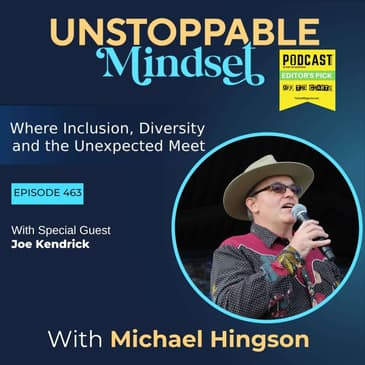
What can live radio offer that an algorithm never will? I talk with WNCW radio host and Southern Songs and Stories creator Joe Kendrick about music discovery, public radio, human connection, and the changing music industry. Joe shares how childhood mixtapes led to more than 30 years at WNCW, where live DJs help listeners find new artists while reflecting the communities they serve. We also explore emergency broadcasting, vinyl records, streaming royalties, podcasting, bluegrass history, and why supporting artists and public media still matters. I believe you will enjoy Joe’s stories and his clear reminder that technology can offer endless choice, but it cannot replace a trusted human voice.
Highlights:
01:23 – How a small-town childhood shaped Joe’s curiosity.
04:29 – How radio and mixtapes sparked his love of music.
17:49 – Why live radio creates a stronger human connection.
22:28 – How public radio supports people during crises.
31:16 – Why public radio still matters to communities.
41:38 – How streaming affects artists and music value.
About the Guest:
Fascinated by radio at an early age, I was having “driveway” moments by grade school, or at least moments when I wished my parents would let the song play out before cutting off the engine. My father’s turntable, with its enchanting cue lamp shining on the platter’s pattern of dots indicating whether it was at the correct speed, was like a lighthouse beckoning me to a land filled with yet-to-be discovered, electrified bliss. I was also enamored of stars on television, including sportscasters and newscasters, taking on their persona to call an imagined NASCAR race on a portable cassette recorder for example, and imitating Robin Williams in front of my fourth-grade class.
By middle school, I got my first jam box and was off to the races with mix tapes, recording songs straight off the radio, my favorite study aid. I was keenly interested in not only the music on the radio but also how the DJs presented it, and would call in to make requests or to ask why they kept playing the Guns N’ Roses songs I did not like. I started collecting music, primarily though tape clubs like Columbia House. I read Rolling Stone and wrote to the editor to disagree with a David Fricke review of Jimmy Page’s album Outrider.
By college, I was determined to become a DJ, the coolest job on the planet. At UNC-Chapel Hill, WXYC beckoned, and after trying and failing to get on staff (the screening process was quite challenging, filled with questions about music I had never heard of on commercial radio or in print), I landed there in my junior year. There, my musical horizons expanded beyond where I could have imagined when transfixed by that vintage Technics turntable spinning Queen’s News of the World a few years before.
There was more, of course, like college basketball (asking Dean Smith a question about how he coached his teams to shoot free throws so well at a student forum was likely my first brush with greatness), and a budding instinct to make sense of the world via the written word. Journalism school (specifically advertising) and hand-written album reviews at WXYC were early outlets. During and after college, there was also the occasional short story or essay, along with a few features on other passions like mountain biking, and more music reviews to write for zines and entertainment weeklies.
Writing and radio remained an avocation for the next fifteen years, with a notable stretch of ten years as a franchise owner in the landscape lighting business dominating my resume before selling that and becoming full time morning host at public radio WNCW in 2006, where I had been volunteering following college before working part-time in the early 2000s. In the mid-1990s, I moved into the old family homestead, which my great-grandparents begun in the 1880s. I got married and had kids, and learned about being a husband and father, as well as how to take up the mantle of family legacy. Two ancestors who became more and more important in this legacy are Earl Scruggs (see: banjo) and W.J. Cash, author of The Mind of the South.
Fast forward to 2014, and the concept for Southern Songs and Stories had taken firm root, after previous music-oriented endeavors Lingua Musica and What It Is had run their courses. As a video documentary series before lack of funds cut it short at two episodes, it became obvious that my ambitions outstripped my means, and making it a podcast was the way to go. DIY, y’all.
Southern Songs and Stories is primarily a music artist-focused series, with interviews, music excerpts, and commentary. The concept of elision is my north star: I edit conversations to fit for length (typically a half hour each episode, currently) and for the overarching statements that each episode should make. Marrying concepts and focusing on the intersection of ideas is typically my goal, along with the foundational work of highlighting engaging conversations and music. My hope is to bring in casual fans and die-hards alike: whether you know anything about artist X, Y or Z, I aim to pull you into their world within the first three minutes and keep you engaged there for the remainder of each podcast.
I also love working with a chain saw and making campfires, but that conversation can wait until we might connect later on.
Ways to connect with Joe**:**
WNCW https://www.wncw.org/people/joe-kendrick-1
Southern Songs and Stories: https://www.southernsongsandstories.com/
Because WNCW is an NPR station, I have gotten involved with many projects there. For example, I was featured for a week during The World Café’s “Sense Of Place” series when they came to Asheville, NC in 2016. I produced videos in their Night Owl series which they posted on their Facebook for a while. This is the most recent example, when I was on their podcast New Music Friday: https://www.npr.org/2025/07/25/1256217309/new-music-friday-july-25-2025
Social links:
https://substack.com/@joekendrick – I post scripts and transcripts of the podcast here
https://www.facebook.com/joseph.kendrick -- I mostly remain quiet here so as not to work for free
https://www.instagram.com/southstories/ -- likewise, I post infrequently
https://www.youtube.com/@JoeKendrickNC – all my podcasts go here, plus very many other videos I make
About the Host:
Michael Hingson is a New York Times best-selling author, international lecturer, and Chief Vision Officer for accessiBe. Michael, blind since birth, survived the 9/11 attacks with the help of his guide dog Roselle. This story is the subject of his best-selling book, Thunder Dog.
Michael gives over 100 presentations around the world each year speaking to influential groups such as Exxon Mobile, AT\&T, Federal Express, Scripps College, Rutgers University, Children’s Hospital, and the American Red Cross just to name a few. He is Ambassador for the National Braille Literacy Campaign for the National Federation of the Blind and also serves as Ambassador for the American Humane Association’s 2012 Hero Dog Awards.
https://www.facebook.com/michael.hingson.author.speaker/
https://www.youtube.com/user/mhingson
https://www.linkedin.com/in/michaelhingson/
Thanks for listening!
Thanks so much for listening to our podcast! If you enjoyed this episode and think that others could benefit from listening, please share it using the social media buttons on this page. Do you have some feedback or questions about this episode? Leave a comment in the section below!
Subscribe to the podcast
If you would like to get automatic updates of new podcast episodes, you can subscribe to the podcast on Apple Podcasts or Stitcher. You can subscribe in your favorite podcast app. You can also support our podcast through our tip jar https://tips.pinecast.com/jar/unstoppable-mindset .
Leave us an Apple Podcasts review
Ratings and reviews from our listeners are extremely valuable to us and greatly appreciated. They help our podcast rank higher on Apple Podcasts, which exposes our show to more awesome listeners like you. If you have a minute, please leave an honest review on Apple Podcasts.
Transcription Notes: