
What happens when you finally stop carrying the weight of your past?
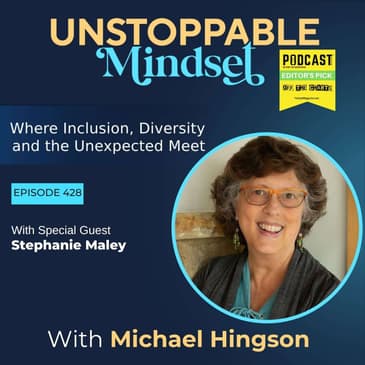
In this conversation, I sit down with Stephanie Maley, a pediatric nurse turned author, who shares her journey through childhood trauma, healing, and writing her memoir. You will hear how she moved through abuse, anger, and burnout, and how the writing process became a path to freedom. Stephanie opens up about motherhood, resilience, and finding purpose through storytelling and advocacy. I believe you will find this episode powerful if you are working through your own challenges or searching for a way forward.
Highlights:
00:10 Learn how Stephanie’s early life shaped her resilience and mindset03:44 Discover why she chose pediatric nursing and what drew her to children06:15 Hear how a traumatic first nursing experience nearly made her quit20:50 Learn what led her to finally write and share her story25:10 Understand how writing became a powerful tool for healing52:38 Discover how COVID gave her the space to step into creativity and purpose Bottom of Form
About the Guest:
A native of Chattanooga, Stephanie L. Maley grew up surrounded by mountains, rivers, and lakes. She developed a love of nature and water there. After obtaining her BSN from the University of Tennessee at Chattanooga, she was a pediatric nurse. She met her husband, Mike, who was a pediatric resident, at T.C. Thompson Children’s Hospital. They met, dated, and married within five months. After he finished his residency, they moved to a rural town in Northeast Georgia and bought a small lake house.
They raised their two sons there and Stephanie home educated them. During that time, she helped to start a YMCA in the area and volunteered for almost fifteen years. After attending photography school at North Georgia Technical College, she became a professional photographer and started her photography business in 2010 (www.lov2shoot.com). Stephanie was also an adjunct professor of photography.
Since Stephanie was a young woman, she wanted to write a book. In 2018, the #metoo movement spoke to her. Stephanie had been sexually abused and groomed by two men in her elementary and teenage years. When Covid-19 hit, time allowed her to write her memoir, No Longer That Girl: Retracing the Scars of the Past and Present. It was published November 4, 2025, by She Writes Press. Simon and Schuster are the distributor. Her book can be found at Simon & Schuster, Bookshop.org, Barnes and Noble, and anywhere books are sold online. You can also order directly on her website (stephmaley.com).
Stephanie and Mike live in their dream home on Lake Hartwell. In the summer, she can be found swimming, driving her boat, paddleboarding, and kayaking. She loves to take walks year-round and has seen foxes, a bobcat, and lots of deer.
Ways to connect with Stephanie:
Website www.stephmaley.com
Instagram @lov2write
FB https://www.facebook.com/profile.php?id=61565579387255
LinkedIn https://www.linkedin.com/in/stephswritings/
Threads https://www.threads.com/@stephlmaley
About the Host:
Michael Hingson is a New York Times best-selling author, international lecturer, and Chief Vision Officer for accessiBe. Michael, blind since birth, survived the 9/11 attacks with the help of his guide dog Roselle. This story is the subject of his best-selling book, Thunder Dog.
Michael gives over 100 presentations around the world each year speaking to influential groups such as Exxon Mobile, AT\&T, Federal Express, Scripps College, Rutgers University, Children’s Hospital, and the American Red Cross just to name a few. He is Ambassador for the National Braille Literacy Campaign for the National Federation of the Blind and also serves as Ambassador for the American Humane Association’s 2012 Hero Dog Awards.
https://www.facebook.com/michael.hingson.author.speaker/
https://www.youtube.com/user/mhingson
https://www.linkedin.com/in/michaelhingson/
accessiBe Links
https://www.youtube.com/c/accessiBe
https://www.linkedin.com/company/accessibe/mycompany/
https://www.facebook.com/accessibe/
Thanks for listening!
Thanks so much for listening to our podcast! If you enjoyed this episode and think that others could benefit from listening, please share it using the social media buttons on this page. Do you have some feedback or questions about this episode? Leave a comment in the section below!
Subscribe to the podcast
If you would like to get automatic updates of new podcast episodes, you can subscribe to the podcast on Apple Podcasts or Stitcher. You can subscribe in your favorite podcast app. You can also support our podcast through our tip jar https://tips.pinecast.com/jar/unstoppable-mindset .
Leave us an Apple Podcasts review
Ratings and reviews from our listeners are extremely valuable to us and greatly appreciated. They help our podcast rank higher on Apple Podcasts, which exposes our show to more awesome listeners like you. If you have a minute, please leave an honest review on Apple Podcasts.
Transcription Notes:
Michael Hingson 00:04
What if the biggest thing holding you back isn't what's in front of you, but rather what you believe Welcome to unstoppable mindset where inclusion, diversity and the unexpected meet. I'm your host. Michael hingson, speaker, author and advocate for inclusion and possibilities. This podcast explores how the beliefs we carry shape the way we live, lead and connect with others. Each week, I talk with people who challenge assumptions, face adversity head on and show what's possible when we choose curiosity over fear, together, we focus on mindset resilience and the small shifts that lead to meaningful change. Let's get started. Well, Greetings, everyone. We're glad you're with us again. You are listening to, if you didn't notice on your screen or whatever unstoppable mindset. We're glad you're with us. Another podcast episode today, and today, we're getting the opportunity to converse with Stephanie Maley, who lives in Georgia. She's had kind of an interesting career in a variety of different ways, but among other things, and one of the things that attracted me to invite her to come on the podcast is She's a relatively new author. Book was published just a few months ago, and we will, we will talk about that, I am sure, along with all the other things that that she's doing, and she has introduced us to a couple of other people who we hope will be on the podcast fairly soon. One is her goddaughter, who is in the Paralympics, and is going to be in the Paralympics here in the California area in a couple of years, because I don't think that all the water in the California area will evaporate by then, so she's a swimmer, among other things. Yeah, I know. Isn't that fun anyway. Stephanie, welcome to unstoppable mindset. We're really glad you're here.
Stephanie Maley 02:11
Oh gosh, thank you for having me. I I've read your books, and you know since we first talked, and I'm just really excited to be here. You're well,
Michael Hingson 02:25
we're excited to have you. Well, thank you. Well, let's start, as I love to do, tell us kind of about the early Stephanie, growing up, and all that around Chattanooga in your case, so you never had dreams of going back to Chattanooga, huh? You're fine in Georgia.
Stephanie Maley 02:43
Yeah, we really are. We okay? So, so I'll start at the beginning. So, yeah, was born in Chattanooga, Tennessee, and my birth father abandoned us right away. I was three months old, and my brother was two, and my daughter, my dad had just finished his residency, and so unfortunately, he had an affair, and he took her from radiology, and then they went on up to Sioux Falls, South Dakota. And so my mom had two children. My brother was two years older, and was a two year old, and I was three months old, and then eventually my mom remarried, and I guess the significant time of childhood my my stepfather raised us until I was about 15, and then they got divorced, and I played sports. I had a lot of anger and and I had sexual abuse in second grade, and then I had two men who groomed me and my teenage years. So I had a lot of anger, and I applied that to sports. I played fast pitch softball, and I was a catcher for probably 13 years, and then I played volleyball and basketball at school, so yeah, and then I went into I wanted to be a doctor, not probably full heartedly, and I didn't get into The college that I wanted to in Suwannee, Tennessee, and so I went into nursing school at University of Tennessee at Chattanooga and became a pediatric nurse in the hospital.
Michael Hingson 04:32
Now, why Pediatric Nursing?
Stephanie Maley 04:34
Specifically, I really love children. Always I just, I just love kids, and as a matter of fact, I almost didn't even continue because as a graduate nurse, I ended up being a camp nurse up in Suwannee, about an hour away from Chattanooga, and I had it. Everything go wrong. I mean, I thought it was going to get to study from my boards play with kids, it looked good on the resume. And unfortunately, like I said, everything went wrong, even to a death of a 12 year old. And I was responsible for, you know, everybody's health and but I had to hospital a child the first week I had everything from a torn cornea to dog bites to burns it, you know, two. I had to get two off of the campus for surgery. One had a grand mal seizure for the first time, and another one had an attendance that was about to rupture, and I got them off. So it was a very weird experience. And after the child who died was on a hike, and there was a waterfall, and he was at the back of the group, and ended up climbing up, barefooted, up this like embankment, and then he slipped and fell 60 feet. And I had three there were three counselors there, and one was a paramedic, and another one was a an EMT. And then I had sent them with kits, first aid kits, because this is back before cell phones or anything like that, and it was just horrible. And he had his brain was like an egg that had been broken. Part, just terrible. And I thought, good grief. I thought this was going to be easy. Would study, you know, and then go into nursing. And so I kind of started off a very rough way into my practice.
Michael Hingson 06:50
Talk about baptism by fire, huh? Yeah, definitely. So what made you decide to stick with it? Because you obviously did, because you became a nurse, a pediatric nurse. I did.
Stephanie Maley 07:04
I well. One of one of my instructors had really schooled me on, let's, let's get you published when you do this camp nursing. So research anything you can, and I want you to get published. So she was very aware of where I was, and after the accident, she recognized that was my camp, and so she called me at camp, and I was just a blubbering mess. I mean, we had Grief counselors were flown in, the bishops, I'm an Episcopalian. Bishops came to be there and this whole thing. And she calls and she says, Listen, I heard that was your camp, and that that child who died, and I want you to get on the horse, and I've got you a job. And this infant is really special. She's having her second liver transplant, and she's 12 months old, and she's in Pittsburgh, but she's going to be taken care of in Chattanooga. And so we want you, instead of keeping her intensive care unit, we're going to single nurse her in a room, you know, until she's able to go home, because she has an eight year old's liver in her 12 month old body, which means it's not covered. You know, her skin hasn't covered. It's gonna be a lot of wound care. She has a trach and, you know, blah, blah, blah. And, I mean, I was just crying the whole conversation, like, No way, I can't do that. I can't do that, you know, so I did, and I think I had those people who really supported me to do that, and the parents were fantastic, and I ended up working for about five and a half years there, and then my husband and I met and married and then moved because he had an agreement with his medical school at Mercer to work in a rural area for four or five years, and to where we live reminds me of Chattanooga. It has mountains, rivers, lakes, you know, but it's very small. So I did stick with it, but then I did burn out. I ended up being with a lot of children who had cystic fibrosis, and they wanted me with them when they died and so. So it was a candle that burned out pretty quickly, within about six years, I I just knew I was done.
Michael Hingson 09:44
So what did you do after that?
Stephanie Maley 09:47
Well, it turns out I got pregnant. All right, that's a start. Yes, I was actually working as a pediatric nurse. It was my husband's a pediatrician and. And we have a hospital where we live. But I didn't want to be known as Mrs. Dr maylie. And so I wanted to, I started working about 45 miles away, and it was a great experience, I have to say that. But I when I got pregnant, getting up at 430 just getting down there by six or 630 I was exhausted, so So then I became a full time mom. So, yeah, go ahead.
Michael Hingson 10:34
What did you learn from all your nursing and so on with all the trauma and other things that were going on in the world for you, what did you learn that helped you to be a parent?
Stephanie Maley 10:47
I think an understanding of, well, definitely an understanding of children, of healthy and non healthy children. And I think patience, there was a lot of, you know, a lot of that our older son, my first child, I knew there was some things a little different with him, and I think it, my nursing kind of prepared me in a way that I might not have been. I might have kind of like, what? What does this mean he won't participate, or he won't cooperate, you know? And when he was about three, and I think my nursing experience just gave me the patience and the fortitude to end up actually home educating him, and then even our second son.
Michael Hingson 11:40
So they they did all their their educating at home.
Stephanie Maley 11:45
Yes, they did. I because again, I saw something different about my older son, and I thought if he goes into the school system, they're not going to enjoy him. Enjoy it. And I didn't have words for it, but it just made sense. And we had about 100 families here who were home educating at the time. So we did science, Olympiad, spelling bees, geography bees, chess clubs, pe you know, all of that. And then I kept some other boys for a friend of mine when she worked once a week. So I had five boys every Thursday. So socialization wasn't an issue.
Michael Hingson 12:22
So your son was different, but how so? Or what was the real difference? Or was there one?
Stephanie Maley 12:31
Well, he just he again, was very if he was interested in the subject, he was great. But if he wasn't, it's like pulling your teeth out, and he just wouldn't, like, we had a playgroup at our church for three year olds, and that's where I first saw a difference, because again, he was just three, just the age of when you start kind of playing with other kids, and he would not do what we were trying to have the kids do like there was he was not going to do it like we had them gather nature like little things outside and put on a table, man that put paper over it and do a rubbing, and he was in the window sill with a car, and there was no way he was going To get over there, so he didn't participate or cooperate very well. Those were the two main things, but he had some other, you know, just some quirkiness, and, and, and it just made me think this was the right decision.
Michael Hingson 13:37
Was there any kind of a medical diagnosis for any of that with him, or just he was the way he was.
Stephanie Maley 13:44
He definitely was the way he was, and he we, we treated him like he had, add inattentive, not hyper, but just inattentive, you know. And my husband has that as well. So that's really what we kind of thought was going on with him well.
Michael Hingson 14:09
And you know, everyone's different anyway. And the fact is that you learned through nursing and so on, how to be patient with that, which is probably a good thing, because you may very well not have had that perception if you hadn't gone through, yeah, the nursing and the other things that you went through, yeah, yeah, which is, which is pretty important to to be able to do. How about your your other son, your younger son?
Stephanie Maley 14:37
Well, he was the other, other way around. He was a sponge. And one day, when I was well, we were having breakfast, and I had been teaching my older son at five how to read. Well, the three year old started reading and decoding the cereal box, and I'm like, what? And so I had him. In my lap, and I had some very basic books, and he he read them all. He was double learning everything, like what his brother was like. He my younger son has always loved Japan, and interestingly enough, he is engaged to a Japanese woman who lives in Osaka, and he lives in Hawaii for the past now, almost six years. So the younger son was the one speaking Japanese around the headless what?
Michael Hingson 15:32
What took him to Hawaii.
Stephanie Maley 15:36
He, you know, he really doesn't like cold weather, okay? He during covid, he decided that he wanted to go to Hawaii, see if he could make it work there, and if not, he would have a neat vacation, and then maybe he would go to California. He just really the temperature and the weather, and he's always been like that, just kind of sensitive to those kinds of things, and he made it work. I mean, it's expensive, and he had worked hard to be able to stay there, and it's just been amazing. He serves, he hikes, he has so many good friends, and he will not come back to see us. So we have to go to him, you know, but it's worth it.
Michael Hingson 16:26
So what kind of work does he do?
Stephanie Maley 16:29
He is a salesman. Now, he was, he started out in security, but he he is a salesman for a Polynesian fiber optic company that is, you know, for people's Wi Fi and that type of thing. So he believes in it, and he is really good as salesman's and he's become a manager. And I know you were a salesman, as I was reading your books, I was like, Yeah, John, Shawn, you know, my older son has that as well. You know, just those that trait. And you know, what is that person interested in? What are they missing? And how can I help? Help? Yeah, yeah. With this product,
Michael Hingson 17:14
it's interesting though, that your younger son has a fiance who doesn't live anywhere near him. She lives in Osaka. That's quite a distance. It is. This is
Stephanie Maley 17:24
the older son. And yeah, he's Oh, the older son. Yeah, they're working on their k1 visa. The plan is she's going to move to Hawaii, and when her parents get older, they'll move to Japan. Okay, so I've been learning Japanese in our Of course, oldest son has been in Japanese Japan many times, but he's trying to learn the language. She speaks English just, you know, slow, yeah,
Michael Hingson 17:55
well, it's okay, yeah. And you get to be bilingual if you work at it,
Stephanie Maley 18:01
I'm trying. I've been trying to do port. I've been learning Portuguese for five or six years. So then try legal. Well, we'll see. Yeah, if you were to have a conversation with me, I'd be like, wait a minute, slow, you know?
Michael Hingson 18:18
Yeah, I took Japanese for a year in graduate school, and enjoyed it. And one of the things that I did to practice being a ham radio operator. I had a really good communications receiver, and oftentimes tuned into radio Japan and worked to understand at least a little bit, and eventually, a fair amount of what they were saying because they were speaking in Japanese, which is what I wanted. I didn't want the English version of it, and right, it was fun. I don't remember a lot of Japanese today, and I've been to Japan twice, let's see, TWICE, TWICE. But I I've enjoyed it and and had a lot of fun doing it. So it worked out well, and thundered. Second time was thunder dog was published in Japanese, and I went over and spent two, almost three weeks with the Japanese publisher of thunder dog. So that was kind of fun.
Stephanie Maley 19:21
I read that. I was like, Oh my gosh, that's amazing. We have not been to Japan. We will end up probably we need teleporting to be a thing, yeah? Well, let's just get that out catching
Michael Hingson 19:35
rod and, well, he's not alive anymore. Get on, yeah, yeah. But get somebody to develop the transporter. That would be good.
Stephanie Maley 19:41
That would be awesome, yeah.
Michael Hingson 19:45
So, anyway, so, so where is your older son these days?
Stephanie Maley 19:52
Well, well, he's, he's the one in Hawaii. He's in Hawaii, yeah, the younger son is in Atlanta, so he's not too far from us. Okay? See, we get to spend time with he and his friends, and, you know, that's really nice. So he works at Emory, yeah, at the computer science department, kind of like, he's like, in the role of an accountant for all the professors and post grad students.
Michael Hingson 20:20
So your but your older son again, dating a woman from Osaka that's kind of long distance. It's good. We have computers that allow for better communications these days, I bet.
Stephanie Maley 20:31
Oh, it does. And they talk, you know, we have WhatsApp, and they talk, I think, every day. And he goes there as often as he can afford it. And, you know, and she and her family were just there in December visiting him. So, yeah, it's pretty cool. Very proud of them.
Michael Hingson 20:50
Good for them. That's, that's pretty cool. So how old is your older son?
Stephanie Maley 20:57
He is 32 okay, yeah, and the younger one is 30, all right.
Michael Hingson 21:03
Well, it's been a while, that's pretty cool. Well, I'm glad that that it's working out well for them. And so what do you do with your Well, I know some of what you do with yourself, so let me, let me go about it this way, you've written a book. What made you finally decide that it was time to write a book, write a memoir or whatever, right?
Stephanie Maley 21:29
Well, that's a good question. It really things started opening up for me internally when the ME TOO movement came out carry other women who'd gone through similar things or works, it just made it that shame kind of that door kind of open, saying, Okay, you might not need to carry this anymore. And so what I ended up doing is writing more of a bio, autobiography, and just telling and just getting it down. My professional editor at the time, Laura Munson, said, Listen, if you do that, you're going to write two different books. If you write the autobiography, and then you you're going to write a memoir. You know you're going to be writing two books, why don't you just do the memoir? And I said, I just have to get this down. I really need to just I've never really gotten my husband knew, but I really never shared any of it with anybody. And so I wrote it down, and then covid came, and I had just written again, the autobiography, and then covid hit, and that really changed my life. I hated it, for all the people who got sick with it, and, you know, it was terrible, and I knew people who died, but for me, it, it put me in a place where that creativity could come out, and that's when I then I had the time, and so I started the memoir and the and the reason I even did that was because I really hadn't, like tried to talk or confront my predators. And I know there was probably other women who had to go through what I went through. And I thought, well, then I'll write this memoir. I'd rather just be in my little office here in Northeast Georgia and not have to do anything else but send it out. But if I really want to reach as many people as possible, I knew I had to do it right. Instead of memoir, it was about a seven to eight year process.
Michael Hingson 23:46
Well, so what is the difference between a memoir and an autobiography?
Stephanie Maley 23:53
Well, an autobiography, you are telling, you're you're just telling everything, and you're not like showing, creating, like the movie in your head. I love the way you know it, because that's what I want. I want it to be a movie you can smell, taste, feel, you know, the whole whole thing in when you're when you're showing, but if you're telling, it's like, it's, it's very boring, and there's, you're not going to be invested in that, you know what? I mean, you're not going to be like feeling you're like, you're there, like you're with that protagonist. You just kind of be sitting back and saying, Oh, I see what that person sees. But in the showing, you're going to be right in the thick of it, as if you were at a movie.
Michael Hingson 24:45
So your book no longer that girl is more of a memoir.
Stephanie Maley 24:50
It is. It is a memo, okay? Yeah, it is. I talk about the past in a couple of chapters, and then I have a great life. I have a beautiful life today, and so I bring in the present as well, and then just talk about what it took for me to get to where I am today, you know, and and what the process was for me doesn't mean it's going to work for anybody else, but this is what this is what worked for me, and this is how I got to be where I am, and this is what happened to me as well.
Michael Hingson 25:26
So it sounds like you've definitely dealt with and and gotten rid of a lot of the anger and other things that you were facing, the demons that you were facing before.
Stephanie Maley 25:37
Yes, definitely.
Michael Hingson 25:41
So writing certainly had to be kind of cathartic and helping to make that happen, I would assume, yes, I mean, and
Stephanie Maley 25:48
you've done that yourself, I didn't expect that, but you're exactly right. I and also had a line editor who lives in tokoa and came from a magazine background, and I knew him, you know, but we were more acquaintances. So whenever he would go through my manuscript and the chapters, each chapter, when it got to be those, those really hard parts, that's when I would not write as well, you know, because I wanted to get through it, and I would tell it and not show it. And those would be the sentences he would pick up on. I'm like, Oh my gosh, do we have to and he was, he was so good about that. But it also forced me to go through, you know, that little girl talked to that little girl, you know, who's inside of me and those things happen to and be able to say, I have you, and I really want to know how you really felt, because, you know, I felt like I was to make everybody happy, you know, not hurt anybody, that kind of stuff, and especially the men who were groomed that. One of them was an Episcopal seminarian, and everybody treated him like he's the best thing. And I'm like, well, then something must be wrong with me, because everybody thinks he's this person. But this is what I get, you know, when people aren't around. So, so anyway, I forget now what the question was. I'm like, Oh, I just went off track.
Michael Hingson 27:30
No, you're, you're, you're doing fine. We were talking about getting rid of the anger and
Stephanie Maley 27:35
Right, right, right. So, yes, having to talk about that and write about it and polish it over and over and over. It's like desensitizing, you know, I mean, and then when I went to record it, that was a whole nother level, which I didn't, I just didn't even think about either. That very first day, there's a 20 something year old in the other room, I'm reading my book out loud, and I'm like, Oh my gosh, you know he's gonna know my entire life. And I didn't even think about that. And so it turns out he was great. He created a safe space. Man, it went really well, but it was another layer of healing.
Michael Hingson 28:22
What does Mike think of all this?
Stephanie Maley 28:26
He is very supportive. Oh, I'm sure he is very, very supportive. I mean, he's always been my safe space, and he has just been a rock. And when I've had, you know, again, difficult times in the process of writing. He's always there and supporting me. It's hard. He he wanted to read my book, but he's not been able to to, even though he knows it. It's just he hasn't been able to read
Michael Hingson 28:57
my book. Yeah, I know when, when Karen was alive, if we if she happened to go with me or whatever, to do a speech, she didn't want to listen to the speech. It just brought out memories and so on and things for her. So she went off and did other things, which was fine, because I, I wouldn't want her to to be in any way traumatized or hurt, and she and the other part about it is especially when I was writing, especially thunder dog with Susie Flory and so on. And just in general, she she heard a lot of it, so she knew the story, but it was just not something that she wanted to deal with directly, and that's fine, yeah.
Stephanie Maley 29:44
I mean, that's that is painful. I mean, when you got that first call off to her, you know, until you were able to talk to her again, that was a lot of trauma for her. I mean, what for you, for sure, but it was a lot of trauma for her. Her well.
Michael Hingson 30:00
And you know, she made the decision after we talked, and then she turned on the TV and found out what was really going on, because we didn't know, of course, and she made the decision she had to do some things to maybe get the house a little bit more in order, and she actually had to get up and eat and all that, because, as she decided, one or two things is going to happen, he's not going to come home, or he is, and either way, she had to be ready, because also if I weren't coming home, or even if I did, but other people showed up, she needed to be able to deal with that. But I am sure even with all that, there was a lot of trauma and a lot that she had to deal with, or chose to deal with, because it's just kind of the way it was, right.
Stephanie Maley 30:53
I mean, she loves you and Roselle, and, of course, the people you worked with, but she was, you know, not sure if you were coming home and that, yeah, and then, or if you were getting injured or, you know, it's just, it's trauma and and, yeah. So I understand her not wanting to, you know, to go through, live through that moment, or moments, you know, by going to your speeches. And the same with Mike, I totally understand sure you don't need to read it. That's okay. I told my boys, you definitely don't need to read it.
Michael Hingson 31:27
If you want to, you can,
Stephanie Maley 31:29
but you can. You're Yeah, you're adults, but I don't have expectations that you read my book.
Michael Hingson 31:34
Yeah. Well, and so the first real, major thing that happened media wise, after the World Trade Center was being interviewed on the 14th, that Friday night on Larry King Live. And then people started showing up the next day, and they kept saying, oh, there's Mike Kingston, star of stage and screen. That really upset Karen. And I understand why. I mean, you know, come on, that's, that's not what this is all about, right, right? And, you know, we got very visible. I've never really talked about it much, but there were a couple people who, on a couple of email lists called me a media whore and all that sort of stuff. And other people immediately jumped in and went, Wait a minute, people. But you know, my my belief is, if I can help get people to have a better understanding, if I can help people move on from September 11, if I can help people grow in any way, that's what I'm supposed to do. And it's worked for the last 24 years, and it's going to continue to continue to work, because it's kind of the way it is, exactly,
Stephanie Maley 32:45
well, it's again that was, you know, wasn't just even your own personal experience. I mean, it is, but it was so it was nationwide.
Michael Hingson 32:58
Well, it was, and we got lots of phone calls because people wanted to hear and in a way, be involved with the story. And so many people from the media called to come and do interviews because it was a story that they felt needed to be told. And we made the choice pretty early on. If it would help people move on from September 11, if it would help people learn more about blindness and guide dogs and the real truth about it and and so on, then it was worth doing, and that's what we did. It was a very conscious decision, but it wasn't about me or anything else, although, you know, a lot of people, I'm sure, didn't think of it that way, but it wasn't so,
Stephanie Maley 33:45
but people could latch on to that, and it's such a great story. You know what I mean? I mean so many people you know didn't make it out seeing or not seeing, but, but you did, and you don't have your sight, you have your dog, Roselle, who doesn't panic and you're as a sometimes she does well with funders, but she was cool that day, yeah,
Michael Hingson 34:09
well, and again. But the issue is that it's a team effort, and that's one of the strong messages that we try to convey everywhere we have the opportunity to do. So it's a team and it was a team effort, and it's always a team effort. And so we we work on it, and, you know, I will continue to do that, because I think it makes sense to do, and will, will live a better life because of it. I learned every time I do a speech, I feel I'm learning a fair amount, especially when it's rare now, but when people ask a question I've never thought of, yeah, that's always so much fun.
Stephanie Maley 34:52
Yeah? I mean exactly, it changes it up and it makes you really go deeper.
Michael Hingson 34:58
So have you done any speech? Working since the book was published.
Stephanie Maley 35:02
Yeah, I we, I did a, I created a panel of Georgia authors who we all also had the same publisher. She writes press, and we did a bookstore in Chattanooga together, and we were all different genres. And so, which really, to me, makes it so much more interesting. And we were like, how did we Why did we take what we had and put it into a story or into a book? So it was like telling your story and then putting it in a book, and why? So we had historical fiction. We have drama from courtroom drama is another author, and it's a series, and I've told her I read her two books. I'm like, Please tell me you have the third book written. You're working on the fourth. And she is. She's a lawyer and a judge, and then the other one is nonfiction, but where she went and taught in Africa and at the girls school, trying to get the girls from the tribe to get educated and change that cycle. And then she went back and interviewed these women after they had become adults to see what they were doing, and they were like pediatricians they were doing in, you know, NGO stuff, just incredible things with their education. So they're all different and very interesting. So we've done that. We're trying to get into other bookstores around the Atlanta area, and we're going to be doing one in agworth, Georgia. But it is not easy. I mean, you have a huge platform, so I don't know if, but it's getting these rejections. And now that my book was published in November, it's kind of like, well, that's a little old now,
Michael Hingson 37:01
which is ridiculous. It's not, but, yeah, it's
Stephanie Maley 37:04
not, but it is in that field. And I guess there's so many people writing these days that so that's what I'm working on right now, is trying to get some more places we can be on a panel. Because again, I think it's much more interesting, you know, than just me talking about mine. And so we're working on, we're definitely working on that, but we have two and then we're, we've been turned down twice for in Decatur Georgia. And I'm like, oh, gosh, why is it so hard? But it is.
Michael Hingson 37:39
Yeah, it's hard to understand sometimes, isn't it?
Stephanie Maley 37:44
Yes, and I'm hoping to volunteer at a child advocacy place here in tocoa that is constantly busy and has It's all designed for children who've been abused or raped or whatever, and they have everything set up for recording and the kit and all that very done pediatric wise. And so I'm waiting to hear from the executive director on how I can help maybe give speeches and talk. You know, give talks, and my book would be, I think, a very good resource for the parents as well. So I'm hoping to do that in addition, that's I'm just waiting to hear back.
Michael Hingson 38:29
Well, you wrote this book, but had you written, had you done any writing before? Or was this just a whole new thing? Or, what
Stephanie Maley 38:40
a good question. I I wrote journals. I started that in high school. I went to a Catholic High School, and one of the priests taught a class like just an extra class you can take as a senior. And it was on called spiritual journal, and he talked to us about keeping a journal. So I started then, and I kept a journal, and I wrote, I don't know how many books, 40 something, so that's really what I had done with my writing, and I did well in English, but that this is really the first big thing. But when that child died at camp, we still had two more weeks to go, and it was so hard, and we were flown to his funeral in Memphis and all that, but I wrote a poem right then and there to express my feelings. So I think I had, I had that potential. I just really didn't work on it. And it was, you know, but it was, it's the comfort of getting stuff out, you know. I wish I had leaned on it, maybe even more, but I did, but I did in journals, but I did, like I said. It a poem. Is what came to me after that accident and where he died.
Michael Hingson 40:04
Have you thought of maybe taking some of those journals, or taking things from those journals and maybe writing another book?
Stephanie Maley 40:12
Well, I tell you what, Mike that I want to write another memoir. It's flesh tearing. Yeah, I and I have, I did get rid of a lot of those, which I wish I hadn't. I do have still some. I'm actually waiting for the muse. I would like to write another book and write it as a fiction, probably with a strong female protagonist. I don't know if you know, I've always wanted to be like, I think I would be a stunt I could be a snack car driver. And I thought, what if I wrote about a teenager who, again, it's more of a tomboy thing, but if she wanted to be a stunt car driver? And, you know, just, I don't know why a book. I really don't know, but I'm kind of waiting for that news. But there's, I have ideas. I just need to get a coerced, you know, coalesced.
Michael Hingson 41:08
Well, if you write a book about a Stunt Car Driver, then maybe you should try it for a little while to get the experience. You know, that makes even a more interesting
Stephanie Maley 41:18
story, doesn't it? It would instead of interviewing somebody, but yeah, well, I'm really, I'm really comfortable behind the wheel. The more that you know, as long as I can move going through Atlanta with the five lanes or so is nothing. And I enjoy it. It's relaxing. And I transfer lanes depending on speed, and I've had people I've had to dodge. I remember even as a teenager, I had to do a 180 to miss somebody, and I completely forgot about it in like, within minutes. It was no big deal. So anyway, I'm very comfortable behind the wheel, and I think I could do well, but I like your idea.
Michael Hingson 42:02
I recall one time it was fairly soon after we moved to New Jersey, and we and I was working in New York, we drove into the city from our home, and we were just coming out of the tunnel, and I knew where we had to go, and I had told Karen, but I think she forgot, or maybe didn't understand. And you know, she said we're coming out of the tunnel, and I said, now you need to make a left turn here to get to where we need to go. And she had forgotten that, and suddenly the car went across three lanes of traffic to make the turn, and she was so proud of herself and the rest of her life. She talked about the fact that she went across those three lanes and not one single person honked at her. There you go, Karen. She said that just showed what kind of a good driver she was. It was so funny. Oh my
Stephanie Maley 43:09
gosh, yeah, I like to go. I go about five miles above the speed limit in town and about nine on the highway and and I don't like back roads. I feel like I can't breathe, you know, I need to be in the open highway.
Michael Hingson 43:24
Well, in this case, it was, it was like five in the afternoon, but coming out of the tunnel, the traffic was moving Okay, where we were. So she was very proud of herself. I was too i But yeah, she was a very observant person. We had some people with us in our car once, and they were they were saying, I'd never want to be in a taxi, because you could just see the taxis just driving real crazy. And Karen said something very interesting. She said to these people, look at those cabs. Do you see any dents or dings or marks on the cabs Exactly? And and they said no. And she said, There you go. They're they're very clever and careful drivers. They know what they're doing. Yes. And again, I, I think that's pretty clever, and that was pretty smart of her to have observed
Stephanie Maley 44:20
that exactly, because they do know what they're doing. They're good drivers. They just do it in a faster pace than a lot of other drivers. And I literally can't ride with someone who's going to drive below the speed limit or, like, really, but I can't do it. I just, I rather, I'll just drive it myself. Just, you know,
Michael Hingson 44:43
it could be a New York so you could be a New York, New York cab driver. That's almost like, that's almost like stunt driving.
Stephanie Maley 44:49
It is, you know, that is a good point. They are like Stunt Car drivers. I actually drove through New York City with the family, and we had this hubcap. It kept coming off. I was taking a left, and there were police, like, across the street, and there goes that hubcap. And my husband like, I'm like, get it, honey. And he lowered the window and tried to reach down to get it, but it was he didn't, but the policeman did. And I'm like, gosh, wouldn't that have been cool if my husband could have swooped that?
Michael Hingson 45:26
Gosh, yeah, it's, it's pretty funny. Well, you know, I think I tell people all the time out here, I don't see why I can't get a driver's license and drive around Victorville, because the way these people drive, I'm sure I would do just as well as they do, but exactly no one believes me. I I have driven a Tesla,
Stephanie Maley 45:53
oh, what do you think of that?
Michael Hingson 45:55
I thought was pretty interesting. You know, it was in co pilot mode, so I was able to do it, and the driver was, you know, the the owner of the car was there. But I, I'm waiting for the day that driving will be taken out of the hands of drivers, because there are too many people who just think they own the road and they don't, right.
Stephanie Maley 46:13
I agree with that. I I don't know how I will do in that kind of a car that does it for me. Because for me again, I feel like I'm a pretty good driver. So that's insulting, because I know what I'm doing, but I do hear also what you're saying, and I think it would be so helpful for not just people who are blind, but people elderly, you know, who don't need to be behind the wheel, I think so
Michael Hingson 46:42
many drivers, you know, in general, of all ages. Because the reality is, we don't pay attention to the details that we need to pay attention to anymore. And so once autonomous vehicles get to the point where they can truly do this safely, consistently all the time. I think it makes perfect sense to do we're not there yet, but the day will come when autonomous vehicles will be a lot more perfected, and it will happen. How soon remains to be seen, but it will happen, right?
Stephanie Maley 47:17
Oh, I think it will too now I want a flying I agree, yeah, I because I love, like I'm a drone pilot, especially when they first came out. I mean, I've been doing it for a long time. I'm certified, but I just think I would just, I always just want to fly, yeah, it'd be a blast.
Michael Hingson 47:40
Oh, I think it'll be cool. You know, there have been some flying cars, but it's not very common. And again, I think most people would not do it necessarily, extremely well, because they don't pay attention to the details that they need to pay attention to. But the autonomy will come and that will that will do it. It's like so many things, but it's like AI, right? Keep people complaining about AI, but it will get better. I don't believe that AI will ever replace humans. I don't think that it will be able to ever keep up with humans, but it's a tool, and it will do a lot of things, but it's not going to be the end of everything as we know it.
Stephanie Maley 48:20
Yeah, and I remember reading, you know, in your books about that in your background. And for some reason, when I was probably 1920 I was terrified of computers and what they could me. And so, you know, I'd watched, I mean, I'd read George Orwell's 1984 1984 before 1984 and, you know, Mr. Roboto, the song that came out. And I was like, that is gonna be it. So it's so funny, it's in my book that it actually got me into counseling. I was on the governing body at our church at a very young age. I was 20. It's called a vestry in the Episcopal Church, and there was discussion about our church getting a computer. During the discussions, I would remove myself, because I just it was irrational. I had this irrational feeling. Well, they had voted that we would, and one Sunday after church, I told our priest I needed to talk to him, and so he met me in his office. Well, if you get a we get a computer and it's smashed. You'll know who did it. He's like, let's sit down for a minute. He said, I think that this has this. This really doesn't have to do with the computer. I think something else going on here. I think we need to talk about therapy and so. That started my therapy was that very thing I
Michael Hingson 50:04
remember reading 1984 and actually a couple of years ago, I went to a hotel, and the room number I was assigned was 101 Do you know the significance of room 101, that was, that was where the brainwashing took place. That's where they, they took you to control you always, always loved it. And said, I'm in room 101, I can
Stephanie Maley 50:34
scream when you embrace that more than you know, yeah, you know, in photography and in which I do as well, and then in writing, you know, AI is there. And as you know, I wasn't sure you were real when you were trying to contact me, because I and I'm sure you do too. You get all these, inundated by these, oh, your book is this. And I think you I could do this for you, and they're AMI generated, you know, it's, I mean, it's crazy how, you know, which is not, you know, obviously, there's always gonna be people using it for good stuff, and, you know, for Not so good stuff, that's
Michael Hingson 51:21
always going to happen. It is and like AI, there are going to be some people who will misuse it, but I think in the long run, there are enough smart people that will will keep that pretty much under control. Some people are going to misuse it, but that's going to be their lot in life to deal with over time.
Stephanie Maley 51:44
Yeah, that's true. And yeah, so I'm trying to, I mean, there are people in Chattanooga who are shocked that I have computers from that memory of that time. But yeah, I, I know people are saying, If I don't get into it, Claude or any of that stuff, that I'm going to get way behind, like some people who chose not to really do computers, you know, and now they're lost.
Michael Hingson 52:17
Well, I think there's, there's merit in doing it. I think you will find that there are many good tools that that you can use it as a part of so it is something to do, but it's like everything. It's going to be what you make of it. I mean, people, people, long time ago, were pessimistic about penicillin, about microscopes, about even having your picture taken that would steal your soul. I mean, there are so many things, yeah, but the reality is, I think God doesn't really let us invent things that aren't, aren't good for us, but you know, if we, if we misuse them, we're going to have to be the ones that deal with that down the line at some point. That's true. That's true. Well, when you wrote the book, you wrote it during covid. Do you think you would have written it If covid hadn't come along? Were you just ready to write it? I'm gonna
Stephanie Maley 53:15
hold it up too for a second. You know, that is a very good question. I I I would think that I would have, but it might have taken a bit longer, because I was on, you know, the running wheel like a rat. I was playing pickleball three times a week, active, doing things at church and just a bunch. I mean, I just kept on the wheel, and that covid just opened that door. But the fact that it, I had already written the autobiography, and it was on my mind and in my heart, I would have, but it might have been, it would have probably been later.
Michael Hingson 53:58
But you also, with covid, you have the time
Stephanie Maley 54:02
it gave me, the time it shut everything down. And I, I mean, I stayed at home for a year and a half. My husband was a, you know, again, a pediatrician. And actually, that's the first part of my book. Is I panicked. I once we heard from Italy and all the people who are dying, and they're like, it's coming to you, and we don't know about it. And my husband's a healthcare provider, and I was a nurse, I'm just like, what is going to happen? I'm I'm actually going to die, is what's going to happen. And I'm like, I need to write my funeral plans, and it just one day, all that, all that past vulnerability, vulnerability I hadn't dealt with, just came rushing at me, and so oddly, my therapist was the one who came up with what we needed to do to feel safe. I had called i. Um, the CDC, and was on hold for an hour trying to talk with a person and say, hey, my my husband's a health caregiver. What should we do to keep me because I have asthma, what you know, and I didn't get any help from them. But she said, yeah, have him change his clothes, put it in the dryer, take a shower, stay away from each other, where, you know, wear a mask, and once I felt safe is when I got down to writing.
Michael Hingson 55:30
There you go. Yeah, you talked earlier about doing a lot of sports growing up. Do you think that was because of the anger and so on, or why did you do a lot of sports?
Stephanie Maley 55:41
Well, I do. Well, that's, again, a very good question. My parents must have seen something in me, and they signed me up for softball when I was seven. So this was 1969 I know. So 1969 I'm playing the sport and and I loved it. I just fell in love with it and, and it did give me a socially acceptable way to express my anger. I'm a girl. I'm in the south girls, don't, you know, don't act like this, right? This is the way they're supposed to act. And softball initially was like, I said, I played at a very young age, made, made a way for me to get that stuff out. And, you know, I didn't understand it, and I would scare myself sometimes, but it was there, and I could just hit that ball harder or throw that runner out faster, and it just became and then I played squash for 10 years. And yeah, I'm just in pickleball. And so yeah,
Michael Hingson 56:54
Pickleball is fairly new compared to a lot of these things, isn't it?
Stephanie Maley 56:58
It is in a way, and again, in another way, it started in the 50s in Washington, though, yeah, what we didn't and Washington state is where it started with these, this family, and they came up with this thing to have fun. And I guess I started playing about eight years or so ago, and I used to compete in tournaments. But if I'd never heard of it, and it was in the county, one county over, and a friend said, Hey, I've heard of this game, I think you would really enjoy it. And I did, because I have, again, muscle memory, and I have really good coordination and but I've had to have three, not because of that, but I've had three foot surgeries, and so I've been out of it for two years right now, and I'm hoping to get back. I just had surgery a few months
Michael Hingson 57:52
ago, again, who have you been kicking? That's what we wanted. No, that's it.
Stephanie Maley 57:58
I have a session for you, if you don't mind. Nope. Okay, so you know you have had a lot of dogs, and have had to say goodbye to a lot of dogs that you just loved. Well, we just lost our I call her my outdoor dog because I was very allergic to her, and she stayed outside on Tuesday. How do you process that grief?
Michael Hingson 58:26
Well, so what? What I tell people? Because I've been asked this before, and I've thought about it a lot. With every guide dog, you're creating a team, and you're both part of the same team. I am supposed to be the team leader. The dog wants me to be the team leader, and I have to accept that responsibility. But the the part about that, that you're dealing with is that there comes a time that maybe the dog isn't doing as well, the dog isn't seeing as well, or the dog is just not doing as well as it did. Doesn't mean it's ready to die, but there comes a time that you have to make a decision for the team. In the case of Guide Dogs, it means applying to get a new guide dog and starting to think about retiring the old guide dog. And I do things to prepare for retirement by maybe not using the dog as much and other things like that, but even with with pets, the fact of the matter is, it's, it's a mental thing as much as anything, and you do have to recognize that that time comes with pets, that that they are going to get older, and what what you need to do is to take steps to recognize that this time is coming. Usually you have a fair amount of time to prepare. A lot of people don't, and so suddenly the the animal has to be put down or whatever. And people don't take the time in advance to prepare mentally for it. And you know, that's one of the things that that they have to and should deal with. And so for me, it's a mental preparation. When my seventh guide dog, Africa started not seeing as well at night as she used to, and starting to walk a little slower, I knew that it was time to start the process. It was a year before Africa actually retired, but during that time, and knowing I had that time, we didn't take her to as many places and things like that and and other things, just to kind of recognize that what we had to do was to prepare for the fact that that something would happen. Now, the other part about it was that we already had Africa's mother, Fantasia, which you read about and live like a guide dog. And Fantasia was my wife service dog. Fantasia figured out how to do that, and we had Fantasia, and we were going to get a new guide dog. So we also decided that it would be a little bit difficult to have three dogs around the house, especially since two of them would be home with Karen in a wheelchair the whole time, and she had started to contract rheumatoid arthritis by then. So we we contacted Africa's parents. Her, her original the puppy raisers, yeah, because they had said, If we ever retired Africa and couldn't keep her, they wanted her, and they came one day, and they got her. Now, we visited with them after that several times, but still, the fact is that, you know we it was not hard, by comparison, to make that change and let Africa go to live with them. So you know it happens, but it's mental preparation, and the thing to do is, when you know something is going to happen, at some point, you start preparing for it.
Stephanie Maley 1:02:06
Yeah, well, thank you for that. Yeah. Definitely had anticipatory grief, because she, she just got cancer, she's 15, you know, a couple of months ago. So we had on the prednisone and and and it was time, yeah, yeah, yeah. So you know it was the thing to do for sure, yeah, it's just yeah. It's just hard. And every time I was reading about your dogs, I'm like, Oh my gosh, that's so hard. And of course, you do know that dogs that you're typically using against guide dogs are they're going to live about 10 years their labs and stuff. Is that about fair?
Michael Hingson 1:02:47
Well, they're going to work about eight years. They'll live more than 10 my longest living guide dog was Holland, who lived until he was 15 and a half and but mostly they'll live longer, but they'll have to retire at some point. And yes, yes, you know that's that's part of the issue. But again, it doesn't matter if it's a guide dog or not. Got regular pets ought to be more treated more like members of the family, like teammates, establish a relationship with them. Yes, it's very important to do that.
Stephanie Maley 1:03:24
Yeah, well, even though I couldn't pet her, her name was Annie, I couldn't pet her. If I did, I had to go right inside and watch. He knew that we walked 95% of the time every day, like 95% every day for 15 years. And you know, we but if I tried to kiss her, she's like, No, don't you know you're allergic to me. Turn her face. Martin girl, really great relationship.
Michael Hingson 1:03:54
Yeah. So what's your favorite movie?
Stephanie Maley 1:03:58
Oh, gosh. So it used to be ordinary people. Do you remember that one at all? Southern London? Yeah, and I think I've wrecked because it was it would help me to cry, because there were years I couldn't cry. And it's that part where one brother lives and the other one doesn't, and when he comes to realize that his guilt is because he survived, that would undo me every time. Now I'm leaning more into comedy, and even though there's a lot of bad language, have you ever seen or listened to the movie spy with Melissa McCarthy. I haven't, oh my gosh,
Michael Hingson 1:04:47
I'll find it holy. So she's so funny.
Stephanie Maley 1:04:51
She is so funny. And I mean, it's a, it's a, the name is so generic, but if you look for it with Melissa McCarthy, yeah. It is so funny that it undoes me laughing. And I'm leaning more into that. It's good for you, not an intellectual maybe, but it's so much fun. You know, movies
Michael Hingson 1:05:13
don't have to be intellectual,
Stephanie Maley 1:05:14
yeah, no, they don't. It's entered. I like it for entertainment.
Michael Hingson 1:05:19
Well, if people want to reach out and talk to you or commiserate or share or whatever. How do they do that?
Stephanie Maley 1:05:26
Well, they could go to my website, Steph, maily.com,
Michael Hingson 1:05:31
So, S, T, E,
Stephanie Maley 1:05:33
P, H, M, a, l, e, y, E, y.com, yeah, and they could. They could send me a message if they want to get on to my newsletter. They could do that. I'm on sub stack, excuse me as steps writings, and I'm actually on social media as steps writings, in on Instagram as well as Facebook, to hear from anybody. And again, what a delight to spend this time with you. I'm so glad that I finally really paid attention and said, Yes, I'm glad
Michael Hingson 1:06:10
you did too. We're really happy that you were here. We're really grateful that all of you listened to this episode, and I hope that you picked up some really good nuggets of wisdom and life philosophy from it, and you'll reach out to Stephanie. You're welcome to reach out to me. I'm easy to find. It's speaker, S, P, E, A, k, e, r at Michael hingson, M, I C, H, A, E, L, H, I N, G, s, O, n.com, speaker at Michael hingson.com, and I would also say that if you know anyone who ought to be a guest on our podcast, we'd love it if you'd introduce us. We're always looking for for people to come on. As I mentioned at the beginning, Steph has actually got us in touch with a couple people, and we're gonna we'll have them on, and we'll probably talk about Stephanie. What can I say? Oh no, oh yeah, but I want to thank you again. Stephanie, this has been absolutely wonderful. We are so glad that you spent some time with us today.
Stephanie Maley 1:07:10
Absolutely thank you so much. I appreciate it.
Michael Hingson 1:07:17
Thank you for being here with me on unstoppable mindset. I hope today's conversation left you with a fresh perspective, a new insight, or at least something worth thinking about if you're ready to go deeper into the ideas that shape how we see ourselves and others. I have a free gift for you. Head over to Michael hingson.com and download my free ebook blinded by fear. It explores the invisible beliefs that hold us back and shows you how to reframe them so you can move forward with clarity and confidence. Be sure to subscribe to our podcast, leave a review and share this show with someone who can use a reminder that growth starts with mindset. When people think differently, we all move forward together. Thanks again for listening. Keep learning, keep questioning and keep choosing to live with an unstoppable mindset. You yo