
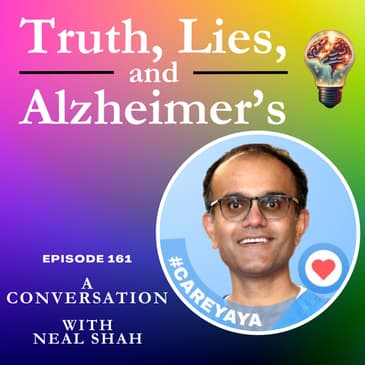
In this episode, Lisa speaks with Neal Shah, founder of CareYaya, about a new approach to dementia care. Neal shares how his platform connects families with trained college students pursuing healthcare careers—providing affordable, compassionate support while helping prepare the next generation of caregivers.
They discuss the challenges families face, the importance of person-centered care, and how innovative models like CareYaya are creating meaningful change in the dementia care space.
Have a look at our updated website - https://www.mindingdementiasummit.com/
Connect with Neal Shah
- Instagram: @nealkshah
- Facebook: @nealkshahcareyaya
- YouTube: @nealkshah
- TikTok: @nealkshah
- LinkedIn: https://www.linkedin.com/in/neal-shah-careyaya/
Resources
- CareYaya: https://www.careyaya.org
About the Host:
Author Lisa Skinner is a behavioral specialist with expertise in Alzheimer’s disease and related dementia. In her 30+year career working with family members and caregivers, Lisa has taught them how to successfully navigate the many challenges that accompany this heartbreaking disease. Lisa is both a Certified Dementia Practitioner and is also a certified dementia care trainer through the Alzheimer’s Association. She also holds a degree in Human Behavior.
Her latest book, “Truth, Lies & Alzheimer’s – Its Secret Faces” continues Lisa’s quest of working with dementia-related illnesses and teaching families and caregivers how to better understand the daunting challenges of brain disease. Her #1 Best-seller book “Not All Who Wander Need Be Lost,” was written at their urging. As someone who has had eight family members diagnosed with dementia, Lisa Skinner has found her calling in helping others through the struggle so they can have a better-quality relationship with their loved ones through education and through her workshops on counter-intuitive solutions and tools to help people effectively manage the symptoms of brain disease. Lisa Skinner has appeared on many national and regional media broadcasts. Lisa helps explain behaviors caused by dementia, encourages those who feel burdened, and gives practical advice for how to respond.
So many people today are heavily impacted by Alzheimer's disease and related dementia. The Alzheimer's Association and the World Health Organization have projected that the number of people who will develop Alzheimer's disease by the year 2050 worldwide will triple if a treatment or cure is not found. Society is not prepared to care for the projected increase of people who will develop this devastating disease. In her 30 years of working with family members and caregivers who suffer from dementia, Lisa has recognized how little people really understand the complexities of what living with this disease is really like. For Lisa, it starts with knowledge, education, and training.
Thanks for listening!
Thanks so much for listening to our podcast! If you enjoyed this episode and think that others could benefit from listening, please share it using the social media buttons on this page.
Do you have some feedback or questions about this episode? Leave a comment in the section below!
Subscribe to the podcast
If you would like to get automatic updates of new podcast episodes, you can subscribe to the podcast on Apple Podcasts or Stitcher. You can also subscribe in your favorite podcast app.
Leave us an Apple Podcasts review
Ratings and reviews from our listeners are extremely valuable to us and greatly appreciated. They help our podcast rank higher on Apple Podcasts, which exposes our show to more awesome listeners like you. If you have a minute, please leave an honest review on Apple Podcasts.
Welcome back everybody to another brand new
Lisa Skinner:episode of the truth, lies and Alzheimer's show. I'm Lisa
Lisa Skinner:Skinner, your host, and I'm really excited to be here today
Lisa Skinner:with you all, and grateful that you have chosen to spend part of
Lisa Skinner:your valuable days with us, and we've got a really special guest
Lisa Skinner:here with us today. I'm going to introduce you to him. His name
Lisa Skinner:is Neal Shah, and he is the CEO of a corporation that is called
Lisa Skinner:care ya ya health technologies. And as I told Neal when we
Lisa Skinner:talked before, Yaya is close to my heart, because that is
Lisa Skinner:exactly what my grandchildren call me, is Yaya. And a lot of
Lisa Skinner:people don't even know that that is a word that, you know a lot
Lisa Skinner:of people use Nana. My kids call me ya ya. And so I thought that
Lisa Skinner:was pretty special, that we had that connection. But care Yaya
Lisa Skinner:Health Technologies is a social enterprise that does research,
Lisa Skinner:lab research advancing health equity for aging populations.
Lisa Skinner:That was named one of America's top 50 startups for 2025 I mean,
Lisa Skinner:what a huge accomplishment. And Neal also brings his personal
Lisa Skinner:experience as both a dementia and cancer caregiver to his
Lisa Skinner:current work, he's an NIH funded healthcare researcher focused on
Lisa Skinner:aging and caregiving, leading artificial intelligence projects
Lisa Skinner:at Johns Hopkins University to improve care for older adults.
Lisa Skinner:And this is really exciting, innovative stuff. So we're going
Lisa Skinner:to let Neal tell us all about what care Yaya does, what it's
Lisa Skinner:all about, how he came up with it. And we are going to start
Lisa Skinner:with one of his core pillars of his organization, which is
Lisa Skinner:caregiving for aging populations on the boomer horizon, because
Lisa Skinner:we're the ones that are aging quickly and starting to develop
Lisa Skinner:Alzheimer's disease and related dementia, and he has got Our
Lisa Skinner:backs. So Neal, with that said, why don't you take it from here
Lisa Skinner:and tell us a little bit about your company and all the
Lisa Skinner:exciting things that are happening with it, and then let
Lisa Skinner:us know exactly what you guys do.
Neal Shah:Sure. Yeah, thanks, Lisa for such a warm
Neal Shah:introduction and exciting to share share with your audience.
Neal Shah:You know, I think that we are heading into, if not already in,
Neal Shah:a caregiving crisis. You know, in our country, you know, we
Neal Shah:have a rapidly aging population. You know, the oldest of the baby
Neal Shah:boomers just started turning 80 this year. You know, if you kind
Neal Shah:of think about when world war two ended, 1946 you know, here
Neal Shah:we are 2026 in the next five years, we're going to have a
Neal Shah:historically unprecedented wave of people turning 80, that's
Neal Shah:typically the age when dementia rates and probabilities
Neal Shah:skyrocket. By 2030 our country will be more people above 65
Neal Shah:than below 18, first time ever in recorded human history. So
Neal Shah:we're heading into a big demographic shift that I think
Neal Shah:is going to impact a lot in our society. I learned this
Neal Shah:firsthand, and I started karaya because in my mid 30s, I became
Neal Shah:a caregiver. Went through a very long caregiving experience for
Neal Shah:my grandfather through dementia, and I kind of realized how
Neal Shah:broken our caregiving system is and how little support there is,
Neal Shah:and how that results in so many families bearing the burden on
Neal Shah:their own. I think family caregivers are like some of the
Neal Shah:most hardest working and empathetic people out there in
Neal Shah:the country, and they're getting the least support from
Neal Shah:government and private sector, so they're bearing a lot of
Neal Shah:burden on their own. And, you know, in our case, like my
Neal Shah:mother, ended up quitting her career to become a full time
Neal Shah:caregiver. So it was really eye opening for me after he passed.
Neal Shah:Actually, my wife went through a multi year cancer battle where I
Neal Shah:became her primary caregiver. So I've kind of gone through this
Neal Shah:firsthand twice, and realized just caregiving is so under
Neal Shah:supported. And, you know, I kind of wanted to do something, so I
Neal Shah:shifted the whole focus of my career and my work into
Neal Shah:improving things for caregivers, you know. So that was kind of
Neal Shah:like the genesis of how this came about. And I saw that,
Neal Shah:given how fast our society is aging, I thought that there was
Neal Shah:going to be a just absolute epidemic that was going to crush
Neal Shah:millions of middle aged people as they as it came their turn to
Neal Shah:care for aging parents. Some of the innovations that we've done,
Neal Shah:I'll talk through and where I think kind of the opportunities
Neal Shah:are, are, you know, in thinking through, what are the problems
Neal Shah:in care? Number one, there is a massive shortage of people doing
Neal Shah:care. So if you are a family caregiver and you need some
Neal Shah:affordable help, there aren't people around. Do it. And if you
Neal Shah:get lucky and find someone, the prices are rates too high. Why
Neal Shah:is that? My entire hypothesis is the care industry is completely
Neal Shah:broken. The way these home care companies work is that they
Neal Shah:typically charge in most cities across America, 40 to $50 an
Neal Shah:hour, and they turn around and pay less than half of that to
Neal Shah:the care worker. The rest goes into sales, marketing profits,
Neal Shah:franchise fees, overhead and all that other stuff.
Lisa Skinner:I was just reading something recently where
Lisa Skinner:somebody posted an article that said, baristas receive more
Lisa Skinner:training than dementia caregiver
Neal Shah:and more pay, you know, and more pay. Why would
Neal Shah:you ever do this, you know? Why would you ever do care for
Neal Shah:someone you know, if you're just like trying to make income, when
Neal Shah:you could work at Starbucks, you could work at Walmart, you could
Neal Shah:work at McDonald's, anywhere, pays better, and by the way,
Neal Shah:compared to barista, caregiving is very, very psychologically,
Neal Shah:emotionally, physically demanding work, as we all know
Neal Shah:from our favorite family caregiving experience. So how
Neal Shah:could we as a society expects somebody to do this for in my
Neal Shah:home state of North Carolina, the average caregiver makes 1215
Neal Shah:hour.
Lisa Skinner:You think there's something wrong with this
Lisa Skinner:picture? Yeah, I'll
Neal Shah:tell you. I'll tell you exactly what's wrong with
Neal Shah:this picture.
Neal Shah:The companies,
Neal Shah:the companies in the way the private sector treats
Neal Shah:caregiving. You know, I think it's absolutely absurd. And you
Neal Shah:know, I don't mean to offend anyone. It's just my
Neal Shah:observation. So apologize in advance, if somebody's
Neal Shah:listening, as a home care agency owner, but these home care
Neal Shah:companies in my area charge 40 bucks an hour and pay the care
Neal Shah:workers, you know, somewhere in the low teens, like 12 to 15
Neal Shah:bucks an hour. They keep the rest of the money for
Neal Shah:themselves. That creates true two problems. One, how many
Neal Shah:families can afford 40 bucks an hour? Not a lot. So if you need
Neal Shah:40 hours a week of caregiving, because you have to go to your
Neal Shah:job and you need somebody to sit with your mom. You know, that's
Neal Shah:adding up to 16 hour bucks a week. You know, over the course
Neal Shah:of year, it's like 80 grand, and then the care worker is making
Neal Shah:30 grand, so the care workers barely able to survive.
Lisa Skinner:There's no subsidy for dementia care, for in the
Lisa Skinner:home, or if you don't already happen to have
Neal Shah:agreed
Lisa Skinner:long term care insurance policy, or you qualify
Lisa Skinner:for veterans benefits that will pay a stipend for care, either
Lisa Skinner:in home or in assisted living or memory care. This is all out of
Lisa Skinner:pocket expense. Exactly. Yeah,
Neal Shah:exactly. So it really the affordability issue crushes
Neal Shah:families, and frankly, the quality issue because the care
Neal Shah:worker's not being paid well. So one of our earliest innovations,
Neal Shah:which I kind of observed from my years of being in caregiver
Neal Shah:support groups, was healthcare students out there, pre medical
Neal Shah:students, nursing students. You know, some of our young people
Neal Shah:who want to go into clinical careers are amazingly empathetic
Neal Shah:and passionate people who want to help people in their
Neal Shah:communities. We started mobilizing them as caregivers,
Neal Shah:and we made them available through our carry out platform
Neal Shah:to be able to be digitally, booked, scheduled, paid, etc,
Neal Shah:for no fees are up charged to anyone. So across America now
Neal Shah:we're running $20 an hour caregiving platform where all
Neal Shah:the money is going to the students. So through the
Neal Shah:innovation and anyone can check this out, cariad.org, you're
Neal Shah:welcome to do it, and it's all like Grant and social impact
Neal Shah:funded. We charge families nothing. They can book schedule
Neal Shah:and pay caregivers near them who are pre medical or nursing
Neal Shah:students at, you know, good universities in their area.
Neal Shah:We're now operationalized at approximately 35 universities.
Neal Shah:We have 50,000 students on the platform, and you can get it for
Neal Shah:20 bucks an hour, and all that 20 goes to the students. So I
Neal Shah:thought this was like a very simple, common sense type of
Neal Shah:innovation based on years of what I observed. You know, the
Neal Shah:best kept secret in family caregivers was people would try
Neal Shah:to go through care agencies find that, hey, I'm spending way too
Neal Shah:much money. I can't afford it. The care workers aren't very
Neal Shah:good. Then many people would post flyers at church or ask
Neal Shah:local support groups, where can I find informal caregivers? And
Neal Shah:then many people who took the time and effort would find ways
Neal Shah:through universities nearby them and asking professors and
Neal Shah:saying, do some of your nursing students or medical students you
Neal Shah:don't want to help. So there's already a very robust informal
Neal Shah:care market happening like that, but for most it's a lot of
Neal Shah:manual work. So we said, Okay, we'll do that work for you. We
Neal Shah:will find the students, vet them, interview them, background
Neal Shah:check them, make Booking and Scheduling easier, almost like
Neal Shah:Uber does, you know, with getting it, getting a ride or
Neal Shah:getting a taxi, right? You know, where you can just kind of do it
Neal Shah:very conveniently and affordably. So that was our
Neal Shah:first innovation, and the multiple reasons for the
Neal Shah:innovation were one, I just thought cost of care were way
Neal Shah:too high, so a lot of families can't afford it, and they're
Neal Shah:priced out. So by doing it at 20 instead of 40, you significantly
Neal Shah:expand affordability. I thought the quality of the care was low
Neal Shah:because the care worker is not getting paid much, so the care
Neal Shah:workers turnover is very high, and many people leave. I thought
Neal Shah:by paying the students the fair share, in this case, all of it
Neal Shah:makes them very motivated. And of course, they want to go into
Neal Shah:clinical careers anyway, so they're already naturally
Neal Shah:motivated. So it makes them show up much better and do a better
Neal Shah:job of care. And then I thought the whole streamline the booking
Neal Shah:process through digital booking, no contracts, kind of none of
Neal Shah:these business tactics that the care agencies use allow much
Neal Shah:more seamless and. Whole experience that a lot of what I
Neal Shah:you know, what you would call sandwich generation caregivers,
Neal Shah:you know, busy middle aged people who are still trying to
Neal Shah:manage their careers. They would prefer an experience like this
Neal Shah:instead of the old school method, where the local care
Neal Shah:company sells you, makes you sign a contract and, you know,
Neal Shah:do a lot of manual paperwork. So that was kind of like the early
Neal Shah:innovation, in a nutshell. And I'm shocked at after running it
Neal Shah:for three years, it's grown from a local, grassroots effort into
Neal Shah:this, like very large thing that's spreading around the
Neal Shah:country. And I'm also very pleased that we're making a
Neal Shah:tremendous social impact on many, both people who would be
Neal Shah:priced out of the care market, and encouraging a lot of young
Neal Shah:people to step up and address the care crisis, which I think
Neal Shah:is,
Lisa Skinner:I have to say that what you're doing, you're an
Lisa Skinner:absolute godsend, because this is exactly what our communities
Lisa Skinner:have needed for as long as I've been around this industry, which
Lisa Skinner:has been 50 years, 30 professionally, but 20 dating
Lisa Skinner:back to my first experience with a family member having
Lisa Skinner:Alzheimer's disease. So you raised a good point. You
Lisa Skinner:mentioned the sandwich generation.
Neal Shah:Tell
Lisa Skinner:us exactly how this new sandwich generation,
Lisa Skinner:and when we say sandwich generation, we're referring to
Lisa Skinner:adult children who are caring for an elderly parent, but they
Lisa Skinner:also have children still at home, and they're standing in
Lisa Skinner:between the two generations. So how, how, what have you been
Lisa Skinner:observing in terms of how this sandwich generation factors into
Lisa Skinner:elder care?
Neal Shah:Yeah, thanks for the question. You know, over 20
Neal Shah:million people are in this sandwich generation, you know,
Neal Shah:caught between caring for aging parents and children.
Neal Shah:Interestingly enough, this is a lot of women who quit their
Neal Shah:careers. Most people think it's because of child care. Actually,
Neal Shah:over 60% is because of elder care, because child care is now
Neal Shah:University acknowledged and recognized and by many employers
Neal Shah:supported things like maternity leave policy are commonplace
Neal Shah:now. Support for a daycare center. Some some large
Neal Shah:employers even having the center on site. These were things that
Neal Shah:didn't exist that much in the 1980s and 1990s but I think
Neal Shah:thanks to a lot of pressure and movements and social awareness,
Neal Shah:now child care is recognized as like we need to offer some
Neal Shah:solutions in order to support working parents of both genders,
Neal Shah:but specifically women, elder care support does not exist. You
Neal Shah:know, minimally and Harvard Business School had a big study
Neal Shah:on this, that what does the sandwich generation need?
Neal Shah:Something like 33% the highest number on the survey was elder
Neal Shah:care support. 33% of people request. Only 6% of employers
Neal Shah:even have anything around that topic. And mostly it's, oh, let
Neal Shah:me get you some counseling with a social worker so no one offers
Neal Shah:actual caregiving support. So I think it's a big gap in terms of
Neal Shah:what employers are providing versus what employees are
Neal Shah:needing. And as a result, many people are scrapping it together
Neal Shah:on their own, or potentially taking time off from work to
Neal Shah:manage it past, you know, turning down promotions, being
Neal Shah:passed over for promotions, or sometimes just leaving the
Neal Shah:workforce entirely to do it themselves when the cost of
Neal Shah:elder care in America is $82,000 a year, just for 40 hours a week
Neal Shah:to get a care through a care agency, you have to make pre
Neal Shah:tax, over $120,000 just to then pay the tax and then spend all
Neal Shah:the rest of your remaining money on paying the care company. So
Neal Shah:you know, most people, unless they have, like, high six figure
Neal Shah:incomes, they'll just be like, maybe I should do it myself. So
Neal Shah:I think that, yes, the sandwich generation is experiencing an
Neal Shah:enormous crisis, and if we don't want millions of people to drop
Neal Shah:out of the workforce, I think we need to do caregiving innovation
Neal Shah:to address the cost and affordability. But I also think
Neal Shah:we need to reform and pressure the private sector in to start
Neal Shah:addressing this issue and supporting employee caregivers.
Neal Shah:And I think we need to change government policy. You know, why
Neal Shah:doesn't Medicare cover any respite care? You know, they pay
Neal Shah:30,000 bucks a year for dementia drugs. That unclear if they even
Neal Shah:work, but they space $0 for you getting a caregiver in your
Neal Shah:home, and everybody knows that does work, getting a caregiver
Neal Shah:in your home reduces nursing home admissions and it improves
Neal Shah:the health of the family caregivers. So I think these are
Neal Shah:common sense things that the government isn't doing, the
Neal Shah:private sector isn't doing. And I think isn't doing, and I think
Neal Shah:you can build advocacy and create pressure to change the
Neal Shah:system.
Lisa Skinner:And everything you are saying coincides with and
Lisa Skinner:this is just something that's total, totally coincidental. I
Lisa Skinner:just recently was asked to write a magazine article for San
Lisa Skinner:Francisco magazine on this very subject, on how corporations are
Lisa Skinner:supporting employees, because all of these things are
Lisa Skinner:happening with this sandwich generation. And also we have to
Lisa Skinner:be mindful that the World Health Organization and the Alzheimer's
Lisa Skinner:associations are are trying to prepare us that by the year 2050
Lisa Skinner:if a cure or treatment is not found, the number of people, and
Lisa Skinner:you touched on this a little bit, that are expected to
Lisa Skinner:develop Alzheimer's disease are. Um, it's estimated it's going to
Lisa Skinner:triple from the number of people who live with it today, and this
Lisa Skinner:is worldwide. So we're looking at, you know, another almost
Lisa Skinner:like a pandemic of Alzheimer's disease. And I think you are
Lisa Skinner:probably about the closest thing to helping society prepare for
Lisa Skinner:this that we've ever had. So we are now going to segue right
Lisa Skinner:into what the future of dementia care looks like for him. For you
Lisa Skinner:know, in his mind's eye, he's a very vision, visionary kind of
Lisa Skinner:guy, obviously. So I can't wait to hear what he has to tell us.
Neal Shah:Yeah, thanks, Lisa. So I'll share a few things. One,
Neal Shah:you know. So where I live in the American South, dementia rates
Neal Shah:are expected to go up over 50% in the next four to five years,
Neal Shah:you know. So it is, you're right. It is absolutely an
Neal Shah:epidemic, and I think it's partly because of the aging
Neal Shah:population. I think it's partly because social isolation triples
Neal Shah:the risk of getting dementia, and we just went through a multi
Neal Shah:year pandemic where people had to isolate, especially older
Neal Shah:adults, so we're coming out of that. But I think the brain
Neal Shah:impact is pronounced, and then also early signs suggest even
Neal Shah:mild covid infections that people recovered from resulted
Neal Shah:in neuroinflammation in the brain that suggests very typical
Neal Shah:of early Alzheimer's pathology. So I think with these three
Neal Shah:factors, you know, if a boomer is turning 80 in large numbers,
Neal Shah:as well as isolation and covid, we are about to have an epidemic
Neal Shah:of dementia. And heading into that, I think that there is a
Neal Shah:lot of opportunity to help people. So where I think
Neal Shah:technology is making promising strides, stuff that we're
Neal Shah:working on and stuff that I see other people working on are both
Neal Shah:in screening. You know, I think dementia is significantly under
Neal Shah:diagnosed and under screened. Many people don't catch it until
Neal Shah:too late, and usually it's due to lack of resources. It affects
Neal Shah:both rural populations that sometimes don't have access to a
Neal Shah:neurologist. You know, something like 37% of Americans live in a
Neal Shah:neurology desert, where there's a neurologist within an hour,
Neal Shah:plus of them that can even make a diagnosis. So that's where we
Neal Shah:see a lot of technology tools helping. We're working on a big
Neal Shah:project with Harvard and Mass General developing artificial
Neal Shah:intelligence tools that can simply help with cognitive
Neal Shah:screening over a voice AI phone call a landline. So help you
Neal Shah:kind of screen fast through just a natural language conversation,
Neal Shah:even process biomarkers in your voice, and then help warn you
Neal Shah:and or the family member that, hey, maybe it's actually time to
Neal Shah:drive two hours to a neurologist because you have a higher risk
Neal Shah:and you should go do a proper assessment. So I think tools
Neal Shah:like that are going to be breakthrough of just like being
Neal Shah:able to access, improve accessibility to care for a lot
Neal Shah:of the population. I also think there's a lot of tools coming
Neal Shah:around caregiving. You know, dementia, caregiving is one of
Neal Shah:the most under supported things that I've learned myself and in
Neal Shah:years of support groups, less than 11% of family caregivers
Neal Shah:going through dementia get any sort of training. I think it's
Neal Shah:our medical system almost views it as okay. We gave you the
Neal Shah:diagnosis, and here's a pamphlet, and then you know you
Neal Shah:as a son or daughter or spouse. It's like you're on your own at
Neal Shah:home. Now, meanwhile, you're supposed to become a doctor and
Neal Shah:a nurse and a physical therapist and a social worker all at the
Neal Shah:same time. Suddenly, when you're 5060, years old, and you've
Neal Shah:never done any of those jobs before, and I think that's very
Neal Shah:hard, and by not covering caregiver training, a lot of
Neal Shah:people end up making mistakes. Their loved one ends up in the
Neal Shah:ER. They themselves end up with a lot of stress and burnout and
Neal Shah:even potentially their own health issues. So AI is becoming
Neal Shah:a promising ground. One of our biggest NIH funded projects is
Neal Shah:that that we've developed an artificial intelligence powered
Neal Shah:caregiver and training system that, again, we're giving you
Neal Shah:know, all of our innovations are free, so we give this away for
Neal Shah:free to individuals to practice, learn how to do care, understand
Neal Shah:and personalize. Who is the loved one that you're caring
Neal Shah:for. What diagnosis do they have? What skills do you
Neal Shah:currently have? And then let's upskill you through bite sized,
Neal Shah:two to three minute personalized videos of the next skill you
Neal Shah:should learn, and then give you short quizzes. So I think things
Neal Shah:like that are very promising innovations. And then I also
Neal Shah:think there's a lot of cool innovations happening that I see
Neal Shah:in neurotechnology, like ability to kind of, like, use non
Neal Shah:invasive interfaces, and, you know, put on your head. And it
Neal Shah:sounds very futuristic, but Brain Computer interfacing is
Neal Shah:improving. And, you know, we have been working on some
Neal Shah:projects just kind of on the side, is almost like a research
Neal Shah:lab to see if we can help people who have lost ability to
Neal Shah:communicate, who have, for example, aphasia, be able to
Neal Shah:visualize and try to communicate, you know, through
Neal Shah:an interface, what they're what they want to say at early
Neal Shah:stages. But there's some interestingly promising signs,
Neal Shah:and I think that is going to be, if I to make a bold prediction
Neal Shah:over the next five years, I think Brain Computer interfacing
Neal Shah:technology is going to get really good, and a lot of people
Neal Shah:who are unable to communicate might actually be able to
Neal Shah:communicate, so we might be able to restore
Lisa Skinner:that. How do y'all address comorbidities?
Neal Shah:Yeah, that's a great question. So comorbidities? Why?
Neal Shah:I think again, speaking about like, because we're located in
Neal Shah:the American South, diabetes is a massive comorbidity. We
Neal Shah:ourselves
Lisa Skinner:cardiovascular disease.
Neal Shah:Agreed, agreed. Cardiovascular Yeah, another,
Neal Shah:another, big one. You know, we ourselves don't do a lot in that
Neal Shah:realm. We try to manage and guide people to nutrition
Neal Shah:programs that we can recommend. But you know, we are not the
Neal Shah:innovators of those programs. Interestingly, on the diabetes
Neal Shah:side, I have seen some amazing results from non pharmacological
Neal Shah:diabetes reversal programs out there that I'm like blown away
Neal Shah:by, and I'm surprised these are not more widely known. So I do
Neal Shah:think there's some help coming. One interesting thing which I
Neal Shah:have mixed feelings on is these new GLP one weight loss drugs.
Neal Shah:Many people I'm finding are actually quite successfully
Neal Shah:managing, you know, their diabetes and, frankly, their
Neal Shah:obesity and just like overall weight levels through those
Neal Shah:drugs. However, I do think there are also some pronounced side
Neal Shah:effects that are unintended that I'm seeing a lot of people
Neal Shah:experiencing. So I'd say the jury's still out. But between
Neal Shah:that and between the non pharma, pharmacological diabetes
Neal Shah:rehearsal programs, I do think that big strides can be made.
Neal Shah:And then one positive side is, I do think, regardless of your
Neal Shah:opinion on politics and etc, I do think the public awareness
Neal Shah:through the Make America healthy again movement is resulting in a
Neal Shah:lot of people realizing that, hey, food does impact your
Neal Shah:health, sugar levels and what you eat and ultra processed
Neal Shah:foods maybe should be significantly reduced. And I
Neal Shah:think that population health is going to change over the next,
Neal Shah:you know, three to five years, which I think it couldn't come
Neal Shah:fast enough, you know, like chronic disease and diabetes
Neal Shah:rates are skyrocketing, which means future dementia rates, you
Neal Shah:know, are going to be skyrocketing. So I'm very happy
Neal Shah:about about that.
Lisa Skinner:Wow. Well, unfortunately, we are at a time
Lisa Skinner:today, we'll just have to have you come back and continue this
Lisa Skinner:conversation, because this is absolutely fascinating, and I
Lisa Skinner:think it's, it's what our future holds for and you know, as I
Lisa Skinner:mentioned, I've been exposed to the dementia world for 50 years
Lisa Skinner:now, and the change has come incredibly slow, and it's really
Lisa Skinner:just been in the last few years that we're starting to pay more
Lisa Skinner:attention to everything we talked about today, it couldn't
Lisa Skinner:come fast enough for me, but hopefully it'll just, you know,
Lisa Skinner:go at lightning speed now, and things will change dramatically,
Lisa Skinner:because we've been stuck in, you know, a quagmire of quicksand
Lisa Skinner:for decades. So anyway, I am just so pleased to hear that
Lisa Skinner:you're doing what you're doing, and there is a lot of hope now
Lisa Skinner:for all of us who have family members who have lived with one
Lisa Skinner:of the brain diseases that causes dementia and that, you
Lisa Skinner:know, it's looking promising that things will will literally
Lisa Skinner:change themselves more rapidly than they have. I was going to
Lisa Skinner:ask you one more question. Oh,
Neal Shah:sure,
Lisa Skinner:just out of curiosity, I noticed since
Lisa Skinner:covid, there's been a pivotal shift in the US. And I would
Lisa Skinner:just wanted to hear your, your comments about this, because
Lisa Skinner:culturally, the United States doesn't typically, or hasn't in
Lisa Skinner:the past, typically taken care of our elderly parents, like a
Lisa Skinner:lot of cultures do. I've seen that changing since covid
Lisa Skinner:Because of what we saw in the high incidence of death due to
Lisa Skinner:depression and isolation and also covid itself, are you? Have
Lisa Skinner:you noticed that since covid, that that we are changing, that
Lisa Skinner:culturally we are taking
Neal Shah:Yeah, I think so, you know, I think, obviously, I
Neal Shah:think it's happening fast enough, but I'm glad that it's
Neal Shah:changing. And I do think it's changing. I think there's a few
Neal Shah:things going on. One, the former Surgeon General, Dr Vivek
Neal Shah:Murthy, put out a great book, which I would recommend to
Neal Shah:anyone called together, and it's the art of connection in a
Neal Shah:lonely world. And he basically framed it right before covid, as
Neal Shah:loneliness, especially in our older adult population, is an
Neal Shah:absolute epidemic. Obviously, covid made it way worse. And he
Neal Shah:was saying, if you're above 65 and your self report is lonely,
Neal Shah:which, by the way, 37% of people do, if your self report is
Neal Shah:lonely, it's worse for you than smoking 15 cigarettes a day in
Neal Shah:terms of predicting if you'll die early. So loneliness is an
Neal Shah:absolute epidemic, and I think now, unfortunately, it's
Neal Shah:happening to our young people too, because they're glued on
Neal Shah:their phones and social media. So I think that it. You know,
Neal Shah:covid has certainly accelerated awareness of that. And I think
Neal Shah:public movements to kind of reduce loneliness have now
Neal Shah:spread the who has now, you know, piggybacked off that, and
Neal Shah:they're calling loneliness and epidemic. So I do think that's
Neal Shah:changing. I also think the baby boomers, you know, if you kind
Neal Shah:of think about the assisted living in the nursing home
Neal Shah:industry, it really grew in the 1980s 1990s and 2000s so baby
Neal Shah:boomers have the experience of putting their parents in those
Neal Shah:facilities, oftentimes near the last few years, and now as a
Neal Shah:baby boomers become the predominant kind of aging
Neal Shah:population, and seeing what happened during covid to people
Neal Shah:who lived in those places, many of them unfortunately, very
Neal Shah:sadly, died and couldn't spend time with their family during
Neal Shah:their last days. Boomers are really hesitating, like, do not
Neal Shah:I've heard from so many people it's like, I would rather die in
Neal Shah:my house than don't put me in a facility. They're telling their
Neal Shah:kids. So I think that the preference has shifted
Neal Shah:tremendously. And I think on a positive side, technology and
Neal Shah:Affordable Care is enabling people to stay in their home
Neal Shah:longer and age longer. And then I think final, finally is, I
Neal Shah:would credit the media and social media to this. Societal
Neal Shah:attitudes are changing as people build awareness about aging and
Neal Shah:caregiving as now, you know, Martha Stewart was on the cover
Neal Shah:of Sports Illustrated right like I think this wouldn't have never
Neal Shah:happened 2030, years ago. So I do think that people are
Neal Shah:recognizing that aging isn't something to shy away from and
Neal Shah:something to embrace. So I think there are a lot of positive
Neal Shah:trends going on that might build a culture that more respects its
Neal Shah:elders and cares about the aging population, not just their own
Neal Shah:parents, but even older people in their community, in their
Neal Shah:neighborhood. So I think that's a pretty good thing. And I see
Neal Shah:this every day. We have so many 1000s of 20 year olds
Neal Shah:interacting with 80 year olds through our care platform that
Neal Shah:are not their grandparents, and they're learning a lot about
Neal Shah:what it's like to be an older person. Talk with people who
Neal Shah:have completely different views and completely different even
Neal Shah:backgrounds and upbringings in them, and I think that it's
Neal Shah:benefiting both sides, bringing people closer together. So yeah,
Neal Shah:I'm excited about that, and I think the change couldn't happen
Neal Shah:fast enough.
Lisa Skinner:I couldn't agree with you more. So anybody who is
Lisa Skinner:as fascinated as I have been with this conversation by Neal
Lisa Skinner:Shah, you can find out more information about him and his
Lisa Skinner:company at care, yaya.org, so make sure you take some time to
Lisa Skinner:further look into this really, really exciting time in elder
Lisa Skinner:care. Thanks again for being with us. I'm Lisa Skinner, your
Lisa Skinner:host. I will be back next week with another brand new episode
Lisa Skinner:for everybody, and in the meantime, have a great rest of
Lisa Skinner:your week. Stay happy and healthy. We need y'all and I'll
Lisa Skinner:be back next week with another episode for you. Take care for
Lisa Skinner:now. Bye, bye.
Neal Shah:Thanks. Lisa.