
What if one of the most powerful forms of cancer support comes from someone who has already walked the path before you?
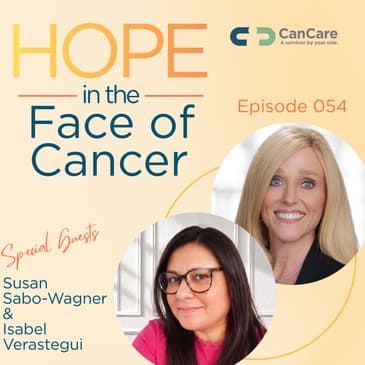
Darcie Wells sits down with Susan Sabo-Wagner, Vice President of Clinical Innovation at the American Oncology Network (AON) , and Isabel Verastegui, Manager of Care Coordination at AON, to explore how personal cancer experiences can shape the way patients are supported. Susan shares how a leukemia diagnosis at age 17 influenced her lifelong career in oncology nursing, while Isabel reflects on being diagnosed with triple-positive breast cancer at 41 while working in the oncology field herself. Both women open up about fear, uncertainty, treatment, and the support systems that helped them move forward.
Their conversation highlights the importance of community oncology, the value of receiving care close to home, and the life-changing impact of peer support. Isabel explains how finding CanCare during treatment helped ease her anxiety and inspired her to become a volunteer for others facing cancer. Susan shares why emotional support is just as important as clinical care and how hope can help people navigate even the most difficult moments.
This episode is a reminder that no one should face cancer alone. Whether you're in treatment, supporting a loved one, or navigating survivorship, there is strength in connection, comfort in shared experience, and always hope ahead.
Highlights:
· Why peer support often provides reassurance that even the best medical team cannot offer.
· How community oncology is helping more people access high-quality cancer care closer to home.
· Practical ways to manage fear, uncertainty, and anxiety after a cancer diagnosis.
· What survivors learn about gratitude, perspective, and living one day at a time.
· How healthcare organizations are expanding support beyond treatment to address emotional well-being.
Mentioned Resources:
CanCare- www.cancare.org
AON - https://www.aoncology.com/
About the Guest:
Susan Sabo-Wagner is an oncology certified nurse executive, Vice President of Clinical Innovation at the American Oncology Network, and a living testament to the resilience that defines the cancer journey. Diagnosed with leukemia as a teenager, Susan faced the fear and uncertainty that comes with a diagnosis that changes everything and came out the other side with a calling. She has spent her career transforming how cancer patients experience care across the country, bringing to that work something no credential can teach: the knowledge of what it truly means to sit in that chair.
Isabel Verastegui is a Care Coordination Manager at the American Oncology Network, where she has spent 12 years working with cancer patients. In January 2022, at just 41 years old, Isabel was diagnosed with triple positive breast cancer. Cancer did not stop her. It deepened her. Today she shows up not only for her patients at AON but as a CanCare volunteer for other women who find themselves navigating their own cancer journeys.
Love the podcast? You’ll be moved by the book. The Hope in the Face of Cancer book shares inspiring, real stories from survivors, caregivers, and healthcare heroes. Raw, uplifting, and full of heart—for anyone seeking hope and connection. Get your copy: cancare.org/hopebook.
About Our Host:
Darcie Champagne Wells is the President and CEO of CanCare, Inc., a nonprofit dedicated to providing support to the cancer community by pairing cancer patients with survivors. Since joining in November 2020 as the third President & CEO, Darcie has driven significant growth, increasing one-to-one support matches by 45% and healthcare referrals by 66%. In 2022, she initiated the Impact Acceleration Initiative to further expand support for cancer patients and caregivers. Her leadership has earned her recognition as a “Most Admired CEO” and “Woman Who Means Business” by the Houston Business Journal, and national “Fundraiser of the Year” by RAISE. Darcie holds a BS in Business Administration from Louisiana State University and an MBA from the University of Houston.
https://www.facebook.com/CanCareInc
https://www.instagram.com/cancare_inc
Thanks for tuning in to Hope in the Face of Cancer!
We’re so glad you’re here. If this episode moved you, inspired you, or brought you a little bit of light, please share it with someone who might need it. Just hit the share button on this page or spread the word on social—your voice helps us reach more hearts.
🎧 Never miss an episode!
Subscribe on Apple Podcasts, Spotify, or wherever you get your favorite podcasts to get updates as soon as new episodes drop.
⭐ Help us grow with a quick review
If you’re enjoying the podcast, leaving a review on Apple Podcasts goes a long way. It helps others discover the show and reminds us that these stories matter. Take a moment to leave a review—we read every one!
📖 Enjoy the podcast? You’ll love the book.
Check out our book, Hope in the Face of Cancer—a powerful collection of real stories from survivors, caregivers, and healthcare heroes. It’s uplifting, raw, and full of heart. Get your copy at cancare.org/hopebook.
[00:00:08] Welcome to Hope In The Face of Cancer, a survivor by your side. Here we share hope and support to anyone in their cancer journey. I'm your host, Darcie Wells, CEO of CanCare and a cancer caregiver. Whether you're a patient, caregiver, survivor, or healthcare provider, we are your cancer support community. Together, uplifting each other every step of the way. No one should face cancer alone.
[00:00:37] Welcome to Hope In The Face of Cancer, where we share real stories of courageous people in their cancer journey. Today, we welcome Susan and Isabel from CanCare's partner, American Oncology Network. Susan is the Vice President of Clinical Innovation at Aon. She's a certified oncology nurse executive who has spent her career transforming how cancer patients experience care across the country.
[00:01:02] But what makes her perspective so powerful is that it was shaped long before any title or credential. As a teenager, Susan was diagnosed with leukemia. She knows firsthand what it means to face that fear and search for hope in the middle of a diagnosis that changes everything. Isabel is the manager of a sudden, can't it be like a pandemic. Isabel is the manager of care coordination at Aon, where she has spent nearly 11 years showing up for cancer patients every single day.
[00:01:28] But in January 2022, Isabel was diagnosed with triple positive breast cancer at just 41. The cancer didn't stop her. She completed her treatments, earned her MBA in healthcare management, became a CanCare volunteer. Thank you, Isabel. And today she shows up not only for her patients at Aon, but for other women who find themselves exactly where she once was.
[00:01:51] Together, Susan and Isabel represent the heart of a partnership between Aon and CanCare that is changing what it means to face cancer across the country. So welcome to you both. We're so excited to have you on the show today. Thank you for having us. Yes. So really want to dive into both of your cancer journeys and then we'll talk all kinds of different things today. But I want our guests just to get to know you a little bit more. So, Susan, just tell us a little bit about Susan.
[00:02:20] So I live in Houston, just northwest of Houston. I have two boys, two dogs and two birds. Yeah. Yeah. So and right now I have a senior who is graduating from high school. So my life is really revolving around between work and soccer with my younger one and then all things senioritis with my older son.
[00:02:47] So, yeah, it's been quite a quite an interesting month. I can't believe we're already here. For sure. I mean, I know we're recording this in May. So your senior is probably definitely counting down the days. I would imagine. Yeah. Yeah. I'm not counting down the days because I can't believe that we're here, but he definitely is. It does happen in a blink of an eye for sure. Yes. So, Isabel, how about you? Tell us a little bit about yourself. I live in Florida and I have two kids.
[00:03:17] Well, they're adults now. I have a 24-year-old son and my daughter is 19 years old. My daughter is in school and works part-time and my son works full-time at Lowe's. So they both are amazing and they are adults now. Yes. Yeah. Yep. I'm very, you know, they are my company and I love them. Yes. Wonderful. Thank you both. So, Susan, let's talk a little bit about your story.
[00:03:45] I mean, you have been in the, worked in the cancer space for a long time. But was that influenced by your own personal journey as a teenager? Tell us a little bit about your own cancer journey. Yeah, sure. So, I was diagnosed with leukemia just after I graduated from high school. So, I graduated in June of that year and took a summer course at the local community college.
[00:04:12] And then in between that summer course, it was anatomy and physiology. And the fall semester, I was supposed to have a foot surgery. And in that pre-op blood work, they found that I had leukemia, which was, you know, in retrospect, I did have symptoms, but nothing that stood out so profoundly. But, you know, at a time, I was 17. I graduated at a young age. I started school in general at a young age.
[00:04:41] But at a time when you're thinking about school, friends, and, you know, ideally who you're supposed to become as a young adult, I was suddenly sort of thrust into this world of, you know, labs, treatment decisions, fear, uncertainty. It was extremely disorienting for me and my family, trying to understand who you are as a person. And then all of a sudden, cancer interrupts that entire flow.
[00:05:11] And everything stops, as, you know, anyone with cancer or anyone who's loved someone with cancer can certainly understand. A cancer diagnosis changes everything. In an instant, you're thrown into a world of medical terminology, difficult decisions, and overwhelming emotions. But there's one thing cancer can never take away. Hope. Hope.
[00:05:40] I'm Darcy Wells, CEO of CanCare, and I'm excited to tell you about our new book, Hope in the Face of Cancer. This book brings together 55 authentic stories for people who've walked the cancer journey. Survivors, caregivers, and healthcare professionals who understand exactly what you're going through. From the uncertainty of diagnosis to finding unexpected gifts along the way,
[00:06:06] these stories remind us that while every cancer experience is unique, no one needs to face it alone. Since its launch, the book has become an Amazon bestseller, with Jack Canfield of Chicken Soup for the Soul saying, it has the power to change lives. As CanCare celebrates 35 years of providing hope, we've set an ambitious goal to place this book in the hands of 35,000 cancer patients and caregivers this year.
[00:06:35] You can get your copy on Amazon today or visit cancare.org slash hope book to help us donate books to those who need them most. All proceeds support CanCare's free one-on-one support programs. In the Face of Cancer, hope makes all the difference. Visit cancare.org slash hope book today to join us on our mission to provide a survivor by the side of anyone facing cancer.
[00:07:07] Yeah, absolutely. You were already on a course to go into healthcare, but did that kind of sharpen your resolve or point you in a particular direction going through your own cancer journey? Sure, sure. That experience, it changed the entire direction of my life. I always laugh because my dad, you know, back in that day, told me to be a nurse, be a nurse, because you'll have a job for sure.
[00:07:34] He just wanted me to have, you know, life security as his daughter. But going through that experience absolutely shaped who I am and why I became a nurse and why I do what I do. I carry the entire patient perspective with me. You know, when I graduated from nursing school, I didn't go directly into oncology. I took some detours. You could not quite get a job where you wanted to back when I graduated.
[00:08:03] I won't say what year. It was a long time ago. Nursing shortages were looking a little different back then. But, you know, I took a detour. I had some different experiences as a nurse. But I got into oncology when I moved to Houston. And it's incredibly important to me that I am a part of the oncology experience for patients because there's so much more to oncology nursing than just taking care of the clinical picture. Oh, absolutely.
[00:08:32] And so you can relate to patients in a way that is rare for a provider to be able to relate. You've been in their shoes. I would imagine that that has, you know, been profound in how you go about your work on a day-to-day basis. Sure. I'd like to think so. Yeah, absolutely. Absolutely.
[00:08:52] So what do you feel like, you know, as you have, you're kind of more in an administrative role now, but when you were really working with patients at the bedside, what do you feel like they maybe most needed that maybe they didn't know how to ask for?
[00:09:12] So I think, you know, especially from my own experience and, you know, think about a 17-year-old kid being told that she has leukemia by a podiatrist. And I don't know if there's ever been another podiatrist that had to tell a 17-year-old kid that she has leukemia, but it doesn't happen very often. But I think, you know, what needs to happen is everything needs to slow down. You know, there's so much information coming at you.
[00:09:42] I always say that patients probably hear about 5% to 10% of the information they're being told at any given time. So when we're doing education or we're giving them information about, you know, treatments or next steps like scans or, you know, what comes next, it's so helpful if they have caregivers with them, the more the better, because if everyone's hearing about 5% to 10%, then you're going to get as close to 50% or 60% as possible.
[00:10:09] But it's like you're getting information through a fire hose, right? And when you have all of that anxiety that slows that down even more, but they need to know what happens next. You need to, it needs to be clear who to call, what the information is most important for next steps. And they need to be okay with being scared.
[00:10:29] That needs to be something that they understand because, you know, scared and fear is a really big part of the whole emotional journey. And it's normal. It's absolutely normal. Well, Isabel, let's talk about you and your story. So you were working in oncology prior to you getting your diagnosis.
[00:10:54] What led you to really become part of the oncology world? I had some family members that faced cancer. And I also thought that I had to do something in the future, like something related to the field. I always, I was interested about this field all the time. So, and that's why I decided to find a job or a position inside the oncology field.
[00:11:21] So, and I'm glad that they hired me at that time 11 years ago, and I'm still here. Yes, I'm very happy. I'm blessed that I'm here. I have learned a lot. And I think there is a reason and purpose that I'm here. Yeah. Also, in when I, I don't know, when I was diagnosed, that was in 2000, as you say, 2022 in January. And going back that time at that time.
[00:11:51] So I was in 2019, I divorced my ex-husband. And after 20 years, and then I started to a new life with my kids and I was okay. I was happy. I was trying to find new goals, which is my MBA. And I was ready to buy my new house. I was in the process of getting a new house with my kids. And also in 2021, I started my MBA.
[00:12:18] And then in the beginning of 2022, I was diagnosed with cancer. I showed you a curveball that was not in the plan. Exactly. And then I was taking care of myself. My hair wasn't until my waist. So I was looking, I was doing Zumba four times a week. So I was, I had plans. And then in 2021 as well, I met my partner, which was a great supporter, but he didn't know I was going to have cancer either.
[00:12:47] So I was afraid that he was going to leave me or something. And I said, I will change, you know, because I will lose my hair. And then I had a lot of emotional thoughts, but everything was very well. My partner was extremely helpful and he was a real friend. And also my kids too. And also my family and my friends and my work environment. I cannot complain. I'm blessed. Yeah. Yeah.
[00:13:14] You had, it sounds like you had a lot of support in the journey, which we know is, is really critical. So what did your, you know, what did that treatment journey look like? You know, what did your journey look like? What all did you have to have, you know, in terms of surgery, chemotherapy? Right. This, I, I, because I work in the oncology fields, I knew the steps that a patient needs to take. Okay.
[00:13:40] But then I, but I didn't know the time, how long my treatments will take. So I asked my doctor and I say, how long it will take? He told me two years. And for me, it was like two years is a lot because I'm always doing something. I always have goals. And two years was for me a lot. I need to stop school and I need to stop school. But, um, at the same time, um, I was like a soldier because I went and I said, I'm going to do everything. I'm going to do all my treatments.
[00:14:10] I'm going to do everything they say. They say that they want me to do. And then I say, I'm going to be the best patient. That's what I'm going to be because I want to face this cancer. I don't want to die in my 41. I don't want to die if I get, you know, in my forties with kids and parents, I don't want them to suffer. I say, that's not fair. I think I've done a lot for them, for my parents. That's not fair. God help me. No, no, no. I'll do everything I can, um, you know, and I want to fight this, this battle.
[00:14:39] Um, and I did, and I did. And I was, as I say, in the beginning, I was like a, in the military, you know, say you have to come this, this time, this, this hour. And, and I, and I, and I did everything I could. Um, so I didn't miss any appointments. Didn't miss anything. I had, you know, because I work in the field, I had my patient portal. I read all my notes. I need, I, you know, I, that was a, that was beneficial for me. Yeah. And I'm very grateful for that.
[00:15:08] But at the same time, I was with a lot of anxiety because we don't know what is going to happen in the future. I didn't know if I was able to complete all the treatments and I had a lot, I had a lot of treatments. And before I got cancer, I was very, I was healthy. I didn't take any medications, anything. So, and that was shocking. And I was the first member of the family that has breast cancer. Mm-hmm. So, how did you manage the anxiety?
[00:15:37] How did, you know, what did you do to cope? The anxiety, um, I was trying to find, I tried, I looked online and I found, uh, cancare, uh, because I needed to talk to someone that, I mean, I knew the environment, but I needed to talk to someone that really faced the triple positive breast cancer. So, I needed to know if they had the same symptoms that I had. I needed to know if they had the same emotions that I had.
[00:16:06] So, and also I needed to know after, you know, what happened after, you know, how do you feel after all the treatments? So, what, how's your body, your breast, you know, I needed to know, I needed to have those answers. I found cancare and, and I had a, a great volunteer that talked to me over the weekends, which was a blessing too, because I was very busy with my appointments and then with work too, because if I needed to work, I have my family, so I had to work.
[00:16:33] And I did have a great support for my work environment as well. So, and then when I found cancare, so it was amazing because I really found support. And also I attended a support group where we found different type of cancer patients there. And it was amazing. It was a great experience. We all were in the same page because all, all of us needed to hear, all of us needed to listen to each other. All of us were in the same boat. So it was a relief. It was a relief for me.
[00:17:04] Yeah. No, that's, I'm so glad that you did that. It's amazing how, even though you have amazing family and friends around you, it can still be incredibly lonely and frightening because they don't, they can't completely relate to what you're going through, you know, like someone who has been there. Anything, Isabel, that as you look back on your treatment journey and those years, any unexpected light, you know, any gifts that really came from that experience?
[00:17:34] A gift? Yes. Because that made me realize that life is only one and we have to enjoy every single day. We have to be grateful. We have to be grateful that we have coffee, that we wake up in the morning, that we have a job, that our kids are healthy. We have to be grateful every day. And that's what I do every day, every, every day that I wake up. I just, I, I, I am grateful for three things. Always. I find anything and I do three things.
[00:18:01] If I forget, if I forget, I can go back again and say, okay, I have to be, you know, I'm, I'm, I have to be grateful. That's what I wanted. And that's what I do and I'm grateful for everything I have. And, and, and, and cancer, you know, as Susan, you know, 17 years old, I was 41, could be any age, just need to breathe. And in order, I mean, we just to die, we just need to be alive and something can happen,
[00:18:28] not even cancer, but for cancer, you know, can hit anyone. And, and, and yes, so, and, and, and I think I value my life. I value my family. I value everything I have around. I'm very positive. I'm a positive person and, and I'm very blessed that I went through this because I learned from this experience. Absolutely. Absolutely. It changes you for sure.
[00:18:53] So Susan, I want to talk about community oncology and specifically American Oncology Network. You know, I've been in the cancer space for, you know, just under six years now and community oncology is really, you know, taking off. What does that really mean? You know, what does community oncology mean? And tell us a little bit about American Oncology Network's kind of philosophy behind cancer care,
[00:19:23] because, and this is something we're seeing more and more and really impacts our listeners. Sure, sure. So Aon is a great example of what community oncology is and what we are and what community oncology is, is, is a physician led environment. And we're a network of community oncology practices. So we function the same way as any community oncology practice. We just happen to have, you know, a bunch of community oncology practices in 21 states.
[00:19:53] But what we do and what community oncology is sort of meant to do is built around the idea that, you know, patients should be able to receive high quality cancer care close to where they live, close to where they work, you know, so that they don't have to travel, you know, large distances or really overcome exceptional burdens to get to the care that's, that's what they deserve.
[00:20:20] Cancer treatment, you know, as we've heard from Isabel and what we know from the people that we care about that have had cancer, it's already disruptive. When you add the drives or unfamiliar large systems, missed work, and our caregivers that have to try to get out of work to come with us and fragment and support, it's, the burden is heavier. And so what Aon does is exists to help practices stay afloat, deliver comprehensive care in the
[00:20:50] communities where our patients are. So for someone listening who may be thinking, you know, if I, you know, get a cancer diagnosis, I've got to go, you know, three hours away to that hospital that is, you know, the academic research center, what would you tell them? I mean, because, I mean, there's just amazing care close to home now. Right. So I think that, you know, there's a place, of course, and a need for all different types
[00:21:17] of cancer centers, whether it's an academic center, whether it's a community center, they all serve a very specific purpose. And you want your treatment to be in a place that you trust, and you want to trust your provider. So first and foremost, that's the most important thing. But I think that oftentimes, there is the thought that community oncology somehow gives different care or doesn't give state-of-the-art care.
[00:21:44] And what we've known is, and what we've been able to even show in research recently, is that community oncology is not just giving standard of care, but they're actually seeing the same, if not better, outcomes in certain cancers. So when we talk about cancer therapy, there are guidelines that are published for every type of cancer out there.
[00:22:09] And community oncology practitioners have studied in all of the same places that academic physicians have practiced and studied. And so they're giving all of that standard of care therapy, but they're giving it and they're seeing sometimes better outcomes because patients don't have to overcome those long drives. And sometimes those higher out-of-pockets, like facility fees and things like that. So there is a lot of better options out there in the community so that you don't have to overcome
[00:22:38] some of those resource gaps. Yeah, that makes a lot of sense. So besides the convenience factor, I mean, do you feel like there's any other advantages to being in a community oncology practice than traveling to an academic practice? Sure, absolutely. I mean, distance isn't just inconvenience. It can cause you to have delayed appointments and mistreatments.
[00:23:03] And when that happens, that actually can have an impact to how you actually respond to treatment. If there's more financial pressure because you're putting more gas, especially, you know, in the current environment, we're all paying more for gas, driving further. If you don't have a car and trying to find other types of transportation to get to those places, you're more likely to miss a treatment or delay a treatment.
[00:23:27] And that has a direct impact on how you do in terms of do you have a good outcome from your cancer treatment? So it's really, really incredibly important that we have these opportunities to treat patients closer to home. And then, you know, there is something to say. These are community clinics often feel. And, you know, I hear it all the time. We feel like family to these patients. We get to know their families.
[00:23:55] We get to know, you know, their children when they come in with them. We understand, you know, who's getting married. And sometimes, you know, when we ask a patient who's newly diagnosed or has been going through therapy for a while, you know, what are their goals? Sometimes it's not necessarily I want to, you know, be cured or live forever, but I want to make it to my son's wedding, which is on such and such a date. And we work with them to try to get to that goal.
[00:24:22] Those small goal-setting opportunities are really important for patients. And we get to know them. And in turn, they get to know us. They get to know our families. They ask about our children. And we become, you know, equal parts family to everyone. And sometimes I hear about some of the larger academic centers where they feel like it's a machine or it's, you know, kind of, you know, a little less personal. And that doesn't speak for everyone.
[00:24:49] But I think that does say a lot about what kind of care that is being provided in the community. Yeah, I think there's an intimacy there that is very special. Right. It's about, you know, you've heard me talking to Susan about this. I mean, from your perspective and what you get to see inside your work at Aon every day, you know, what do you think is so special about, you know, Aon and the model and providing community-based care? Oh, I love my job.
[00:25:18] And I feel that my leadership team, Susan, are doing a great job. All their job is just to find solutions and programs for patients. And that's what I love. When I hear something new, I say, yes. You know, when I hear about can care, they say, yes, because can care, I know what is can care. So I had a volunteer, so I know what it is. So I knew that patients needed that support. So that's why I love my job, because I know we're doing something. We have a purpose. We have goals for patients.
[00:25:47] And I felt that, okay, so, and I'm honored to work for Aon because of that. You know, we are doing something for patients. And that's what Susan does every day. So, and probably people don't know, but that's, you know, that's what they do. I know they do a lot behind the scenes like this program, you know, like can care. So that's, I feel, you know, I feel great about this. I feel that it's a blessing too. Mm-hmm.
[00:26:14] Well, I'm super excited about the partnership that can care and Aon have together and us rolling that out and just providing, you know, that survivor by the side of your patient population. But, you know, Isabel, you were really the first to kind of raise your hand and jump in and say, you know, you obviously knew can care because you had been a client of ours. But what was it that made you raise your hand to say, I'm going to volunteer?
[00:26:42] And then what has that experience been like for you? Because I thought that cancer made me wise and also made me stronger. So when I say, maybe I have to do something with it, right? So, and then I say, yeah, I would like to participate and it will be nice to talk to people because I know some, you know, patients, some people are not ready for that. So, because they still bring emotions and that's understandable.
[00:27:10] But I felt like, okay, so I feel I got to talk to someone. I feel that I can tell them that they can do it. I feel I can tell them it is possible to battle. You know, I feel that I'm very positive and I can give that energy to them because that's what they need. That's what they need. They need to be listened. They need to be, they need to be with someone that are able to understand them. So, yeah, that's why I thought, I think I can do this.
[00:27:36] And I'm doing it and I'm glad I did it because I feel very privileged to do that, to be able to talk to these people that really need someone, someone like them. Like, because I, you know, we face the same, I faced the same situation at one point and I know how that feeling is noticed. So what has it been like? I mean, what is it actually like working with someone who's currently going through cancer as their volunteer?
[00:28:04] So for example, I'm just going to give you an example. What I do is every time I receive a notification on a match, I'm so excited because I go ahead and look the profile and see if they have kids and see if they are single and see what is the stage. And then I, in the beginning, when I received my fair match, I'm not going to lie, but I cried a little bit. I say, yes, I think I can do this. And then I'm happy. I'm going to be able to help.
[00:28:32] But what I do is, is basically I talk to them. I do check-ins weekly as needed. They have my contact number so I can talk to them anytime. Even on my vacation time, if they need me, I can answer. They know that. And I think they feel supported because they are not alone. So, and because the anxiety, because all of them, I feel, I feel all of them have anxiety
[00:28:58] and anxiety is not, it's a terrible feeling, you know, but even though you might have, you can battle with anxiety with other methods, you know, meditation, you know, but if you really talk to someone that is facing the same situation, that face the same situations that you are facing right now. So, you know, it's, it's, it's, it's, I think it's a blessing and it's totally different. And, and I, I very, I'm very happy that I can support them that way. Yeah.
[00:29:27] It's a gift. It's a gift. And we thank you so much for doing what you do. Susan, from your nursing background, what does emotional distress do to someone who's also facing, you know, they're in their cancer battle, but you layer on top of that emotional distress. I mean, what does that actually do to someone in their treatment? Yeah.
[00:29:53] So, you know, prolonged emotional stress affects a lot of how patients, you know, react in general, how they process information, how they communicate to us, how they make decisions. And if you think about just for, for us in general, you know, when we're feeling very overwhelmed it's hard to make decisions. It's hard to figure out what our next steps are going to be.
[00:30:19] And, you know, these are very stressful times when you're told that you have cancer or, you know, you've progressed with cancer or something along, you know, those lines. And so it's very difficult to think clearly and make those important decisions. And sometimes it's difficult to even communicate the symptoms that you're having. And so patients may be at home and having side effects from treatment or side effects from their cancer.
[00:30:45] And they're either afraid to communicate it to the practice or to the doctor because they don't want to switch therapy because they're scared or they don't understand if it's really something wrong or they don't want to feel like they're complaining or they're just so overwhelmed by the whole process that they, they just, you know, don't communicate. So that prolonged emotional stress can really impact in general how patients tolerate treatment and, and the whole situation.
[00:31:13] So why do you think peer support is so valuable? What have you seen in your career? Sure. So, you know, as clinicians, we educate, treat, we can do all sorts of things from the treatment side and advocate, advocate for patients. But there's just something so different about hearing from someone who can say, I have been where you are.
[00:31:45] That kind of connection, there is something clinicians or clinical expertise cannot do, even though they, you know, we'd, we'd love to be able to do that. It, it helps patients feel less alone and isolation is a huge issue. And it's, you know, in the, the years of social media and where we are today, isolation at baseline without a cancer diagnosis is, is a huge thing. And add a cancer diagnosis.
[00:32:13] And, you know, I think Isabel raised a great point, you know, as if you have a new partner, or, or even if you, you don't, you, you, you have to tell people and there's sometimes embarrassment or shame where there shouldn't be, but it, it happens. And so feelings of isolation, feelings of aloneness are often a big part of a cancer diagnosis. And so peer support, especially from someone who understands the terminology that you now
[00:32:40] learn, you become an expert in cancer terminology pretty quickly. Um, I always say my mom is an honorary nurse, um, but these people, they know, they know what you're going through. They know the words you don't have to explain. Sometimes I feel like we feel burdensome to our family members or to our friends who don't understand those words that we're using. Um, and they want to be helpful, but we feel like, well, this is what this means. This is what this means.
[00:33:07] And you kind of go off into these, um, you know, tangents of trying to explain it, but our friends through CanCare, our peer support, they already know it and, and they can explain it and understand it. And also know, well, I went through that and look where I am today. Yeah, absolutely. So we're so excited. Our partnership, um, with Aion is launching. Susan, why, why did Aion decide, you know, to partner with CanCare and to bring CanCare
[00:33:36] services into, um, you know, your menu of care for your patients? Why, why did y'all decide to do that? And why is it important to you? Sure. So, you know, I first saw, um, the value of CanCare when I worked at a local practice in Houston, uh, named Oncology Consultants, which is now one of Aion's practices. Um, we had volunteers who supported the patients in the offices, as well as the traditional method of, uh, one-on-one support.
[00:34:03] Um, and it absolutely stayed with me how meaningful it was for patients to have that support with the CanCare volunteers. Um, and at Aion, we have an opportunity to, to grow that at a larger scale. We can take something that we know works locally and works locally and build it, uh, through a consistent referral process. So we, and we know we don't have to have patients reach out and seek the care or the peer support on their own.
[00:34:31] Um, and the goal is that if we have a patient who's identified the need for support, that we can get them referred, uh, as a workflow process instead of just, you know, here's a brochure, good luck, you know, good luck trying to find someone. We can be part of that process for them as part of our care journey with them. Um, well, we're, we're so excited and grateful that you guys, I mean, you really take an approach of what can we do to support our patients, even if it's outside of the direct
[00:35:01] care of the body. Um, but all those surrounding things, because a cancer journey is not just physical, it's emotional, it's mental, it's spiritual. It's so much more than that. And so I really appreciate that. You all appreciate that. Isabel, what about for you? I mean, you were part of the CanCare family before Aon and CanCare ever met. Um, but what are you most excited about, you know, in terms of this partnership coming to life and what it means for your patients? We're going to have a lot of work.
[00:35:30] I'm very happy to be busy helping these patients. I'm going to be very happy to assist those patients. I'm going to make this, um, my team already know that. So they are very excited about this. They're already, we're already talking about this. And I'm, again, um, um, I'm going to support this program a hundred percent because I think this is a great opportunity, great opportunity for the patients. And, and we cannot, I mean, it's an opportunity that they might not know now, but they will know.
[00:36:00] And then as soon as, as soon as we onboard more clinics, so I will be happy to, you know, to do anything I can to help them and to help them to help the practices as well. Yes. You are an amazing ambassador and always full of energy. We appreciate that so much. So, you know, we have folks who are listening today who, um, are going through cancer themselves, maybe loving someone going through, um, cancer themselves.
[00:36:29] It's about what would you want someone listening and maybe who's still in the midst of treatment to know, um, about the cancer journey and kind of what's on the other side of it? Um, so they are very scared, but we don't know what is happening because each patient, each client is different age, health conditions, type of treatments.
[00:36:53] There is a lot of things behind that we don't know, but what I tell them is, this is what I tell them is we are in a great country where we have the best technology. We have great, uh, oncology professionals. We have great treatments for, for, for different type of cancers. So we have clinical trials. We have options. All they need to do is to follow, be positive.
[00:37:19] Sometimes it might be very difficult and, you know, we have to admit that, you know, the end might not be the one that we like, but in that journey, it has to be, uh, they have to, they have to understand that there is, they can, they can still fight and they can still live the life, um, the way they want it to be with their families, with their at work, with their neighbors. So life is only one.
[00:37:49] I always tell them it is one day at a time. Just, just, you have to have faith if they believe in God or if they don't believe in God, they have to, you know, I always encourage them. If you have a loved one that passed away, talk to them, you know, everything is energy. So I'm sure they're listening to you. Talk to anyone that will help you. I always try to find, um, ideas for them to feel calm and comfortable. And I think I have achieved that many times.
[00:38:19] And after I do that, and when I listen to them, I feel, God, thanks, thanks for helping me, for giving me the right words to them. I support a Spanish-speaking patients. So I support, of course, you know, English patients, but it's any of them, you know, I'm, I'm very, I'm very blessed that I can do that. And also like, for example, just today I spoke to a client and she was concerned about how do you manage your hair, losing your hair?
[00:38:48] And that was a big part for me because losing my hair was like, uh, amputating my arm. That took, it was like my identity. And I said, you know, at that time it was very painful, but at the same time, uh, people told me it's going to grow and, and it's, and they were right. And they were, they were right. And I didn't believe it at that time. And I say, it is a process, but this is just a side effect. Your hair is going to grow.
[00:39:17] And you know what? Look your hair, you look at your, look your head, look your ears, value what you have. Maybe you have a, you know, I'm sure you have beautiful ears and your, your, your scalp is nice before. So you have to enjoy, you have to see, you have to see something that you have the opportunity to see now. Just look at it that way. And I said, you have options. You know, we have wigs, we have bandanas, use them. Yeah.
[00:39:45] You have loved ones that love you because everything is expensive now. You know, tell them if you love me, just get me a wig, get me a banana, get me something and I'll be a happy camper. And I said, you know, I, I recommend that, but it's, it's something that I, I feel that for every negative situation, we have to see, um, we have to see the positive side as well.
[00:40:10] You are amazingly glass half full person and just your perspective through everything is, um, so inspirational and so positive. Susan, what about you? What would you, you know, want to share, you know, whether it's from your, you know, wearing your hat in the oncology space or from your own personal experience, you know, what would you want someone who's in the middle of treatment to hear from you today? That there is hope.
[00:40:38] We are so far from where we were several years ago. I know that cancer, the word cancer sounds like a death sentence. And, and so many times people hear it and think that's it, you know, I'm going to die or I'm going to be sick or, you know, this is going to be the worst thing, but there's so much hope and so many reasons to hope and to have hope.
[00:41:06] Um, we've come so far in treatment every day, you know, the amount of treatments that are approved, um, every single year. It's incredible. It's absolutely incredible in the amount of work that's being done and research that's being done in, in specific types of therapy, I think is so amazing. Um, I know it's scary. I know it's scary and I know it's hard to hear the word hope.
[00:41:32] Um, like I said, when you hear the word cancer and everything starts moving very fast, but I think there's so much, um, to be hopeful for. And which is exactly Darcy, when I hear you say, you know, hope is such powerful medicine. It absolutely is. And when you get to speak with someone who's been in this, um, in, on this journey, just a little bit further, I think that's the best way that you can give hope to someone is to be that person who's down the road.
[00:42:02] You know, my leukemia journey was 30 years ago. And, you know, if someone is diagnosed with AML today and knows that there's a 30 year survivor, I, I think that can be better sometimes than medicine, um, to hear that. And so I think it's important that we understand that hope is, is very important and mindset is incredibly important. Um, yeah, that's so true.
[00:42:29] I think, um, even just meeting someone, I mean, having that survivor by your side is so amazing, it's so amazing and so powerful, but part of the power in that is being able to envision what survivorship is. If, you know, a person that you're, that is, that is supporting you is five, 10, 15, 30 years out from their journey. It's like, wow, I can be there too. And that in and of itself, I think, um, provides a lot of hope.
[00:42:55] So I'm going to do a little rapid fire with each of you before, um, we close today. Um, so I'm going to start with you, Susan, and then go to Isabel. Okay. Susan, one word that best describes your cancer journey. Transformational. Hmm. Okay. Isabel, how about you? Learning. Mm-hmm. Okay. A comfort food you leaned on during your treatment, Susan. Honestly, anything I could tolerate at the time.
[00:43:25] You weren't lucky. It was like anything I can keep down. Yeah. Right. Isabel? Shrimp. Shrimp. That was the only thing that I could taste good. So I went left. Yeah. That's an interesting one. I did not expect that one. Okay. Susan, how about a song that has always lifted your mood or lifted your mood in that time? Three Little Birds by Bob Marley. Oh, yes. I love that one.
[00:43:53] Okay, Isabel, how about you? Well, I listen to different kinds of music. So as long as any of them will make me happy, I'm for it. And I like to sing as well out loud when I drive at home. That's kind of a therapy for me. So I think any kind of music will work for me. Okay. All right, Susan, finish this sentence. Every cancer patient deserves...
[00:44:18] Every cancer patient deserves equitable care, clear research, and the opportunity to have the best standard of care afforded to them. Yeah. Yeah. Okay. Isabel, finish this sentence. My cancer journey taught me... That life is only one. And we need to value what we have around us.
[00:45:11] Mm-hmm. Yeah. So hopefully we are in a neighborhood. And if we are not, there's community oncology practices in all 50 states. That's right. Well, I want to thank you both. We're so excited about our work with you. And I want to thank you both for what you do every single day in the oncology space, but also just as survivors and how you bring your survivor hearts with you into your work.
[00:45:39] And thank you for making this partnership possible. It's going to impact hundreds and thousands of people. I look back, I think, and think about, you know, just a few years from now, just the impact that we're going to have together. And so I just want to say thank you for you, for what you do each and every day. Thank you, Darcy. Thank you, Darcy. And thank you for joining us for this episode of Hope in the Face of Cancer. If you or someone you love is facing cancer, CanCare is here to support you.
[00:46:07] Visit us at CanCare.org to learn more. And if you're a survivor or a cancer caregiver, we need you as part of the CanCare family. Visit our website to learn more about becoming a volunteer. Until next time, remember, there is always hope in the face of cancer. Thank you for joining us on this episode of Hope in the Face of Cancer, a survivor by your side.
[00:46:33] If you or someone you know is facing cancer or is supporting a loved one through their journey, we invite you to share this podcast. As a cancer survivor, your journey carries invaluable wisdom and insight. We would love for you to get involved in CanCare's mission of becoming a survivor by the side of someone facing cancer. Please visit our website at CanCare.org slash volunteer or click the link in the bio for more information on how to get involved.
[00:47:01] Our survivor volunteers have been a beacon of hope for so many. Thank you for your support and our efforts in the cancer community. No one should face cancer alone. Thank you.