
Listener Advisory: This conversation touches on sensitive topics, including sexual assault. Please take care while listening, and feel free to pause or skip ahead whenever you need.
How do you find the courage to ask for help and rediscover joy after a breast cancer diagnosis?
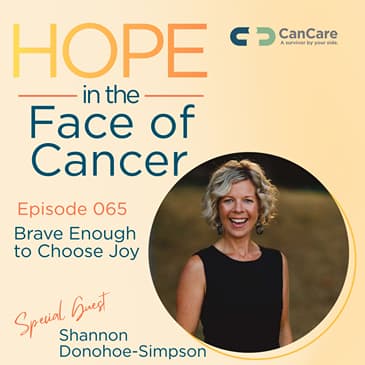
At 35, Shannon Donahoe-Simpson was raising one-year-old twins when she was diagnosed with triple-negative breast cancer, a rare and aggressive form of the disease. Now a TEDx speaker, storyteller, and advocate for wholehearted living, Shannon shares how one of the hardest seasons of her life became the start of a profound personal transformation.
Through chemotherapy, a double mastectomy, and the challenges of caring for her young family, Shannon learned the power of community, emotional healing, and allowing others to help. She opens up to Darcie Wells about the childhood trauma she began to confront during her cancer journey and the healing she found through counseling, support groups, and honest conversations. Her experiences also shaped how she advocated for her son as he navigated autism.
Today, Shannon helps women find the courage to choose joy, even after deep pain and loss. Her story is a reminder that healing doesn't have to happen alone, asking for help is an act of bravery, and hope can begin with one small step forward.
Highlights:
· Why receiving help can be harder than offering it.
· How shared experiences can ease feelings of isolation.
· The connection between vulnerability and personal growth.
· Learning to release control when life feels uncertain.
· Making room for grief without closing the door to joy.
Mentioned Resources:
CanCare- www.cancare.org
Shannon’s Website -https://shannondonohoesimpson.com/
About the Guest:
Shannon Donohoe-Simpson is a TEDx speaker, storyteller, breast cancer survivor, and self-proclaimed joy bringer from Vancouver Island, Canada. In 2009, a year after welcoming twins and at just 35, she was diagnosed with a rare and aggressive breast cancer. Today, she helps women become brave enough to choose joy and step fully into authentic, wholehearted living.
Love the podcast? You’ll be moved by the book. The Hope in the Face of Cancer book shares inspiring, real stories from survivors, caregivers, and healthcare heroes. Raw, uplifting, and full of heart—for anyone seeking hope and connection. Get your copy: cancare.org/hopebook.
About Our Host:
Darcie Champagne Wells is the President and CEO of CanCare, Inc., a nonprofit dedicated to providing support to the cancer community by pairing cancer patients with survivors. Since joining in November 2020 as the third President & CEO, Darcie has driven significant growth, increasing one-to-one support matches by 45% and healthcare referrals by 66%. In 2022, she initiated the Impact Acceleration Initiative to further expand support for cancer patients and caregivers. Her leadership has earned her recognition as a “Most Admired CEO” and “Woman Who Means Business” by the Houston Business Journal, and national “Fundraiser of the Year” by RAISE. Darcie holds a BS in Business Administration from Louisiana State University and an MBA from the University of Houston.
https://www.facebook.com/CanCareInc
https://www.instagram.com/cancare_inc
Thanks for tuning in to Hope in the Face of Cancer!
We’re so glad you’re here. If this episode moved you, inspired you, or brought you a little bit of light, please share it with someone who might need it. Just hit the share button on this page or spread the word on social—your voice helps us reach more hearts.
🎧 Never miss an episode!
Subscribe on Apple Podcasts, Spotify, or wherever you get your favorite podcasts to get updates as soon as new episodes drop.
⭐ Help us grow with a quick review
If you’re enjoying the podcast, leaving a review on Apple Podcasts goes a long way. It helps others discover the show and reminds us that these stories matter. Take a moment to leave a review—we read every one!
📖 Enjoy the podcast? You’ll love the book.
Check out our book, Hope in the Face of Cancer—a powerful collection of real stories from survivors, caregivers, and healthcare heroes. It’s uplifting, raw, and full of heart. Get your copy at cancare.org/hopebook.
[00:00:08] Welcome to Hope In The Face of Cancer, a survivor by your side. Here we share hope and support to anyone in their cancer journey. I'm your host, Darcie Wells, CEO of CanCare and a cancer caregiver. Whether you're a patient, caregiver, survivor, or healthcare provider, we are your cancer support community, together uplifting each other every step of the way. No one should face cancer alone.
[00:00:37] Welcome to Hope In The Face of Cancer, where we share real stories of courageous people in their cancer journey. My guest today is Shannon Donahoe Simpson, a TEDx speaker, breast cancer survivor, storyteller, and self-proclaimed joy bringer from Vancouver Island, Canada.
[00:00:57] In 2009, just a year after welcoming twins, and at only 35 years old, Shannon was diagnosed with a rare and aggressive form of breast cancer. Hers is one of the most honest stories you'll hear about the hardest days, about learning to ask for help when it felt impossible, and discovering that on the far side of the deepest pain, there can be breathtaking joy.
[00:01:23] Now, after walking through profound personal transformation, she helps women to be brave enough to choose joy, regardless of what life throws at them. Through her lived experience, she helps women reconnect with their inner power and step fully into authentic, wholehearted living. Shannon, thank you so much for being on the show today and trusting us with your story. Thank you so much for having me. It's such a pleasure to be here.
[00:01:50] Oh, I'm so excited to dig in because you've got such a fascinating story. I know our listeners will really relate to. So I'd love to just take us first to your life, you know, before 2009. You were a young mom with brand new twins in Vancouver Island. So what was life like? What was an ordinary day? Probably not a very ordinary with two young kids.
[00:02:18] No, there was a lot going on when, yeah, when my twins were born. It wasn't your easy pregnancy. I was on bed rest for almost two months. And I remember the twins coming along. And, you know, I, you know, you don't know anything different when, you know, people typically have one child at a time. But you don't know if you're a first time mom and then you have twins.
[00:02:46] It was just a very busy time. So I was, everything was about schedules and sleep time and all the different things. It was just a very, very busy time. My husband at the time also worked as a full-time firefighter. And we also had a full-time company with nine employees. And it was just a really very busy time. Yeah, I can only imagine. So what were you really focused on in that season?
[00:03:15] I mean, it sounds like with two young kids, with your twins, I mean, that pretty much was the focus of your life. But tell us a little bit more about kind of what season of life you were in. Yeah, I mean, I was just going through a really big transition, you know, coming from being, you know, on my own. You know, a lot of women are having children when they're older now. And so I was 34 when I had my kids. And it's a big transition, like whether you're younger or whether you're older.
[00:03:45] But I find when you're older, you've had your routines for a longer time. And then all of a sudden, you've got these two young ones that are relying on you and solely on you. And you're like, oh, my gosh. So it was a really big transition for me. I mean, I know a lot of moms go through depression, post-traumatic depression. And I mean, I didn't have that. But still, it was a massive transition for me to go through that, you know.
[00:04:13] And also working for a big part of my career. I was a recreation therapist for many, many years. And I loved my job. I was very good at my job. And just the transition of like all of a sudden, I know I'm not working anymore. I'm staying at home all the time. You know, my husband is working two full-time jobs. So I was home on my own like a lot with these two little ones. So it was a really big transition for me.
[00:04:41] Well, and shortly thereafter, you had another big transition. So tell us about your diagnosis. You know, what led up to it? What how did you know something was not quite right? Well, I remember talking to my girlfriend on the phone and I just said we were talking about she tell me that her friend was diagnosed with breast cancer. He said, oh, that's funny.
[00:05:07] You know, I got this little lump on the side of my breast and I didn't make a big deal about it. And she's like, oh, my God, maybe you better check that out. I was like, oh, OK. What I just thought maybe it was connected to like breastfeeding. You know, you get lumps when you're breastfeeding and differently. And I didn't really make anything out about it. And so I decided, OK, I'll go make the appointment. And I went and make the appointment that made the appointment.
[00:05:32] And I remember just being having that moment where I was on my parent at my parents house on Main Island. And I got the phone call to soon as I get into town to come to the doctor's office. And I remember getting into town, going to the doctor's office and the doctor's office was completely closed. And I was like, oh, this is really weird. Like the doctor's office closed.
[00:06:02] So I knock on the door and two girls are behind the desk and they're like, oh, we're closed. We're closed. And I was like, no, no, I was told to come down here. And they're like, oh, are you Shannon Simpson? And I was like, oh, goodness. Like, yeah, I'm Shannon Simpson. And they're like, open the door, get me in. And they sit me down and they dial the doctor and he gives they give me the phone. And my doctor says, Shannon, you've been diagnosed with triple negative breast cancer.
[00:06:30] And I just remember sitting in the doctor's office by myself with these two women that I don't know. And being like, oh, my gosh, like I've got two young children at home that are not even like just turned one years old. Like, what the heck? How am I going to get through this? And first thing I thought about was my hair. I know it sounds so ridiculous. So ridiculous.
[00:06:58] But I had hair past my bum and I had the most amazing, beautiful hair. And I was like, oh, my God, like, I'm going to lose my hair. I'm just a new mom. I just got out of bed rest for two months. Like, how am I going to do this? Like, I just don't even know how I'm going to do this. And my husband at the time had one broken hand. And we'll get into the story of that because he ended up breaking both of his hands.
[00:07:24] And it just was a really, really difficult time. As you were processing that, how did you get the support you needed? I mean, how did you who did you talk to? How did you handle the news? Where did you turn? Yeah. Yeah. So I've always been really good at asking for help. And I'm I've always been a very resourceful person.
[00:07:54] My background, again, is in recreation therapy and in human kinetics. And I've always organized and planned and made events happen. And so I've always been able to find resources around me. And so I went to these skills that I had and I'm not afraid to ask for help.
[00:08:17] And so when I was diagnosed with cancer, I was really lucky to have had critical illness. Yeah. And because I had critical illness that gave us some money to help support us, which was amazing because I then was not working, I was off because the kids.
[00:08:41] But I was I'd actually just gone back to work after the kids were they had just turned one. So I just gone back to work. I don't think I was there for more than like a month or two and maybe a month. And then this diagnosis. And so I reached out to a woman that I had met after I'd gone to Inspire Health Integrated Cancer Care,
[00:09:09] which is a great organization here in Canada that allows people support, free support through their cancer diagnosis. And I ran into an old teacher of mine that taught me in therapeutic recreation program. And she was there supporting her mom. And I just remember thinking, oh, my gosh, like I've got this money. Lee is an incredible coach.
[00:09:37] How amazing would it be to hire this woman to support me through this journey? Because I had that money and I wasn't going to just let it sit there. I was like, I need to use this as a resource. And it was the best thing that I did because having someone that I could talk to weekly to continue to support me and pick me up. And I've said this before.
[00:09:59] It was almost like every week I would like fall down and she would literally pick me back up and put me back on the shelf again. And then every week I felt like I was literally coming undone again. And then every week she would pick and it was one of the best things that I did. And on top of that, I had an incredible girlfriend that there was a platform, an online platform called Helping Hands.
[00:10:27] And that allowed she set that up for me and that allowed me to reach out for support for food, meals. If I needed to go to be taken to my chemo appointments, if I needed help with the kids. And it also allowed me to create a community around me. So when I was going through some of my hardest days, I was that 1% that reacted violently to chemo.
[00:10:55] And so my first chemo treatment, I was in and out of the hospital for eight days straight. I couldn't eat food. I couldn't even take a sip of water like nothing would go in my mouth. Wow. And so for my husband at the time to be able to reach out to my community using this platform to update all my community on how I was doing and what was going on for me.
[00:11:22] And so that was an incredible resource to have behind me. And then people, of course, showing up to be there when we needed it, which was incredible because my husband at the time was still working full time. We still had a full time business where we had nine employees. Like there was a lot of moving parts going on behind the scene. And then on top of that, he then broke his other hand.
[00:11:48] So here I was with two young children going through cancer. My husband had two broken hands. And when I was in the middle of chemo after that first round, one of my twins, my son, was diagnosed with autism. Well, he wasn't diagnosed at that time, but I was told that he was very likely on the autism spectrum.
[00:12:18] And, you know, those moments where, well, I mean, I remember the moment. Like, I remember the moment I was sitting in my kitchen and, you know, I had just gone through my first treatment and I had no hair. And I was sitting at the kitchen table and this woman, Jennifer, who had followed my kids for over a year because my twins are only four pounds when they were born.
[00:12:43] So they're quite premature. And so the child development society followed them. And this woman, Jennifer, sitting across the table from me and she just started to cry. And I remember looking at her and saying, like, what's going on? And she goes, Shannon, I don't even know how to tell you, but I'm pretty sure no one has autism.
[00:13:07] And, you know, those moments where you are like, you know, they say that God doesn't give you more than you can handle. But in that moment, I was like, I don't actually know that I can handle anymore in this moment. And, you know, somehow, somehow God knows that we have this incredible resilience within us and we have this ability to go into these really hard places.
[00:13:39] And somehow God knows that we are more powerful than we know. And we don't know it in that moment because in that moment you feel like you are like, how am I going to get through this? But we just make one step forward every day. And somehow, somehow we do it. Somehow. Wow.
[00:14:04] It was so incredible that you had taken the time and effort to put the support system around you. Because I can't imagine how you could walk through the season without an army. And I, you know, just applaud you for that because I think that's one of the hardest things sometimes for people to do. Yeah. Is to ask for help. Yeah.
[00:14:33] And I remember a dear friend of mine, Sean. He was my TEDx coach, incredible human. And he talks a lot about this with me at one point. And he said, you know, Shannon, I used to do these talks on the stage. And he says, I would ask people, how many of you like to help your friends and your family? And everybody would put up their hand. And then he would say, and how many of you like to ask for help?
[00:15:03] And no one would put up their hands. Yeah. And he's like, okay, like, wait a minute here. Look around. Like, you all just put up your hand saying that you love to help your friends and family. And yet nobody can put up their hand saying that we want to ask for help. But if we all know that we love to help each other, then why aren't we asking for help? Like, it just doesn't make sense.
[00:15:29] And, you know, I remember this moment so clearly. I was sitting on my couch and my ex-husband was not good at asking for help. Not, I don't know if it's a male thing, but definitely not good at asking for help. And one of my very close friends came over and my ex-husband at the time, he said, you know, sit down, make a cup of tea.
[00:15:56] And she just looked at him and she said, you know what? I'm here to help. And you don't get permission to take that away from me. And I was just like, I remember sitting on the couch going, whoa, like people want to help and that's what they want to do. And we don't get to take that away from each other. You know, we want to help.
[00:16:22] And so that was a real pivotal moment for me moving forward. We innately as humans, like you think about all the really hard things that like the disasters that go on. And I know they're horrible. And when there's like big floods or there's big fires or disasters, all of a sudden color doesn't matter where you're from. Doesn't matter.
[00:16:52] None of it matters. All that matters is that we help each other. Yeah. And all of a sudden the love, all the things, the little things that matter, the little things that don't matter, sorry, wash away because all we want is to help each other. And it's, it's literally at our core. And so being diagnosed with cancer is no different.
[00:17:22] It's this pivotal point. I feel like, and I have a different view on being diagnosed with cancer and maybe some people won't agree with me, but for me, it was one of the best things that ever happened to me because it made me pause. It made me have to look inward.
[00:17:43] And I spent so much of my life running, running, trying to be perfect, trying to keep busy. So I didn't actually have to be with myself and my feelings. And there was, I mean, there's so many moments that I've had these big epiphanies in my life,
[00:18:05] but one of those big transformational moments was I was again, sitting on my couch happens a lot. And I remember knowing that I needed to go on a retreat. I needed to connect with some people going through the same thing as me. Yeah.
[00:18:29] Now I know that being diagnosed with cancer at any point in your life sucks. It's hard. But when you are a young mom with two, one-year-old twins, a husband with broken hands, a young son that's in the process of being diagnosed with autism,
[00:18:54] you've got a brand new mortgage and like, it literally feels like you can't work. It feels like all the things are stacked up against you. Like, how do I hold space for all of this? And I knew that I wanted to be around other people going through the same thing as me. So I could sit in a circle and know that I wasn't alone because I felt so alone.
[00:19:24] I remember going on the internet and finding this Kellanish society. I remember showing it to my ex-husband. He's like, that looks like a cult. And I was like, no, no, it's not. It can't be like, this looks amazing. And I remember reaching out to these incredible women and I'm going on my first retreat and it literally transformed my life.
[00:19:47] I remember sitting in this circle and everybody starting opening up about how cancer had impacted their lives. And this one woman, she started talking about her experience with sexual abuse. And I literally almost stopped breathing. And I was like, oh my goodness, this is me.
[00:20:15] And all of a sudden in that moment, I realized that I wasn't in that circle to heal myself from cancer. I was actually in that circle and that retreat to heal the wounds that caused my cancer.
[00:20:34] And that's my story around me and my experience going through cancer is that I've literally spent my whole life running, running from the truth, running from this truth of going through this sexual abuse that I experienced at the hands of my grandfather from my childhood.
[00:20:59] And being raised in a home where I was to be seen and not heard, be a good little girl, do as I'm told. So many women in particular been raised in these houses where we just lift the rug and sweep it under. And if we don't talk about it, it didn't happen.
[00:21:23] But as Gabor Mate speaks in his book, which is the very first book I read after I was diagnosed with cancer, When the Body Says No. And it talks about how when we suppress our emotions and our traumas, that they will manifest into physical ailments.
[00:21:43] And those physical ailments are meant to literally bring us to pause so we can look inward and do the inner healing that is meant to happen.
[00:22:01] And maybe not everybody agrees with me on this, but I literally now when someone gets sick, whether it's cancer, whether they break their back, whether anything happens to them and they are forced to pause, I believe it's not by mistake. I believe that it's an opportunity. Like, let's look at COVID. So many people view COVID as this really horrible time.
[00:22:31] And it was. It was a really hard time. But we all had to pause. We all had to look inward. We all had to be faced with the relationships that were in our lives. And maybe some of us realized like, oh, this actually isn't really great for me.
[00:22:52] So many of us had to go inward and reflect on some things that we keep so busy that we don't want to look at. And so this was my opportunity going on this retreat and sitting in this circle surrounded by people that were my age because this was the very first young adult only retreat that they had done. It was their 50th retreat.
[00:23:19] So amazing that I got to sit in a circle with people that were my age, all of them, all nine of them going through the exact same thing and feeling like for the very first time I could speak my truth that had been literally kept locked inside me after 20. No, at the time I was 30.
[00:23:48] I mean, I'd spoken it out loud before, but not in a circle, only to a counselor. And so after 34 years to be able to speak this out loud. And this was the start of my healing journey. This cancer was the start of my healing journey. I can imagine there was such freedom and in a way relief, you know, saying that those things,
[00:24:16] out loud and realizing the hold that they had on, on you for so long. Yeah. How did you work through that? Cause that's, I mean, that's a heavy revelation and you're still, you know, going through your cancer journey and your kids are young. How did you peel back that onion and do the work needed to heal you from that revelation? Not alone. Yeah.
[00:24:46] And, you know, to the listeners, we don't do this alone. We, we do this in community. So for two years, I drove to the Kalanish society every single Wednesday night. And I sat in circle for two full years. And that was a huge part of my healing journey. I also had a counselor that I reached out to.
[00:25:11] I also continued to work with that coach Lee for that entire year. As I moved through my chemo, as through my double mastectomy, through all of my different treatments. I, I, I continue to use my platform, the helping hands platform. I was not afraid to ask for help. I was also really blessed to work with the most incredible recreation therapy team.
[00:25:40] I worked at Peace Arch Hospital in White Rock area. And we, there was a team of 17 of us. And they continued to bring me food and, you know, show up when I needed help with the kids. Like I just had the most incredible support. And again, we don't do this alone. You admittedly have never had an issue asking for help.
[00:26:10] But for the person listening today who doesn't want to burden others, who feels like they want to walk this journey alone, what would you say to them? Being brave is hard. And cancer forces us to be brave. It really does.
[00:26:41] And so many of us have been raised to be independent. We can do it alone. I got this. That's the way I was raised. But it doesn't serve us. And just because that's the narrative that maybe you were told or taught doesn't mean it's the narrative that you need to continue working forward to. We, I give you permission. We give you permission.
[00:27:09] We give you permission to be brave enough to ask for help.
[00:27:42] But it's hard. It's hard. It's hard going through cancer. But it's even harder going through it alone. It's true. It's even harder going through it alone. And you don't have to. You know, you may not have. You may not have in the family and friends network to surround you. That still doesn't mean that you have to be alone. That there are. You've talked about the resources that, you know, were in your life and obviously can care.
[00:28:12] But there are so many organizations out there designed just to do this, to be there. Yeah. To ensure that you're not walking that journey alone. Yeah. And you just have to look out for them. You know, and I'm a big believer in because I've been forced to pause so many times in my life. I'm a big believer in listening to our intuition as well.
[00:28:41] And my intuition was that day and I call them downloads. I get a lot of downloads in my life to literally go on the Internet and I needed to go to a retreat. And I typed in and this Kalanish Society came up. And then having the opportunity to do that, I got connected to Young Adult Cancer Canada, which then led me to have the opportunity to go on two retreats with them. One with my husband at the time, one on my own.
[00:29:09] Then I ended up running, not running the retreats, but being a supporter and going on two more retreats with Young Adult Cancer Canada as a person that got to share my story and be there as supporter for other young people going through cancer. And then that connected me to Inspire Health Integrated Cancer Care.
[00:29:31] So each one, every time we are brave and we show up and we ask, it's like God gives you, oh, here's more. Oh, oh, here's more. And, you know, I'm not, I don't go to church. I'm not a spiritual person, but I do believe that when we are brave enough to ask, the universe is there just waiting. And I've always been told that you just have to ask. You just have to ask.
[00:30:00] There was a moment in this journey that someone had a message for you about Nolan, your son. Tell us about that. You know, that was a really incredible moment. I remember exactly where I was. I was standing in the kitchen right beside the island. And my coach, Lee, had phoned me.
[00:30:30] And we were supposed to have this big conversation that day. And I was in the middle of chemo. And we were working towards some goals to just really help my mindset to be positive. And the phone rings and I'm picking it up. And I remember Lee saying, OK, we're ready to go. We're going to do this thing. And I was like, oh, Lee.
[00:30:55] I said, I'm pretty sure that Nolan's been diagnosed with autism. And I remember Lee just taking a deep breath. And she goes, OK, Shannon, we're going to switch gears. But I just want to say out loud that Nolan is going to be your biggest teacher. And I never forgot that moment. I never forgot that moment.
[00:31:25] You know, I know this maybe isn't connected to cancer. But as a mother, I always believed that I was going to bring my kids into the world. And I was going to teach them everything that I know. And I can humbly sit here and say, as my teenagers are now 18 years old, that they have taught me everything that I know. They've literally taught me everything that I know.
[00:31:57] And it's been a journey going through cancer and supporting my son through his journey, through his autism, my daughter having quite severe anxiety. I homeschooled my kids for seven years. And if you had told me that I was going to homeschool my kids, I would have told you you were crazy. There is no way I'm homeschooling my children. But it's what they needed. It's what they wanted.
[00:32:27] And, you know, after my son was nonverbal, he didn't speak. He didn't walk. He only bashed his head on every hard service he could find and hummed so incredibly loud.
[00:32:45] And he did therapy for years until we moved to Vancouver Island when he was eight years old for five hours a day since he was two years old. And we literally turned our garage into a therapy room. And there were days where I would listen to him scream for hours.
[00:33:14] And I would be like, I don't, you know, where you question whether you're doing the right thing. You question everything. And somehow we just need to surrender and let go and know that there's something bigger than ourselves guiding us.
[00:33:34] And I'm so incredibly proud to say today that my son has graduated two years early. He is going to college to become a accountant. He has more money invested in his bank account than I do. And my daughter is doing incredibly well. They're both incredibly brilliant.
[00:34:04] And again, it comes back to resources and love. I had the opportunity to stay home with my kids because I went through this cancer journey. And that cancer journey gave me the tools to ask for help, to learn, to be a little tenacious, to ask for what I need.
[00:34:28] And those skills transformed, translated beautifully into supporting my son through his journey of autism. Because I had to stand up. I had to go to play for him. I had to ask for what he needed for him and for my daughter. I poured every resource and every ounce of love that I had into my two kids.
[00:34:58] And probably part of the reason I was able to do that was because I had that critical illness that allowed me to stay home. And I also had an incredible husband that worked really hard. And so we were a great team. But to be on the other end of a young boy, not able to speak, not able to walk, and now thriving in this world.
[00:35:25] And that's because I was brave enough to ask for what he needed. Brave enough to ask for what I needed in my journey, which then translated into what he needed for his journey. And so, again, we don't do this alone. I think it's probably, if there's anything that I want to say out loud for here, is we don't do this alone.
[00:35:53] And being brave, it's hard. But you're doing cancer already. And that's hard. You're doing it already. And so, there's more. When we think that we can't do any more, you've got more in you. We all do. Dig deep because we do.
[00:36:21] This message of being brave enough has really become a platform for you. And you have turned your journey into an opportunity to impact other people's lives. Talk a little bit about what you're doing now and the message you're really trying to deliver and the impact you're trying to have on the world.
[00:36:45] Well, really, I help women be brave enough to choose joy regardless of what is going on in their life. And joy is so interesting because Brene Brown says that joy is the most vulnerable human emotion there is. And some people would pause and go, well, I'm curious about that. Counterintuitive.
[00:37:14] Right? But when you think back to all the things, many of us have been through so much trauma in our lives. I think back to my childhood and the trauma and the sexual abuse of my grandfather that then led to me not speaking my truth and me holding all these secrets, which then led to me going through my cancer diagnosis and all of the journey through this healing.
[00:37:41] And being brave enough is. And back to this piece around joy is when all we know is trauma and when all we know is the things that have happened to us.
[00:38:01] For me, the translation happened when I was sitting in that circle realizing that this isn't happening to me. It's happening for me. And that is such a huge turnaround. Because we can be stuck in these victim mindsets where we're like, woe is me. I can't get through this. I'm not.
[00:38:30] I don't know how to do this. But you do. You do. And it's not happening to you. I promise you it's happening for you. And on the other side of it. Well, again, like I was stuck in that victim mindset for so long. Whole life. My whole life.
[00:38:52] But when we can come to those places and turn that on its head and be like, okay, this is happening for me. I get the opportunity now to slow down. I get the opportunity to look within. I get the opportunity to ask people to help me. I get the opportunity to not do this alone. I get the opportunity to surround myself with community. And maybe I've never had community around me before.
[00:39:21] And man, does it feel good. Man, does it feel good to have somebody come up and say, what do you need? What can I get for you? But then being brave enough to say, thank you. Because I really needed that. So many of us, it's one thing to give. But what if we're brave enough to receive? What if we're brave enough to receive?
[00:39:51] Because isn't that what life is about? It's about the ebb and the flow. And if we're always giving and giving and giving and giving, we're exhausted. There's nothing left. And that's where the joy light goes out. What if we allowed the joy to come in too? And what if we made that part of our lives?
[00:40:17] What if we decided that we don't want to always live in trauma anymore? And what if we were brave enough to invite in the joy? What if we were brave enough to allow ourselves to feel it all? There's this incredible saying that I just literally came across last week. And it goes like this.
[00:40:44] Joy is the fruit of well-lived grief. Joy is the fruit of well-lived grief. And we're so afraid to feel. We're so afraid to cry. We're so afraid to be angry. But what if on the other side of feeling the anger, feeling the grief, feeling it all,
[00:41:14] is joy that you can't even explain? And I am here to tell you that I am living proof. The joy that I feel in my life... I was sitting in a coffee shop yesterday with my girlfriend, trying to explain to her the joy that I feel in my life. And I often break down into tears.
[00:41:43] And not because I am sad, but because I am overwhelmed with so much joy in my life and so much awe because I have been to the depths of the depths. And I've allowed myself to feel the anger, the pain, the hurt, the heartache, the heartbreak. And I've gone through...
[00:42:11] I mean, I just came out of a divorce in the last two and a half years. And for any of you that have gone through divorce, hands down, the hardest thing I've ever done. And I've even said this out loud before that I would actually do my chemo again, then go through this divorce. You know, after being married for 18 years and going through cancer and going through autism, going through broken backs and PTSD and anxiety
[00:42:41] and all the things and finally getting on the other end of it and thinking, okay, we're on the other side of it. And for my husband to say, I want a divorce, the pain of my heart, literally feeling like it was crushed into a million pieces was indescribable.
[00:43:06] But because I had had the opportunity to go through cancer, to go through autism, and I wasn't afraid to feel, I allowed myself to go to those depths. I allowed myself to feel that incredible pain and to allow people to hold space for me. I've sat in women's circles. I've gone to counselors. I've done energy work.
[00:43:34] I've done medicine work, plant medicine work. And the emotions need to flow because energy, we are energy. I mean, whether you believe that or not, we are scientifically 99.999999% energy. And that means that energy flows where attention goes.
[00:44:04] And so if we've got emotions that need to move through, they need to move through. And this is what Gabor Mate talks about. All these emotions, all these traumas need to be spoken out loud. They need to flow through. And on the other side of that is joy. Joy that I promise you is so incredible. So incredible.
[00:44:34] And that's what I want to say to, and what I bring to the plate is that on the other side, I help women be brave enough to choose joy regardless. Through the cancer, through the heartache, through the heartbreak, that there's hope on the other side. And I spent so much of my life
[00:45:00] needing to control every little thing. And it was exhausting. It was exhausting for me. And it was exhausting for every person that needed to be around me. Because that was my control mechanism. If I could control, if that was how I made myself feel safe. If I could control every little bit,
[00:45:26] even when my ex-husband would throw all the ingredients to make a sandwich into the picnic basket, I would literally have a heart attack. Because I needed those sandwiches to be made, wrapped, I couldn't handle it. But when we let go of control, and we trust that there's something out there bigger than us guiding us,
[00:45:52] and that there are people out there that want to support us and love us, that we don't have to actually hold on so tight to everything, that cancer may be even an incredible opportunity to heal and invite joy into our lives that we've never experienced before. And I know maybe this sounds crazy, but it's not.
[00:46:21] Because I'm living proof. Yeah. Shannon, your story is incredible. What you've learned is incredible. The gifts that you're giving to our listeners right now are incredible and rich and authentic. I would love for you to speak directly to someone listening right now who is in the middle,
[00:46:49] going through and feeling despair, maybe feeling hopelessness, feeling like I don't have the energy. You know, to do what you're advising me to do. Speak directly to them as we close today. Yeah. I would say, I see you. You're not alone. We're never alone. And you don't have to do it all at once.
[00:47:18] You just need to take one step forward every single day. And that is it. One step forward. Maybe you make one phone call. Maybe you make one journal entry. Maybe you eat one thing that can get into your body today. Maybe you drink the water. Maybe you reach out
[00:47:47] and ask your husband or your wife to do something nice for you that you need. But don't be afraid. Be brave enough just to take that one step forward. And you got this. Trust me, you got this. I, if I can get through autism and cancer and a husband with two broken hands and twins
[00:48:17] that are one years old, trust me, you got this. We are more resilient than you know. More resilient than you know. So be brave enough. Do the thing. The one thing. That's all you need to do. Thank you so much, Shana. This has been such a special time. Thank you for just opening up and allowing us into your story and being brave enough to share such an intimate,
[00:48:48] challenging, heart-wrenching at times story. It is very inspiring, I know, for our listeners. And how can our listeners, if they want to follow you or be a part of what you're doing, how can they find you? Thank you for asking. So you can reach out to me at shannandonohosimpson.com. You can also find me on Instagram and Facebook. You can also find me on my YouTube channel. I do a weekly Toolbox Tuesday,
[00:49:19] which is just me speaking what's on my heart and speaking my truth. And if you live in Vancouver on Vancouver Island, I'm actually hosting the inaugural Brave Enough conference, which is going to be happening October 30th. I have four incredible speakers, including myself, that are flying in from around the world and going to be on Vancouver Island here in Courtney. And I'm so excited about this event.
[00:49:49] And I also host a women's group called Brave Enough to be Yourself. And you can reach out and join me and be part of that women's group. Thank you, Shannon. Thank you so much for sharing your story and your heart. And we just thank you for what you're doing and creating community, sharing your story, being brave and helping others do the same. It's been a blessing to have you on the show today. Thank you so much for having me.
[00:50:18] It's my pleasure. And thank you, listeners, for joining us today. Whether you're facing cancer yourself or you're caring for someone you love facing cancer, please know you don't have to walk this road alone. At CanCare, we connect anyone facing cancer, whether it be a survivor or a caregiver, with a trained volunteer who's walked that same journey. You can learn more at CanCare.org.
[00:50:48] And if you're a cancer survivor or a caregiver who'd like to walk alongside someone else and support them, we would love to welcome you into the CanCare volunteer family. So visit us at CanCare.org to get or give support. Until next time, remember, there is always hope in the face of cancer. Thank you for joining us on this episode of Hope in the Face of Cancer, a survivor by your side.
[00:51:17] If you or someone you know is facing cancer or is supporting a loved one through their journey, we invite you to share this podcast. As a cancer survivor, your journey carries invaluable wisdom and insight. We would love for you to get involved in CanCare's mission of becoming a survivor by the side of someone facing cancer. Please visit our website at CanCare.org slash volunteer or click the link in the bio for more information on how to get involved. Our survivor volunteers have been a beacon
[00:51:47] of hope for so many. Thank you for your support and our efforts in the cancer community. No one should face cancer alone.