
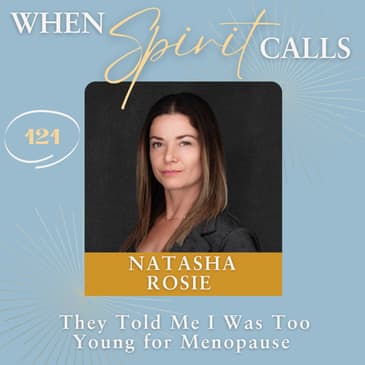
Perimenopause can bring unexpected changes, from mood swings, insomnia, brain fog, fatigue, weight gain and depression. In this episode, Natasha discusses why these symptoms happen, why they’re not your fault and the importance of getting the support you deserve. She shares simple, practical ways to support the nervous system, muscles, bones, sleep, and overall well-being, helping women move from hormonal chaos toward greater balance, energy, and confidence.
Natasha’s offerings to our listeners:
- Want to be seen, heard, and supported through your perimenopausal journey? Claim your2 FREE Breakthrough Experiences Here
Connect with Natasha:
- Natasha Rosie - Website
- Natasha Rosie - Links Page
- Natasha Rosie - Instagram
- Natasha Rosie - Facebook
- Natasha Rosie - YouTube
Connect with Rev. DeeAnne:
About the Guest:
Natasha Rosie is a Health and Mindset Coach who specializes in women’s health and longevity. After being diagnosed as postmenopausal at 44, Natasha recognized how underserved women are during the perimenopause transition and was inspired to bring greater awareness and education to this important stage of life.
A Red Seal Chef and Jay Shetty Certified Life Coach, Natasha is currently studying with Dr. Shaunna Menard at The Health Professional Academy. She combines her knowledge of health and mindset to help women understand what is happening in their bodies and approach this stage of life as a powerful new beginning.
Natasha lives in beautiful Penticton, BC, in the Okanagan.
About the Host: Rev. DeeAnne ‘Rose Hope’ Riendeau B.Msc, HADM, PIDP, NLP is a thought leader in spiritual and business development whose mission is to elevate how we think and live. Experiencing a life of chronic illness, and 2 near death experiences, DeeAnne rebounded with 20 years of health education and a diverse health career.
She is known as the modern-day Willy Wonka for giving away her company Your Holistic Earth, which is the first holistic health care system of its kind. She is currently the owner of Rose Hope International, in which she helps those who are seeking more joy, love, freedom, and a deeper meaning in life using your soul’s library also known as the Akashic Records.
She has spoken at Harvard University, appeared on Shaw TV, Global Television, and CTV and has been recognized as a visionary and business leader having been nominated for numerous awards including Alberta Business of Distinction. Along with being an entrepreneur, DeeAnne is a mom of 2 bright kids, publisher, popular speaker and international bestselling author who uses her heart and her head to guide others to create their best life.
Thanks for listening!
Thanks so much for listening to our podcast! If you enjoyed this episode and think that others could benefit from listening, please share it using the social media buttons on this page.
Do you have any feedback or questions about this episode? Leave a comment in the section below!
Subscribe to the podcast
If you would like to get automatic updates of new podcast episodes, you can subscribe to the podcast on Apple Podcasts or Stitcher. You can also subscribe to your favorite podcast app.
Leave us an Apple Podcasts review
Ratings and reviews from our listeners are extremely valuable to us and greatly appreciated. They help our podcast rank higher on Apple Podcasts, which exposes our show to more awesome listeners like you. If you have a minute, please leave an honest review on Apple Podcasts.
Rev. DeeAnne Riendeau: This is when spirit calls, and you on your journey are in the right place. This show is about magic, miracles, and meaning shared through stories, interviews, and channeled messages. We have so much to share about who you are and your divine mission here on the earth. Let's get to it when Spirit calls is right now.
Speaker:Today's guest is Natasha Rosie. After being diagnosed postmenopausal at just 44 years old, Natasha recognized how underserved women are during the perimenopause transition. Now a health and mindset coach, Natasha specializes in helping women navigate the complexities of perimenopause and prioritize longevity by combining mindset coaching with health education. She empowers women to manage symptoms, reclaim vitality, and see this stage as a powerful new beginning. Her mission is to ensure that no woman feels lost in their hormonal shift, providing the tools to thrive with purpose, agency, and a long, vibrant life. Natasha lives in the beautiful Okanagan Valley, located in Penticton, B.C. Canada. Oh my goodness! We're back again on When Spirit Calls, and I have a very special guest on the show today. This woman came into my life several years ago, and you guys have learned a little bit about Atasha already. But I am so excited for you to learn more about this human being. She has so much wisdom inside of her. It blows my mind, and this woman can do everything from the acting to the cooking to the coaching. So she has it all under her belt, and I'm so excited to have you here with us. Hi, Natasha.
Natasha Rosie:Hello.
Natasha Rosie:Rev. DeeAnne Riendeau: I am so happy that you're here, so that people can get to know you and your story, and particularly because I'm moving through a very significant phase of my life called perimenopause. And so, for all you men listening, I know you might not think that this has anything to do with you, but let me tell you, it has a lot to do with you too in terms of how you handle us when we're going through this phase of our lives because it is a little bit wild. I got to tell you, so we're going to break down some of those pieces today. Of like, okay, what do we need to know about perimenopause, and are we losing our minds, and are we going crazy? So we're going to address some of those concerns that a lot of people have, and also for the men who are like, I don't know what to do with my crazy perimenopause wife or girlfriend anymore, or whomever that might be in your world. This is for all of those people that have to deal with anyone in that particular age range. You know, really the plus 35 to you know 55 kind of range. So, really, again, really important topic of conversation. So, before we get into all of that, Natasha, can you enlighten us? Because, you know, you've been through some things in your life that I wouldn't wish upon my worst enemy, and I would love for the audience to get to know you and the things that you've been through and had to move through that have gotten you to this place where you become now an expert in perimenopause. Can you enlighten us?
Natasha Rosie:Absolutely. Well, sort of started. I was around 42, and I was doing a live acting improv workshop, and my team and I were coming up with a scenario to put up put up a C, and my team members were going over like, how are we going to do this? And I had my pen and I had my paper. I was going to write it down, and I couldn't for the life of me comprehend what they were saying and put it on paper. And that's like what? Like I I share your words, but I cannot write down what we're supposed to do in order on paper, and that started a series of testing. So I went to go get tested for ADHD, right? Because we go down the rabbit hole of what what are these symptoms?
Natasha Rosie:Rev. DeeAnne Riendeau: Yeah, what's wrong with me?
Natasha Rosie:Yeah, there's something wrong with me, which is the typical thought. And then we go down the rabbit hole Google, and so I did the ADHD testing. It came up negative, and then the next thing that sort of popped in was vertigo. So I was dizzy. I was dizzy, and it it wasn't concerning. And as women, we have symptoms, and we just kind of disregard them. You know, it's like, oh, I have this interesting new pain. Oh, it just you just kind of keep going along and ignore it, right? Because we're too busy to go to the doctors, and what are they going to say any anyway? So I had this dizziness, which was manageable. I was still, you know, being a mom and working, and and then the hot flashes showed up. And so I had two hot flashes, whereas you-that's when you get like the flushing of the skin. It's almost like an instant sunburn, and you turn visibly red. And then I was getting the night sweats. And so I was due for a an annual with my doctor, and I asked her before I did the blood work if she could throw in to check my hormones, check my estrogen, and because we all know about the night sweats, right? And she's like, "Yeah, sure. And so she did that, and I went to go see her, and she was absolutely against any hormonal anything, and suggested some supplements to help with the night sweats, so I went to the store and bought some rosehip oil, and then, and then it led to my vertigo becoming so crippling that I could not walk. I felt like completely hammered, so drunk, hadn't had a drop to drink. I was walking to walls and falling over. It was scary. I have two kids, and I drive them to school and to their activities, and I couldn't do any of that. It was scary, so that's when I asked to be taken to the ER. I went to the ER, and I was in and out. They would test my heart, and then send me back to the waiting room. It was horrible. I had to keep running to the bathroom, and you know, vomiting, and they were testing me for everything, and I remember
Natasha Rosie:laying. Finally, they had me in a bed, and I said to the ER doctor, "I'm like, I think it's because I'm in menopause. And she looked at me and said, "No, you're too young. That's not possible. And my husband, also a doctor, didn't believe me, and I felt very scared and lost in that moment.
Natasha Rosie:Rev. DeeAnne Riendeau: Yeah, my heart aches for you a bit in that. You know when we're not fully witnessed.
Natasha Rosie:Yeah, and you're with the people that are like these are the these are the people that are going to help me.
Natasha Rosie:Rev. DeeAnne Riendeau: Right, they're the ones that should know.
Natasha Rosie:Yeah, and when they're like no, and it was a female too, right? No, you're too young. I was 44 at the time. Wow! Sent home with medications and more follow-ups with specialists for inner ear infection. I did a CT scan. I did an ultrasound, and nothing was coming. And eventually, I found a hero of an OBG who said, "I believe you. So I had to do some self advocating, and she took me on. And with her help and a lot of sort of lifestyle learning habits, I am now on the other side of it, and am very grateful.
Natasha Rosie:Rev. DeeAnne Riendeau: Oh, I am so relieved for you, and I'm sorry that you had the experience you did, but I hear that's fairly common these days, you know. Even myself, I felt like I had to be my own advocate many times. And I think if if there's one thing that people can take away from your stories, be your own advocate. Only you know what is best for you, right? And I think I think sometimes we give our power away, right? It's like well, the doctor said, or so and so said, and we forget that we have this own our own internal mechanism that helps us to discern and helps us to know what's going on. So I'm really proud of you for listening to that, and thank you for inspiring the rest of us to be advocates for ourselves. And sometimes that means calling the shots. Yeah, I mean, when we really think about it, the health service professionals they work for us, not the other way around. And I think we also forget that that we are their customer, and so we we have the open door for us to say no. That's not satisfactory for me. I need X, Y, and Z, even if I don't know exactly what that means, right? So, yeah, brilliant, absolutely. So now I love that you brought us, kind of caught us up, and why you're like, okay, this is where my focus needs to be. Can we back up a little bit to more of your life journey? Because you have, like I said, you are a red seal chef. You are an actress. You have training and coaching and like nutrition and all of that stuff. So you have like a whole wealth of experience and knowledge. I'm assuming you're rolling that into the work you're doing. But could you let people know, like before you got to this point in your life where you're like, "Oh my God, there's a you know such misconceptions around perimenopause, and you know these women are are struggling and they need some support. Can you bring us back even further than that?
Natasha Rosie:Yeah, I mean, I was always obsessed with food, anything food. I remember growing up when it was story time. If there was a picture of food, it was exciting to me. And I, it's I don't even remember really learning to cook. Like my mom cooked all the time, but she never like taught me to cook. I just it's one of those things I just naturally was good at. Before that, my dream was to become an actress. I tried. And it didn't go as planned because of depression and anxiety. That's a whole other podcast episode, but something that I have overcome and I do help clients with. And then, so I took the chef route, and I loved that very much. And I did very well in nutrition, part of the the Red Seal certification, and took that to wanting to help women because after I had kids, the shift work as a chef wasn't really applicable, and we had decided my husband and I that we wanted to raise our kids and and not go the daycare route. So luckily, we were able to do that, and so I found myself at home, kind of lost as a stay-at-home mom, feeling like I didn't have a purpose and wanting to help people, and so that led me down to health and wellness online a little bit, and so was helping people with exercise routines and meal plans and mindset, and as I was doing my own self development with podcasts and self learning and workouts and food, I came across Jay Shetty, and if people don't know who Jay Shetty is, he is well not a retired monk. He tried being a monk for a couple of years, and he now is incredible at helping people to find their purpose and and see their light. And so he offered me a certification to become a life coach, and so it was just stepping stones, and that led me to be able to work from home and help other people. And so, with the menopause, it kind of just narrowed down specifically what I wanted to do. I think as helpers, we want to help everybody with all the training as women, right? Like we want to help everybody with all the things,
Natasha Rosie:just not possible. So you have to narrow down your expertise, I guess. And I guess this is my my expertise, but it all it all ties in with helping my clients. It's a holistic approach. So yeah, yeah
Natasha Rosie:Rev. DeeAnne Riendeau: I love that you're so diverse in that, like you're so multidimensional, and I think that's one of the things that sets you apart from maybe another perimenopausal coach. But you know, I tell my clients this all the time. This is how life works. It gives you a directional signpost to go there, and then another directional signpost to go there, and now you got your big directional signpost that says, "Okay, this is it now. You're going through it, so you're gonna get it. And because of your experience, I think if the experience would have gone smoothly for you, you might have not felt as called to this. So I love that's how spirit works, and what a reminder for us that on the surface, when things are getting difficult, we might think, "Oh, this is not working out for me, but in fact, it's actually guiding you closer to exactly where you're supposed to be. So, I love that for for you, even though it was an uncomfortable and difficult, you know, traversing trying to figure out what was wrong because there's nothing worse than not knowing what's wrong.
Natasha Rosie:Absolutely.
Natasha Rosie:Rev. DeeAnne Riendeau: So, okay, give us the goods here, Natasha. Thank you so much for sharing that, by the way. And you know, before we get into the goods, I just want to pause on that. You talked about depression and some mental challenges that you went through yourself, and I think that we all experience that these days. I don't think any of us are immune from that, but I love that also because you went through some of those challenges that you also can bring that to the table. Because one thing I know for sure is that I know a lot of women in perimenopause who are severely depressed right now. So is that one of the symptoms or one of the things that happens when we're in perimenopause?
Natasha Rosie:Absolutely, it's probably one of the most prominent symptoms, and it's often overlooked. And a lot of women are just prescribed SSRIs and antidepressants.
Natasha Rosie:Rev. DeeAnne Riendeau: SSRIs are what?
Natasha Rosie:So it's the serotonin. I forget the
Natasha Rosie:Rev. DeeAnne Riendeau: injection, like a
Natasha Rosie:no, but it's antidepressants, right? Oh, it's an antidepressant. Got it. Okay, your serotonin levels,
Natasha Rosie:Rev. DeeAnne Riendeau: I got it. Okay.
Natasha Rosie:Yes. Yeah, which can be helpful for women who have estrogen-driven cancer or a history of it. Okay. A small dose SSRI can be helpful for mood and night sweats.
Natasha Rosie:Rev. DeeAnne Riendeau: Okay.
Natasha Rosie:But typically, you know, throwing pills at women is not going to help them through their their menopause. If their is low enough, they're not going to have the mood balance and the calming effect that estrogen and progesterone have.
Natasha Rosie:Rev. DeeAnne Riendeau: Right, and yet that's what we're seeing. I know a lot of women my age right now who they are getting prescribed with all these different medications. Yeah, and you know, a part of me cringes a little bit because I think, oh no, we're not getting to the root. And recently, I went and got a bunch of testing done for myself too, and I said, I'm having all these symptoms, like my head is burning. That's one of the things I'm experiencing with that burning head. Like I just want to pull my rip my scalp off, kind of God, it's awful. And I'm like, what is happening? Yeah, and so I'm I'm telling this to this naturop this traditional Chinese doctor, and he's like, "Well, yeah, the symptoms happen when the body is not in its optimal state. You get the body back working, functioning properly. Those symptoms almost can be eliminated.
Natasha Rosie:Yeah,
Natasha Rosie:Rev. DeeAnne Riendeau: so there is a better way, is what I want to say.
Natasha Rosie:Absolutely, a lot of it is. I mean, I always the first thing I do is get my clients to find a doctor that will do their testing, and then we take it from there. But my job is to bring awareness and education to them, and a lot of it is letting them know that it's not their fault when they're pinching that belly fat, or they're dragging themselves, or they can't sleep, or their mood is like from zero to 60. There's so many things, and then women are constantly like blaming themselves, and that's number one thing is, or that's number two, I guess. Number one is get an opinion from a medical professional that will take you seriously, and if they want, then find a second opinion, and then knowing that it's not your fault, absolutely not your fault.
Natasha Rosie:Rev. DeeAnne Riendeau: I love that you're saying this right now because even like this weekend I was with my kids. I was so tired, Natasha. I had two naps during the day, and I was falling asleep on the couch. And my son was like, "Why are you so tired? And I went right to like, oh my god! I stayed up too late on Friday, you know. I, you know, didn't do this or like whatever. I went right into self blame, and so for everyone listening, it's not your fault, you know. There's things happening, mechanisms, chemicals happening beyond us, right? That you know we might not even feel like we have any control over. I don't have control over my head burning, you know, or the hot flash or the night sweats. Yeah, unless I get the proper help and get my system back into a regulated state to be able to manage the symptoms.
Natasha Rosie:Yes, yes.
Natasha Rosie:Rev. DeeAnne Riendeau: So okay, so we get some help from someone who's ready to hear us and listen to us. That is the number one, okay. And if, by the way, you guys again advocate for yourself, if your doctor says no, you're too young, you say I don't care. I want it anyways. You work for me, okay. And then the second part, you're saying it's not your fault. Okay, what else do we need to know?
Natasha Rosie:I guess prevention. Prevention is what I'm very passionate about with the loss of estrogen and progesterone and testosterone. That's another one that we don't talk about enough with women. There's so much prevention that we can do long term. I know, like I'm 45 now. When I was 35, I was not thinking about my bone health, and so this is something I really want women to hear about: is bone health and muscle health. It's so so important for our long term benefit. I guess once you once you're going through the symptoms, it helps you to listen a little bit more because it sucks, right? Because you're just uncomfortable and you don't feel like yourself.
Natasha Rosie:Rev. DeeAnne Riendeau: Well, you've lost the capacity, right? Because your bandwidth is so much smaller, too.
Natasha Rosie:Well, and you can't put it into words. You, you're like, I just don't feel like myself, you know. But what we don't want is to end up with a fracture and end up in a home and lose their independence. Like the, the percentage of women that lose their independence because of a fracture from just doing like normal everyday things is insane, and I think it's like 60 to 70% of women don't go back to being living independent after a fracture because of infections and complications. Wow! So, just for example, I was doing a video the other day teaching women about jumping. Like jumping tells your bones to release osteoblasts, which tell your bones to create new solid, healthy bone. Right. So something that I've incorporated into my life and teach my clients is jumping or stomping. As long as you're protecting your knee joint, this is going to tell our bones to make more bone. Right. Did we learn growing up? No. You guys have heard a lot about like eat your protein, but like don't overdo the protein because that could be uncomfortable on your digestion, right? But when we lose estrogen, our muscles literally stop growing. So we start with the fear, right? But then, if we start introducing a little bit of strength training, nothing crazy. We don't have to join a gym and get all bulky and stuff like that. Like you can lift up a six-year-old a few times a day. You know, you just have to have some resistance on your muscles, which is going to make them stronger, which will also protect your bones.
Natasha Rosie:Rev. DeeAnne Riendeau: Nice. I love the jumping because I got myself a rebounder like a year ago, and I haven't been on it as much lately. I got to get back to my jumping. Yeah, and it doesn't notice, you guys. It's not a pill. We just need to jump, and so even just some like bouncing is that even helpful?
Natasha Rosie:Yeah, you could do like 10 sets of 30 jumps. You know, it nothing. Crazy! I mean, you're standing in the kitchen waiting for you know the pot to boil. Jump 10 times.
Natasha Rosie:Rev. DeeAnne Riendeau: Wow!
Natasha Rosie:Get the kids involved. They'll love it,
Natasha Rosie:Rev. DeeAnne Riendeau: right? Yeah. Of course, it doesn't love to jump.
Natasha Rosie:What are you doing? The
Natasha Rosie:Rev. DeeAnne Riendeau: other day, I was with somebody, and I was like, "When was the last time you skipped? And I started skipping, and they're like, "What are you doing? I'm like, "It feels so good to you that much.
Natasha Rosie:Yes. I'm like yes.
Natasha Rosie:Rev. DeeAnne Riendeau: So there you go. Skip a little bit on your day, everybody. Okay, so you know prevention. I'm sure there's many layers, and the jumping great strength training great. What other things can we do to prevent these symptoms? Like, what could I have done to prevent my burning scalp,
Natasha Rosie:honestly, it depends. Everyone is different, but stress is a huge one that definitely makes our symptoms flare up a little bit. So, any sort of de-stressing mechanism that works for you-it could be a walk outside in nature, it could be putting your phone down and not scrolling on social media, the easiest free tool that I teach everyone is belly breathing. It it scientifically resets our nervous system if we're in that fight or flight mode, which a lot of us are. It's gonna just cause way more inflammation. And again, it's I'm so repetitive, but women need to know this. When you lose estrogen, it is a naturally a natural anti-inflammatory, so your body is in chronic inflammation, so it's chronically stressed, and so de-stressing, breathing, trying to get your sleep is going to help with that, and detoxing, which could be people or social media.
Natasha Rosie:Rev. DeeAnne Riendeau: Yeah, lad, not not just detoxing food. You're saying detox your environment.
Natasha Rosie:Yeah, absolutely.
Natasha Rosie:Rev. DeeAnne Riendeau: Yeah, yeah, brilliant. When you talk about belly breathing, can we just give everyone kind of an understanding of that, just in case someone's like, "Well, I don't really know what they mean by that. Can you expand?
Natasha Rosie:Well, this is a hard one for women because we all want that perfectly flat stomach, right? And so a lot of women don't want to belly breathe because they they're self conscious of having a stomach. Another podcast episode, but what I do is I'm doing it right now. I take my hands and I put them on my belly, and I bet you a lot of people are restricted right now, and they don't even realize it. Like they're holding in their stomach, yeah, and let it just release it. And what you're going to do, what you're going to do is breathe out as you're taking an inhale in through your nose and expand your belly as if you're blowing up a balloon inside your belly as far as you can go, and hold it for as long as you can, like four to six seconds. And when it feels right, just exhale slowly out of your mouth, and you can do that a few times. I try to do it in the morning. I find in the morning it's a little harder because we're kind of stiff and achy, and so give yourself grace when you're trying this. But you can reset yourself, you know, before you start yelling at your child, or even if you are my one of my other mentors taught me this: red lights. Whenever you get a red light, use that as an opportunity to belly breathe, and then you're going to start looking forward to having a red light instead of being frustrated because you need to get to the thing. It's like you know what? This is an opportunity. Thank you to breathe, breathe.
Natasha Rosie:Rev. DeeAnne Riendeau: I love that red light breathing, everybody. That's new. Yes, and I love those little hacks because I find those hacks so helpful. You know, every time I'm craving sugar now, I have to go have a glass of water. And guess what? By the time I'm done the glass of water, I don't want the sugar anymore. My belly's full, right? And so it's like you put these little-I'll put it in quotation of rules, okay, or guidelines, if you will, about hey, if I do this, maybe I can do that. If I'm, you know, waiting for water to boil, okay, I'm going to do my jumps, right? Like this doesn't have to be like, oh my god, I have to change my whole lifestyle in order for me to function. It can be these little subtle things that don't require extra bandwidth because Lord knows at this phase, we don't have a lot of it.
Natasha Rosie:Exactly what I'm doing is as helping women to, you know, that are really struggling with, like as, like, like I said, the belly fat, which is a common one, and the the brain fog, and the mood swings, and the fatigue, to find the ease, find the balance. Feel confident in their foes without the pockets of supplements, the hours in the gym, the fad diets that we all see. It's everywhere. I have to stop myself still from getting down these rabbit holes.
Natasha Rosie:Rev. DeeAnne Riendeau: So overwhelming, and so if we're overwhelmed, we do nothing, right?
Natasha Rosie:Exactly.
Natasha Rosie:Rev. DeeAnne Riendeau: Much. So you're you're really helping to take that overwhelm away so we're not coming all over like the chicken with our head cut off you know we mentioned a few symptoms we mentioned my my burning scalp the night sweats you had talked about your vertigo as well which I think is really important for people to understand can be tied to hormones like I didn't. That connection before, so that amazing, but you also talked about your brain not computing, and I want to share this too because I'll be talking to my kids, and then I'll say a word, and they'll look at me like I'm crazy. Well, I've replaced a word with a whole other word that doesn't even belong there, and I'm not even noticing I'm doing it right. Like I'm speaking, thinking I'm saying it right, and then I'm like, "Mom, and so that's also happening to me. So much like you were listening and you couldn't put the words to paper, I feel like that's kind of the same kind of idea. Is that common too? Where like our brains just are not like we can't think of the word, or we replace words with other words, because that's what's happening for me.
Natasha Rosie:Yeah, that's what we call brain fog.
Natasha Rosie:Rev. DeeAnne Riendeau: Okay, that's part of the brain fog.
Natasha Rosie:Like we talked about, women being prescribed antidepressants, we're also being diagnosed with ADHD, which may or may not be the case because a lot of the symptoms are the same as ADHD, and then we're being put on Adderall or whatever, right? So your so your ovaries and your brain are connected, and so your brain will say, "Hey, I need a little bit more estrogen, and your ovaries are like, "Okay, and then they send up the estrogen, and then this is the communication path. So it's almost like that the fuel to communicate is just gone; it's depleted, and so the communication is gone, and so for us to be able to think and do problem solving and have conversations and stay focused is very challenging for some women. Yeah, yeah, absolutely. What other symptoms might we see, Natasha,
Natasha Rosie:Rev. DeeAnne Riendeau: if we're you know going through this perimenopausal phase of our lives?
Natasha Rosie:There's about a million, but the most common ones are not being able to stay asleep. So there's like a three a.m. like wake up, and you're like going down an anxiety loophole. That's a common one. Not being able to get to sleep, joint pain is a very common one. An itchy ear. If you have a very itchy ear, that's a common one. Low libido is one we don't really talk about, and things get uncomfortable down there. That's a big sign as well, especially if you're. Yeah, question.
Natasha Rosie:Rev. DeeAnne Riendeau: What about high libido?
Natasha Rosie:High libido?
Natasha Rosie:Rev. DeeAnne Riendeau: Yeah, mine is crazy. I'm crazy right now, and I have a few other friends that are also going through it. I have it's so interesting because half of the friends are like, I don't want anything to do with any of that.
Natasha Rosie:Yeah,
Natasha Rosie:Rev. DeeAnne Riendeau: the other half of us are like rare. This is where we get the whole cougar concept from.
Natasha Rosie:That's so funny. You're hilarious. So our hormones are sort of like a seesaw effect. So like when our progesterone's down, our estrogen goes up, vice versa, and I think it's the same with testosterone. So, if you're on imbalance, then your test, your testosterone is probably peaked a little bit, which feels amazing. Sure, it's not something that we're used to. So, did you have your levels
Natasha Rosie:Rev. DeeAnne Riendeau: done? I'm, I have my, I did, and I meet my doctor next week.
Natasha Rosie:Okay, cool. I want let me know how that goes.
Natasha Rosie:Rev. DeeAnne Riendeau: Okay, I will. Yeah, because I think that will be really revealing. Yeah,
Natasha Rosie:but yeah. So one that's uncomfortable to talk about is being dry down there with the loss of estrogen. You know, things kind of dry up and the tissues thin out, and so intercourse is very uncomfortable. So that's nothing to be ashamed of. Again, not your fault, and there is options for that that aren't going to affect you systemically. That are completely safe.
Natasha Rosie:Rev. DeeAnne Riendeau: Okay, that's great. Yeah. So there are there things that I can be doing now because, like now, right now, like my estrogen hasn't maybe dropped yet. Can I do something now in prevention so that I kind of stay a little steadier and I don't go to the opposite side of the pendulum of like being all dried up. The
Natasha Rosie:obvious ones are hydration and good nutrition and stuff like that. But the most effective one is something called Intra Rosa, and that is like a depository that you could use down there. Oh, brilliant!
Natasha Rosie:Rev. DeeAnne Riendeau: So there's things you could do to like help that, and I don't know if this is true, but I heard this recently, or something popped into my feed that in addition to that dryness, that you you mentioned the thinning, I think of the labia, but like they talk about it shrinking, so that also is something that happens for women.
Natasha Rosie:Yes,
Natasha Rosie:Rev. DeeAnne Riendeau: their their vulva will change. Yes, absolutely. That's completely normal, and you can use lubes and things like that for the time being if you're uncomfortable. But definitely talk to your doctor about intraosa for that. Yeah, great. That's great. Yeah, I mean, I know the list goes on with symptoms. You know, we covered a few main ones. Is there anything else that, like, you wish that you would have known before we kind of come into our wrap up today that you would really love for people to know about perimenopause? You know, aside from it not being our fault, aside from you know being a bit more preventative and not waiting until you see the symptoms necessarily, but to start even in our 30s.
Natasha Rosie:Yeah.
Natasha Rosie:Rev. DeeAnne Riendeau: Anything else that you know comes to your mind that we need to know?
Natasha Rosie:Well, just sort of what you said. Like it starts young. I'm pretty sure looking back for me, and this might be this might hit a light bulb for for another woman. That looking back now, when I was around 35, I was struggling big time with hair loss, weight that I could not get rid of, even though I was doing all the things, we're doing all the things. I was eating really well. I was exercising like crazy. I was very depressed, very down. And looking back, it's like, oh my gosh, I was probably in the thick of perimenopause then, considering I was diagnosed as postmenopausal at 44 because the transition is between five to 10 years. It makes sense looking back, and so even if you're in your early to mid 30s, it's something to start thinking about. I don't want women to be scared. I want them to be educated, as we know knowledge is power, right? So start talking to your friends. Start talking to the doctors and start doing some research and start doing the behavioral changes and the lifestyle habits and the self sabotaging things that we we have going on, so that by the time you're past it, you're ready to go. You know, you have the long term suffering that so many women, our moms and grandmothers, have been dealing with. We're about 20 years behind on the research, and so finally now, it's happening.
Natasha Rosie:Rev. DeeAnne Riendeau: Wow!
Natasha Rosie:Yeah,
Natasha Rosie:Rev. DeeAnne Riendeau: I think this is such an important conversation to be having to help us understand, you know, what's going on, and some of the things that we can do about it? Because I really feel also that as we move into this phase, like we're moving into the old crone energy, right? That's like that inner wisdom. And some people will say, from a spiritual perspective, when we're going through perimenopause, we're actually activating deeper remembrance of who we are as women, as the old sages of the past, the old Sears, the old Krans. So there's something really potent and powerful about this phase of our lives. But yet, many people feel powerless. Many women have said, like, "Oh, like, is this the way it's going to be? And you know, I think that there is an opportunity here for us to really take this in and enjoy it and celebrate it. Celebrate that for the last whatever 40 years we've been able to have babies, or 30 years we've been able to conceive and create life. But I think a lot of women go through grieving through this process. Is there anything that you can say about the grieving as you go through this perimenopausal process?
Natasha Rosie:Yeah, definitely. Like we were speaking about earlier, right around when I was diagnosed, I was actually planning on having a baby, and so that choice was taken away from me, and it put me into this grievance of, wow, I will never be able to have another baby again. If this is common for me, it's going to be common for other women, and having that grace and that awareness and that grief period-that this is such a shift in our lives. Like this is what we are known for. This is our superpower. We create life, and when that is taken away from you without your choice, it's hard. It's very, very hard. So that's something that I've worked through, and I continue to work through. But definitely something I want to be talking about with other women as well.
Natasha Rosie:Rev. DeeAnne Riendeau: Yeah, like you know, I I was saying like it. Our identity is so attached and hooked into, you know, being a woman, conceiving, creating life, and so when that goes away is okay. Well, what am I? Who am I? Yeah, there's big opportunity for discovery, but also the the ability to hold the space for the grief. So if you're one of those women listening who has been grieving, and you're like, I don't even know what I'm grieving, this might be part of that. As you move through the perimenopausal journey, you might be grieving your ability to create new life within your vessel, right? And I think if we can give ourselves some grace on that, I really feel like that's going to help. And what you've done is poured grace into all of us who are going through it, going through the thick of it, and all the roller coaster ride of being in perimenopause. So I'm so glad that you could share with us, Natasha. That was awesome. Thank you. No problem.
Natasha Rosie:And just know that women who aren't experiencing symptoms, it applies to you too. So do your research.
Natasha Rosie:Rev. DeeAnne Riendeau: Yeah, I think that's important too because, like, I didn't really have symptoms for a long time, although I knew I was going through some changes for a couple years, right? And I think, oh man, if I could just go back five years, I could have done so much different things to me where I'm at now.
Natasha Rosie:But also, it's not too late, and that's another
Natasha Rosie:Rev. DeeAnne Riendeau: never too late.
Natasha Rosie:Yeah, no, never, no matter your age.
Natasha Rosie:Rev. DeeAnne Riendeau: Amazing,
Natasha Rosie:yeah,
Natasha Rosie:Rev. DeeAnne Riendeau: Latasha, this has been so great for all of you listening. I hope that you got some really good golden nuggets for you, and recognizing that you're exactly where you need to be. There is no mistake that you know God knew what it was doing when it created women and men, right? And so, reminding you that like this is part of our experience and part of our path. Don't reject it. Love on it. Know that there's answers that have great wisdom available to you as you move through this process. So Natasha, I know you have a a little something for everyone listening. We're going to put a link in the show notes. Do you want to explain what that link is for?
Natasha Rosie:Absolutely. So I do offer two free breakthrough experiences where we just talk specifically about you. You are heard with no judgment and empathy and understanding to share your story, and we just do a little bit of an assessment and see where you are right now and where you want to be, and we come up with a customized plan of how to get you there,
Natasha Rosie:Rev. DeeAnne Riendeau: awesome! So, for those of you that are wanting to be seen and heard in your perimenopausal journey, this is for you. So that link's going to be in the show notes right below this episode, folks. If you feel the call, please do click on that. Natasha is a a well of wisdom that I know for sure. Natasha, I'm so glad you're here, and thank you for shining some light on my own perimenopausal journey as well. I so appreciate you.
Natasha Rosie:Thank you, Dee. I appreciate you too.
Natasha Rosie:Rev. DeeAnne Riendeau: Oh well. Until next time, everybody. Stay well. Thanks for tuning in to another episode of When Spirit Calls. Bye for now.
Natasha Rosie:So happy you could join us today, and we hope that you found comfort and inspiration with wherever you are at right now. If you feel you received a gift in today's message, please pass that gift along to a loved one by sharing this episode with them. To continue this conversation. Please join me @rosehope.ca, and when you do, be sure to access your free gift by signing up for the When Spirit Calls newsletter. I'm looking forward to connecting with you again soon.