
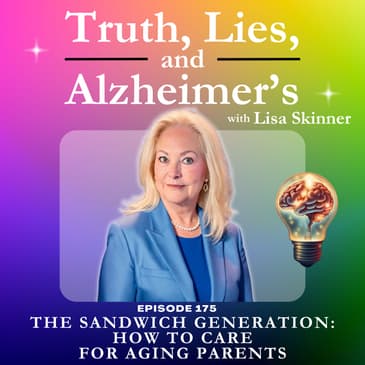
In this episode of Truth, Lies & Alzheimer’s, Lisa explores the challenges faced by the sandwich generation, adults who are caring for aging parents while also supporting children, managing careers, relationships, finances, and their own well-being.
When dementia becomes part of that caregiving picture, the responsibilities can become even more complicated and unpredictable. Lisa discusses the emotional, financial, and practical pressures caregivers may face, along with ways to better prepare for changing care needs.
You’ll learn about planning ahead, creating a support network, navigating unexpected dementia-related situations, communicating with employers, using available resources, and recognizing when it is time to ask for help. Most importantly, Lisa shares practical ways caregivers can protect their own well-being while continuing to care for the people who depend on them.
Visit our Website - https://www.mindingdementiasummit.com/
About the Host:
Author Lisa Skinner is a behavioral specialist with expertise in Alzheimer’s disease and related dementia. In her 30+year career working with family members and caregivers, Lisa has taught them how to successfully navigate the many challenges that accompany this heartbreaking disease. Lisa is both a Certified Dementia Practitioner and is also a certified dementia care trainer through the Alzheimer’s Association. She also holds a degree in Human Behavior.
Her latest book, “Truth, Lies & Alzheimer’s – Its Secret Faces” continues Lisa’s quest of working with dementia-related illnesses and teaching families and caregivers how to better understand the daunting challenges of brain disease. Her #1 Best-seller book “Not All Who Wander Need Be Lost,” was written at their urging. As someone who has had eight family members diagnosed with dementia, Lisa Skinner has found her calling in helping others through the struggle so they can have a better-quality relationship with their loved ones through education and through her workshops on counter-intuitive solutions and tools to help people effectively manage the symptoms of brain disease. Lisa Skinner has appeared on many national and regional media broadcasts. Lisa helps explain behaviors caused by dementia, encourages those who feel burdened, and gives practical advice for how to respond.
So many people today are heavily impacted by Alzheimer's disease and related dementia. The Alzheimer's Association and the World Health Organization have projected that the number of people who will develop Alzheimer's disease by the year 2050 worldwide will triple if a treatment or cure is not found. Society is not prepared to care for the projected increase of people who will develop this devastating disease. In her 30 years of working with family members and caregivers who suffer from dementia, Lisa has recognized how little people really understand the complexities of what living with this disease is really like. For Lisa, it starts with knowledge, education, and training.
Thanks for listening!
Thanks so much for listening to our podcast! If you enjoyed this episode and think that others could benefit from listening, please share it using the social media buttons on this page.
Do you have some feedback or questions about this episode? Leave a comment in the section below!
Subscribe to the podcast
If you would like to get automatic updates of new podcast episodes, you can subscribe to the podcast on Apple Podcasts or Stitcher. You can also subscribe in your favorite podcast app.
Leave us an Apple Podcasts review
Ratings and reviews from our listeners are extremely valuable to us and greatly appreciated. They help our podcast rank higher on Apple Podcasts, which exposes our show to more awesome listeners like you. If you have a minute, please leave an honest review on Apple Podcasts.
00:00:00
Lisa Skinner: Hello, everybody, and welcome to a new episode of
00:00:03
the Truth, Lies, and Alzheimer's Show. I'm Lisa Skinner, your
00:00:07
host, and I don't know how many of you have heard this new buzz
00:00:12
term that is called the sandwich generation, but it's fairly new,
00:00:18
and it's becoming quite trendy. So I thought it might be nice
00:00:23
for me to do an episode explaining who fits into this
00:00:29
sandwich generation and what kind of challenges this
00:00:34
generation is facing, which actually is quite a bit. So
00:00:40
that's what we're talking about today. Let me just start off by
00:00:44
saying that the term "sandwich generation" refers to adults who
00:00:53
simultaneously provide care for their aging parents and are also
00:01:03
supporting their dependent children, all while managing
00:01:09
their own careers and personal responsibilities, often around
00:01:16
midlife. That is quite a bit to deal with on a day-to-day basis,
00:01:22
wouldn't you say? Especially if you're in it and you are doing
00:01:27
it. Well, the sandwich generation sits at a critical
00:01:31
intersection of family, health, and work. Their contributions
00:01:37
are essential, but their burdens are substantial, with
00:01:41
wide-ranging implications for personal well-being,
00:01:46
organizational performance, and societal health. Now, through a
00:01:52
combination of flexible work policies, comprehensive
00:01:57
caregiver support benefits, accessible resources, and
00:02:02
compassionate leadership, employers can significantly
00:02:08
alleviate the strain on these workers while fostering loyalty,
00:02:13
engagement, and productivity. A coordinated approach grounded in
00:02:20
policy, practice, and ongoing dialog will help ensure that
00:02:26
these sandwich generation caregivers do not have to bear
00:02:31
the burden alone, and that both employees and organizations can
00:02:37
thrive together. So I'm going to go over that with you too,
00:02:40
because in the research that I've done for this piece, there
00:02:45
are a lot of employers who are adapting standard operating
00:02:51
procedures and policies to accommodate sandwich generation
00:02:56
folks. Now, some of the care responsibilities that are
00:03:01
included in this daily living is not just support, but many of
00:03:08
these folks are also responsible for their parent or parents'
00:03:13
medical management, their financial planning, and
00:03:18
coordination of any and all services. This demographic is
00:03:24
diverse across socio-economic status, also race and ethnicity
00:03:31
and geographic location. Though certain populations may
00:03:37
experience greater prevalence or intensity of the actual needs
00:03:44
that they are, you know, juggling in the air, and the
00:03:48
ages for my research typically range from the late 30s even
00:03:53
into the 60s. The caregivers may be employed full time, part
00:04:00
time, or even may have stepped back from work temporarily, but
00:04:05
regardless of what their work schedule is, they're still
00:04:09
juggling all of these responsibilities in many of the
00:04:13
family systems. Now, the variability exists in the level
00:04:18
of care required, from occasional tasks to
00:04:23
around-the-clock supervision, their caregiving components
00:04:28
typically include personal care and hands-on assistance with
00:04:32
mobility, the dressing, meals, all of the ADLs, activities of
00:04:39
daily living. In addition, medical management, including
00:04:44
coordinating appointments, medication management, and
00:04:48
navigating insurance companies. Then there's the financial
00:04:52
oversight, taking care of billing and planning for
00:04:56
long-term care needs, paying medical bills. We can't forget
00:05:01
emotional support and decision making for aging parents, and
00:05:05
then of course too they have dependent children. So I'm going
00:05:10
to kind of elaborate now on the challenges that the sandwich
00:05:17
generation is facing. Well, there's the financial strain,
00:05:22
increased out-of-pocket caregiving costs. And for
00:05:26
example, if you hire in-home care, or if your folk, your
00:05:31
parent or parents are in assisted living, there's making
00:05:35
sure they have adequate transportation. Of course, in
00:05:39
terms of their jobs, they have reduced earning potential due to
00:05:46
the leaves that they're being forced to take, or having to cut
00:05:51
back to a part-time position, or even in a job transition to find
00:05:57
something that maybe doesn't carry quite the responsibility
00:06:02
of what they were or are currently doing. There are
00:06:06
retirement planning disruptions. People probably don't even think
00:06:11
about that, and potential long-term financial insecurity.
00:06:18
There's the time and work-life balance and struggles, juggling
00:06:24
caregiving tasks with professional responsibilities
00:06:27
and their own personal well-being. They run into
00:06:31
tremendous scheduling conflicts, unplanned caregiving
00:06:36
emergencies. You never know when that's going to show up, and
00:06:42
care coordination time. Also, they're finding themselves with
00:06:50
very limited availability for professional development or for
00:06:55
advancement opportunities. There's emotional and physical
00:07:01
health pressures, elevated stress and anxiety, and a huge,
00:07:06
huge, huge risk of burnout.
00:07:10
Some of the sandwich generation are experiencing serious and
00:07:16
chronic sleep disruption and fatigue from caregiving demands
00:07:20
for both their elderly parents or aging parents and their
00:07:25
dependent children, and that leads to the potential of impact
00:07:31
on mental health, social isolation, and of course,
00:07:34
relationship strain. Dealing with fragmented care networks
00:07:40
across healthcare, social services, and elder care
00:07:44
communities, they're up against all of these things. And then,
00:07:49
of course, there's complex insurance coverage, eligibility
00:07:54
criteria, and most importantly, cost transparency. The other.
00:08:03
thing that they're running into is difficulty assessing reliable
00:08:07
information and respite resources, conflicting
00:08:12
expectations among adult siblings. So within their own
00:08:17
family dynamics, their spouses, or their extended family, the
00:08:23
potential for interdependence issues such as dependency on one
00:08:28
particular caregiver for all the decision-making situations, also
00:08:35
experiencing limited flexibility to accommodate unpredictable
00:08:41
caregiving needs-that is, in addition to emergency caregiving
00:08:47
situations, falls, and and you know infections and things that
00:08:53
you know you never know when those are going to occur-and a
00:08:58
lot of the sandwich generation are feeling that stigma has been
00:09:04
placed on them, or that they're feeling fear of career penalties
00:09:10
for having to take leaves or having to reduce their hours,
00:09:16
and there's been inadequate access to supportive benefits
00:09:20
like paid family leave and caregiving resources. So these
00:09:26
are some of the things that, in my research, I've discovered are
00:09:30
changing slowly, but they are. And I'm going to briefly explain
00:09:35
to you what I'm seeing. So what do I think people should
00:09:41
consider about becoming caregivers for parents and
00:09:47
children simultaneously. So, some of the strategies,
00:09:52
practices, and consideration for managing the sandwich load are
00:09:57
prioritization and. Planning is critical. You need to establish
00:10:05
a clear caregiving plan with timelines, responsibilities, and
00:10:10
contingency options. You need to have proactive financial
00:10:15
planning in place, including insurance reviews, savings, and
00:10:20
long-term care considerations. Also, it's going to be critical
00:10:27
to build and coordinate support networks for yourselves. It
00:10:32
takes a village. You cannot possibly do all of this by
00:10:36
yourself. So that may mean creating a formal or informal
00:10:42
network of family members, friends, and community
00:10:46
resources, engaging in professional services such as
00:10:51
in-home care, using geriatric care managers, transportation
00:10:57
services when appropriate, leveraging community programs,
00:11:02
senior centers, and nonprofit organizations that provide
00:11:07
respite and support, workforce, and personal well-being
00:11:16
improvements need to be taken into consideration, so you can
00:11:21
implement time blocking and prioritization to protect
00:11:25
personal well-being and reduce the high risk of burnout. Also,
00:11:32
got to think about establishing routine for self-care practices,
00:11:39
seeking mental health support when needed, exploring flexible
00:11:43
work work arrangements to accommodate all these caregiving
00:11:48
responsibilities without sacrificing your own career
00:11:53
goals. There's a lot of technology that's available now
00:11:58
that can be utilized. They're like digital tools for
00:12:02
scheduling. AI apps are a lot of them are available now. I'm
00:12:08
going to do a separate episode on that for scheduling
00:12:12
medication management and scheduling appointments,
00:12:17
telehealth care coordination. There are now online communities
00:12:22
that provide resources for caregiver education and for peer
00:12:27
support. Look into accessing employer-sponsored caregiver
00:12:35
assistance programs and external caregiver support services. They
00:12:41
are starting to show up. You have policy and legal
00:12:46
considerations. In other words, understanding eligibility for
00:12:50
family leave, medical leave, and what their flexible work
00:12:56
policies look like. Legal documentation to ensure
00:13:01
preferences are respected and to protect your financial
00:13:05
interests, there needs to be a plan for continued proactive
00:13:14
communication with healthcare providers and care coordinators
00:13:20
for aligned care plans, these are all things that need to be
00:13:25
considered. So, what is it that some employers are doing to
00:13:35
support the sandwich generation employees? These are some of the
00:13:42
things I discovered that I want you to be aware of. So, if
00:13:47
you're not, you can ask your employer. So, do they offer
00:13:51
flexible work arrangements like remote work options, flexible
00:13:57
start and end times, and compressed work weeks to
00:14:03
accommodate some of your caregiving duties. Is there a
00:14:08
job-sharing program or part-time pathways that retain employees
00:14:15
while reduce burnout risk? Do they have expanded leave? and
00:14:23
paid time off benefits-they're often referred to as PTO
00:14:28
policies. Do they offer enhanced family caregiving leave beyond
00:14:34
statutory minimums? That's an important one. Do they offer
00:14:40
paid leave options for caregiving emergencies-they
00:14:44
happen all the time and they're unexpected. Or for medical
00:14:50
appointments and respite care, do they have caregiver-specific
00:14:55
benefits and programs, or EAPs? In other words.
00:15:00
Employee assistance programs that offer caregiver coaching,
00:15:06
counseling, and resource referrals. Do they provide
00:15:12
access to caregiver stipends or subsidies for in-home care, for
00:15:18
transportation, or even respite services have they formed
00:15:25
partnerships with elder care navigation services to help
00:15:30
their employees coordinate care? A lot of employers have put
00:15:35
these policies and benefits into place already, and more and more
00:15:41
employers are realizing that it is much, much better for
00:15:47
everybody around to implement some of these things to support
00:15:53
sandwich generation adults than to continue the revolving door
00:16:00
of turnover, and have to retrain people. It's very expensive. And
00:16:05
the other thing that I read in the research is when people
00:16:09
leave, they take really, really valuable information with them
00:16:14
that they've learned in their positions. So trying to kind of
00:16:19
quash all that, they discovered that this is a better way, and
00:16:24
that's to support their employees who are part of this
00:16:29
sandwich generation. So some of the other supportive workplace
00:16:34
practices is to have manager training on caregiver Awareness,
00:16:42
stigma reduction, and workload management. To offer formal
00:16:49
caregiver resource groups or commit communities of practice
00:16:53
within the organization. To have clear communication channels for
00:16:59
requesting accommodations and flexible scheduling to offer
00:17:06
technology-enabled and resource-rich environments and
00:17:11
caregiving portals with information on these benefits,
00:17:15
policies, and external resources that are now available to
00:17:20
sandwich generation folks, family-friendly policies
00:17:28
supported by digital tools for scheduling and time management.
00:17:34
These are all now available. Telehealth access and remote
00:17:40
support for caregivers to manage their own health alongside the
00:17:46
caregiving duties. In one of my support group sessions, I had a
00:17:53
gentleman who showed up for a lot of them, and he wasn't a
00:18:00
sandwich generation gentleman, but he did take care of his
00:18:03
wife, who was in her latter stage of dementia, and I felt so
00:18:09
bad for that man because he took care of his wife during the day,
00:18:15
and then he did his job at night when she was sleeping or hoped
00:18:20
that she was sleeping, which wasn't always the case, and the
00:18:24
man probably, if he was lucky, got you know a few hours of
00:18:30
sleep a night, and this went on day in and day out. And of
00:18:35
course, I thought at the time, you know, don't you get support
00:18:39
from your employer? He didn't at the time. This was a while ago,
00:18:42
but now these things are becoming more and more popular
00:18:46
because they're necessary. We need to consider financial
00:18:52
wellness and planning support from our employers, access to
00:18:56
financial planning resources that are focused on caregiving
00:19:01
costs and retirement planning benefits that help with
00:19:06
long-term care insurance education and enrollment
00:19:11
support, also employer-sponsored retirement planning tools that
00:19:18
consider caregiving interruptions. These are all new
00:19:23
things that need to be considered in today's workplace
00:19:26
because it's a fact of life now. The sandwich generation is a
00:19:32
real thing that is growing exponentially in our society.
00:19:40
Having measurement and accountability tools, employee
00:19:44
surveys to gage caregiver needs, and program effectiveness-what's
00:19:50
working, what's not-and then key performance indicators-they're
00:19:56
called KPIs-that are linked to retention. Which employers are
00:20:01
realizing are is extremely important and valuable
00:20:06
engagement and burnout reduction among the folks who are in the
00:20:12
caregiving position, and finally improved cycles to refined
00:20:19
policies based on employee feedback, so yeah, my research
00:20:26
was actually quite extensive, and I was really pleased to find
00:20:33
out that there's many companies out there that have and are in
00:20:37
the process of implementing a lot of these benefits and and
00:20:42
policies for our new sandwich generation. So, if you are part
00:20:51
of the sandwich generation and you're dealing with unbelievable
00:20:56
challenges, I hope that some of this information that I was able
00:20:59
to share with you today will definitely be helpful and take
00:21:05
some of the burden off your plate. It is just so much to
00:21:11
deal with. So I admire every one of you who is in this situation,
00:21:17
but I also, through my research, have realized that there can be
00:21:22
a little easier way by just knowing this information and the
00:21:27
tools that possibly are now available to you. So, with that
00:21:33
said, I will close today's episode of the Truth Lies in
00:21:36
Alzheimer's show.
00:21:38
Again, I'm Lisa Skinner, your host, and I hope you have a
00:21:42
wonderful rest of your week, and you can do something fun and
00:21:47
even possibly relaxing. And I will be back next week with
00:21:51
another new episode of the Truth, Lies, and Alzheimer's
00:21:55
show. So take care for now, and try to stay happy. Try to stay
00:22:00
as healthy as you possibly can. You got a lot going on in your
00:22:04
life. I'll see you next time. Bye bye.