
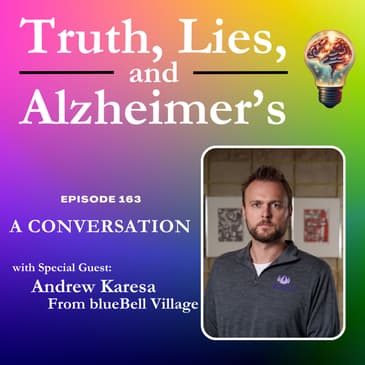
In this powerful and heartfelt episode, Lisa welcomes Andrew Karesa for a meaningful conversation about his personal journey into the world of dementia care.
Andrew shares how his grandmother’s Alzheimer’s diagnosis deeply impacted his family and ultimately shaped the path he is on today. What began as a personal experience quickly turned into a greater purpose—one that led him to create blueBell Village, a solution designed to restore personhood and independence for those living with dementia.
Throughout the episode, Andrew speaks to the importance of seeing the individual beyond the diagnosis and creating care environments that honor dignity, identity, and personal choice. He also offers insight into how his background, culture, and research in Indigenous entrepreneurship are influencing innovative approaches to care in the health sector.
This conversation is both inspiring and thought-provoking, offering a fresh perspective on what dementia care can and should look like—for individuals, families, and caregivers alike.
What You’ll Hear in This Episode:
- Andrew’s personal story and what inspired his mission
- The impact of Alzheimer’s on families and caregivers
- The vision behind blueBell Village
- Why person-centered care is essential in dementia support
- How culture and community can shape better care solutions
- A hopeful look at the future of dementia care
Why This Episode Matters:
This episode is a reminder that behind every diagnosis is a person with a story, a history, and a life that deserves to be honored. Andrew’s work challenges us to rethink care and move toward more compassionate, individualized approaches.
Get in contact with Andrew Karesa:
Bluebell Village website: Bluebell Village
Instagram: https://www.instagram.com/bluebell_village/
Bluebell Connect website: https://bluebellvillage.ca/what-is-connect/
YouTube Channel: https://www.youtube.com/@Bluebellvillage
LinkedIn: https://www.linkedin.com/company/bluebellvillage/
Learn more about dementia education and caregiver resources at: Minding Dementia
About the Host:
Author Lisa Skinner is a behavioral specialist with expertise in Alzheimer’s disease and related dementia. In her 30+year career working with family members and caregivers, Lisa has taught them how to successfully navigate the many challenges that accompany this heartbreaking disease. Lisa is both a Certified Dementia Practitioner and is also a certified dementia care trainer through the Alzheimer’s Association. She also holds a degree in Human Behavior.
Her latest book, “Truth, Lies & Alzheimer’s – Its Secret Faces” continues Lisa’s quest of working with dementia-related illnesses and teaching families and caregivers how to better understand the daunting challenges of brain disease. Her #1 Best-seller book “Not All Who Wander Need Be Lost,” was written at their urging. As someone who has had eight family members diagnosed with dementia, Lisa Skinner has found her calling in helping others through the struggle so they can have a better-quality relationship with their loved ones through education and through her workshops on counter-intuitive solutions and tools to help people effectively manage the symptoms of brain disease. Lisa Skinner has appeared on many national and regional media broadcasts. Lisa helps explain behaviors caused by dementia, encourages those who feel burdened, and gives practical advice for how to respond.
So many people today are heavily impacted by Alzheimer's disease and related dementia. The Alzheimer's Association and the World Health Organization have projected that the number of people who will develop Alzheimer's disease by the year 2050 worldwide will triple if a treatment or cure is not found. Society is not prepared to care for the projected increase of people who will develop this devastating disease. In her 30 years of working with family members and caregivers who suffer from dementia, Lisa has recognized how little people really understand the complexities of what living with this disease is really like. For Lisa, it starts with knowledge, education, and training.
Thanks for listening!
Thanks so much for listening to our podcast! If you enjoyed this episode and think that others could benefit from listening, please share it using the social media buttons on this page.
Do you have some feedback or questions about this episode? Leave a comment in the section below!
Subscribe to the podcast
If you would like to get automatic updates of new podcast episodes, you can subscribe to the podcast on Apple Podcasts or Stitcher. You can also subscribe in your favorite podcast app.
Leave us an Apple Podcasts review
Ratings and reviews from our listeners are extremely valuable to us and greatly appreciated. They help our podcast rank higher on Apple Podcasts, which exposes our show to more awesome listeners like you. If you have a minute, please leave an honest review on Apple Podcasts.
Hi everybody, welcome to another new episode
Lisa Skinner:of The Truth, Lies, and Alzheimer's Show. I'm Lisa
Lisa Skinner:Skinner, your host, and I would like to welcome a very special
Lisa Skinner:guest who's with us in the studio today. His name is Andrew
Lisa Skinner:Carissa, and Andrew comes with a really unique story that he's
Lisa Skinner:going to share with us. After witnessing how his family coped
Lisa Skinner:to support his grandmother with her Alzheimer's diagnosis,
Lisa Skinner:Andrew realized he needed to take action. This inspired him
Lisa Skinner:to create the Bluebell Village aimed at restoring the
Lisa Skinner:personhood and independence of those living with dementia. With
Lisa Skinner:Bluebell, Andrew has seen lives transformed for both individuals
Lisa Skinner:living with dementia and their caregivers, and he is passionate
Lisa Skinner:about fostering a world where care is tailored to each
Lisa Skinner:individual's needs. Additionally, this ambitious
Lisa Skinner:young man is pursuing his doctorate degree at the
Lisa Skinner:University of Calgary, where his research explores indigenous
Lisa Skinner:entrepreneurship in the health sector. Andrew also holds an MBA
Lisa Skinner:from the University of Alberta, and before founding Blue Bell
Lisa Skinner:Village, he worked as a practicing engineer in the
Lisa Skinner:energy sector, and one last thing. This is a pretty unique
Lisa Skinner:Andrew is a member of the Muskeg Lake Cree Nation, and a proud
Lisa Skinner:husband and father of two young sons. Welcome, Andrew. So happy
Lisa Skinner:to have you here today. Can't wait for you to share your, your
Lisa Skinner:amazing story with our audience today.
Andrew Karesa:Thank you for having me. Thank you for the
Andrew Karesa:invitation, Lisa.
Lisa Skinner:You are so welcome. It's a pleasure to have
Lisa Skinner:you. So, why don't we just dive right in and tell us you went
Lisa Skinner:from being an engineer, and then you had a personal experience in
Lisa Skinner:your family with dementia, and that somehow changed you. So,
Lisa Skinner:why don't you pick it up from there, and let us know how all
Lisa Skinner:of this evolved into what you are doing now.
Andrew Karesa:You know, what's funny, Lisa, is that I never
Andrew Karesa:really wanted to be in health. I actively was avoiding it. So,
Andrew Karesa:like you mentioned, I have a master's in business for the
Andrew Karesa:University of Alberta, and I specifically looked at strategy,
Andrew Karesa:and that was kind of my specialization. And in it, they
Andrew Karesa:have these career tracks or specializations where you get
Andrew Karesa:industry experience while you're working and what was funny is
Andrew Karesa:that this is an elective process, but in the process of
Andrew Karesa:doing my MBA, I was nominated to lead the public health and the
Andrew Karesa:public sector and health industry segment, and which is
Andrew Karesa:funny considering I was a practicing engineer in oil and
Andrew Karesa:gas, and I had a leadership consulting firm, so absolutely
Andrew Karesa:nothing to do with health, but everyone's like, this is where
Andrew Karesa:you need to be, this is where we see you, we nominate you for
Andrew Karesa:this, I'm like, I want nothing to do with this, no, no, no, no,
Andrew Karesa:no, I'm good, and it ended up being a bunch back and forth, I
Andrew Karesa:ended up refusing to do it, because I'm like, why would I do
Andrew Karesa:this thing? I have nothing to do with health, I want nothing to
Andrew Karesa:do with health. And it's funny looking back years later, it's
Andrew Karesa:like that probably wouldn't have been the worst plan, but you
Andrew Karesa:know, we kind of go about it in our own unique way,
Lisa Skinner:right?
Andrew Karesa:So, like you mentioned, I'm an engineer by
Andrew Karesa:trade, so I, at a high school, I took engineering and did the
Andrew Karesa:whole engineering route, worked doing a lot of design work for
Andrew Karesa:some large refineries around the world, and so I'm very black and
Andrew Karesa:white, one plus one is always two, and that's how my mind
Andrew Karesa:works, and when we were approaching my grandmother's
Andrew Karesa:dementia care, I expected that same level of logic. I expected
Andrew Karesa:that we would get a clear diagnosis, we would get clear
Andrew Karesa:definitive, repeatable steps, and a predictable outcome on the
Andrew Karesa:result. That's what I was hoping for. And ultimately, I noticed
Andrew Karesa:that that wasn't the case. So, because of that I was like we
Andrew Karesa:need to do something different, and that ultimately led to the
Andrew Karesa:creation of Bluebell. So my family was fortunate enough that
Andrew Karesa:we didn't have to put my grandmother in an institution or
Andrew Karesa:one of these memory care facilities. Instead, we could
Andrew Karesa:carry her at home with our family, which is truly. Be a
Andrew Karesa:blessing,
Lisa Skinner:so Blue Bell has definitely evolved from what you
Lisa Skinner:originally created. So, the first version or iteration was
Lisa Skinner:you called Bluebell Village, right?
Andrew Karesa:Yeah, so my grandmother's care was really
Andrew Karesa:derived on the idea that, you know, we have this family
Andrew Karesa:looking after my grandmother, and it wasn't, it wasn't always
Andrew Karesa:working great, and so one night, while I was watching videos with
Andrew Karesa:my wife, we, you know, saw the whole YouTube thing came up, and
Andrew Karesa:there's a video for the Hogovich, which the dementia
Andrew Karesa:village in Netherlands, and the idea that in this isolated
Andrew Karesa:community everyone can live together, we can live normally,
Andrew Karesa:not like the conventional memory care facility that looks like a
Andrew Karesa:hospital with little flowers painted on the door, or
Andrew Karesa:whatever, like it is a community where you can walk around, and
Andrew Karesa:you can go to the general store, you can go to the coffee shop,
Andrew Karesa:you can get hair done, whatever you want to do, you live a
Andrew Karesa:normal life within a safe community. I was like, why don't
Andrew Karesa:we have something like that here, and so we started this
Andrew Karesa:company called Blue Bell Village to support and try and build one
Andrew Karesa:of those. That was my dream, my aspiration. And as a late 20s
Andrew Karesa:engineer with a, at that point of almost an MBA under my belt,
Andrew Karesa:I was like, Who else can do this thing? I got this. I will do
Andrew Karesa:this. There was a lot of humbling that happened over the
Andrew Karesa:years, but I built that was my dream, was like I want to build
Andrew Karesa:this thing to support my grandmother. I want to build
Andrew Karesa:this place so that my grandmother or people, my
Andrew Karesa:family, have a safe community that they can go to, and that
Andrew Karesa:was kind of my, my dream. And so the company was named Bluebell
Andrew Karesa:Village, because my grandmother's name is Shirley
Andrew Karesa:Bell, her favorite color was blue, and her favorite place to
Andrew Karesa:be in this world was in her garden, doing gardening-related
Andrew Karesa:things. I never picked up the gardening tray from her, she
Andrew Karesa:tried, but it did, it did not carry over well.
Lisa Skinner:I am such an advocate of those villages that
Lisa Skinner:you're talking about in the Netherlands, right?
Andrew Karesa:Yeah, that was where the first one started with
Andrew Karesa:the wonderful folks, the Dutch folks there, but the idea is
Andrew Karesa:really spread. I mean, we have one definitive one here in
Andrew Karesa:Canada, okay? And yeah, the village Langley, and it's, it's
Andrew Karesa:truly remarkable how they've made a change. I mean, I tell
Andrew Karesa:this, I tell a story in my TED talk that there was a guy named
Andrew Karesa:Don, right, and Don was a lawyer, he didn't want to be
Andrew Karesa:there, and the these communities were able to adjust his care
Andrew Karesa:based on what he needed to the effect of Don was a lawyer,
Andrew Karesa:right, so he was logic, argument, control, that sort of
Andrew Karesa:thing, and he didn't want to be there. He would introduce
Andrew Karesa:himself, like, "My name is Don, LLB, if you, my best friend is
Andrew Karesa:Sue, and if you don't let me out here, I'm gonna sue you, like
Andrew Karesa:that was Don's mindset, right? Pretty crazy in a dementia
Andrew Karesa:village, right? Like, he sells that level of cognition to,
Andrew Karesa:like, challenge you and say I shouldn't be here. Well, so Don
Andrew Karesa:was kind of in the village, Langley, so dementia village in
Andrew Karesa:Langley, British Columbia. He was walking to the general
Andrew Karesa:store, and there's a, there's a working wood shop on the side,
Andrew Karesa:like a one with, you know, a whole push up, and they're
Andrew Karesa:making these little Christmas trees for the community kids,
Andrew Karesa:and so he meant up making this thing, and or they're making
Andrew Karesa:this like Christmas tree, and and you walked on inch and he
Andrew Karesa:looked and said, "What are you guys doing? and they go, "We're
Andrew Karesa:making these Christmas trees, and he goes, "Can I have? So
Andrew Karesa:they gave him a little bit of glue and a little bit of paint,
Andrew Karesa:and he made this tree, and then he left, but then he came back
Andrew Karesa:again and again, and to the point where he ended up becoming
Andrew Karesa:a member of the team in the wood shop. When initially they just
Andrew Karesa:came a paintbrush with some glitter and paint, but then they
Andrew Karesa:gave him, you know, sanding blocks, measuring tape, to the
Andrew Karesa:point they gave him drills and saws. But it's pretty wild for
Andrew Karesa:someone living with dementia in the dementia community to have
Andrew Karesa:this level of autonomy, and I think that speaks the brilliance
Andrew Karesa:and beauty of these communities, that instead of saying, hey,
Andrew Karesa:this is how we're going to control you and keep you safe by
Andrew Karesa:prioritizing safety, they prioritize the person and said,
Andrew Karesa:let's build your care around what you want to do, let's
Andrew Karesa:build, let's build everything around what you want to do, and
Andrew Karesa:then adjust the care and the planning to ensure you're safe
Andrew Karesa:while doing those things right. It, a person with dementia using
Andrew Karesa:power tools like drills and saws, would not pass a risk
Andrew Karesa:assessment and a liability framework. Consider that bad
Andrew Karesa:news, right? But these dementia villages are finding new ways to
Andrew Karesa:be novel and to make changes and to focus on the person, and as
Andrew Karesa:my grandmother's care was going, I was like, that's what we need
Andrew Karesa:to do,
Lisa Skinner:that's
Andrew Karesa:amazing, right, and so we started, we went down
Andrew Karesa:the road and we. We went down the road for probably about two
Andrew Karesa:years, and we had some investment stuff lined up, but
Andrew Karesa:I'm very much of the mindset that I, if I'm going to do it, I
Andrew Karesa:want to do it with the right people that believe the same
Andrew Karesa:thing as me. I don't want to do it where I'm going to, you know,
Andrew Karesa:shift it into a real estate ploy where it's where we're focusing
Andrew Karesa:in on the notaries, I want to focus on making the person
Andrew Karesa:first, so I want to make sure that people focus the same as
Andrew Karesa:me. So that's first thing, and secondly, we found that this was
Andrew Karesa:right around middle of Covid, so you saw everything was getting
Andrew Karesa:very, very complicated economically, that ended up just
Andrew Karesa:not working between whether it's the cost to build things in
Andrew Karesa:Alberta, we had our Alberta Health Services was kind of
Andrew Karesa:breaking up into a handful of different government entities,
Andrew Karesa:so it was just super complicated that we ended up saying, you
Andrew Karesa:know, we need to table this for later because the system just
Andrew Karesa:wasn't equipped. I mean, it's a great idea, works great, but
Andrew Karesa:it's expensive, and if you're not going to do it without the
Andrew Karesa:government support, like you, you're going to have a tough
Andrew Karesa:time, especially in Alberta, where you pay $2,200 roughly, a
Andrew Karesa:month for a publicly funded dementia facility, and, but if
Andrew Karesa:you're doing dementia, a village like this, the village Langley
Andrew Karesa:is like $11,000 a month, Canadian, so it's a steep price
Andrew Karesa:increase, but the families pay because they care about these
Andrew Karesa:things, right? But it really, if you want to bring people in and
Andrew Karesa:want to make a movement, you need to get government
Andrew Karesa:alongside, and unfortunately, our government just wasn't
Andrew Karesa:alongside provincially, which is front the healthcare, the
Andrew Karesa:provincial health care. They were going through a breakup,
Andrew Karesa:the band was breaking up, and Alberta Health Services was a
Andrew Karesa:mask. People didn't know what was happening, but then
Andrew Karesa:federally, they were just pushing it back down the line to
Andrew Karesa:the province. So we're kind of just stuck in this weird
Andrew Karesa:position. So, me being me, I'm not going to just sit and wait
Andrew Karesa:for anything to happen, so I, while was going on, I built this
Andrew Karesa:tool in the back end of my desk called Bluebell Connect, and
Andrew Karesa:really does two things: one, it communicates the care and
Andrew Karesa:information trends transfer between all members of a care
Andrew Karesa:team, care team being family members, home care folk,
Andrew Karesa:companion care folk, all these people that are caring for our
Andrew Karesa:loved ones. How to make sure that they're on the same page.
Andrew Karesa:Oftentimes, I'm sure you have heard of Lisa, that my company
Andrew Karesa:uses blank. This other company that's worked that way higher,
Andrew Karesa:they're using a different software, they don't
Andrew Karesa:communicate, so I'm stuck in the middle communicating, maybe I
Andrew Karesa:got, maybe I got this binder. I hear the binder all the time. I
Andrew Karesa:got a binder that stays in the room that has all information.
Andrew Karesa:One security is terrible on a binder. I mean, I lose things
Andrew Karesa:all the time, so not great, right? How? And that assumes
Andrew Karesa:they're gonna look at it, that assumes that they can, you know,
Andrew Karesa:actually put stuff in it doesn't always work well. So we built
Andrew Karesa:this tool that really allows all these people to communicate
Andrew Karesa:together. Oftentimes we work on, like, all these caregiving
Andrew Karesa:islands, so everyone is doing what they think is best, and
Andrew Karesa:they're working as best they can, but nobody is communicating
Andrew Karesa:if they are, it's through one single entity. My family's case
Andrew Karesa:was my aunt. My aunt is lovely, and she was trying her best, but
Andrew Karesa:that's a big burden when you have multiple companion home
Andrew Karesa:care companies coming in and multiple people coming in to try
Andrew Karesa:and communicate all these pieces and juggling determine what's
Andrew Karesa:important. If you get all this information, information
Andrew Karesa:overload. How do you subjectively evaluate what's
Andrew Karesa:important? And so we're handling through this, so I was like, we
Andrew Karesa:need a tool that is system agnostic, vendor agnostic, that
Andrew Karesa:can allow everyone to communicate. So that was the
Andrew Karesa:first thing. Let's bridge all these characters in the islands,
Andrew Karesa:so that's the first piece of connect. So if you're no matter
Andrew Karesa:what home care or community care company you use, all these folks
Andrew Karesa:can communicate and talk together, so we can all work
Andrew Karesa:towards one cohesive, collaborative goal, because
Andrew Karesa:that's ultimately what is most important, right, is looking
Andrew Karesa:after our loved one, working towards one unified goal to make
Andrew Karesa:this happen effectively, don't think the different, the various
Andrew Karesa:people from all the different channels have to actually input
Andrew Karesa:the information into correct as of right. As of right now, we're
Andrew Karesa:working on APIs to go from the software, the different home
Andrew Karesa:care software companies directly communicate, but right now the
Andrew Karesa:API doesn't work yet, but that is the launcher plan.
Lisa Skinner:So, let's say a caregiver from a home care
Lisa Skinner:company goes to the person's home. Sure, you're going to have
Lisa Skinner:to rely on that person to enter the information, and how has
Lisa Skinner:that been working
Andrew Karesa:right? Oh, yeah, and the interesting piece here
Andrew Karesa:is that we find a lot of the driver for this is the families
Andrew Karesa:themselves. The families say this is an expectation that we
Andrew Karesa:have, and especially where I am, the families are in control.
Andrew Karesa:There's lots of home care companies out there that are all
Andrew Karesa:clamoring for work, so the families are really the ones
Andrew Karesa:that are in control and saying this is what we expect, this is
Andrew Karesa:what we want.
Lisa Skinner:Oh, perfect.
Andrew Karesa:If you want to work for our family, this is
Andrew Karesa:what our expectations are. And we've kind of aligned with that
Andrew Karesa:in the business model, where if a family is using this on their
Andrew Karesa:own just to track, then the family pays monthly, but if
Andrew Karesa:they're being supported by, I don't know, Lisa's home care
Andrew Karesa:company, then Lisa's home care company would cover the monthly
Andrew Karesa:subscription fee, and the family doesn't pay anything, so really
Andrew Karesa:it entices the families to say let's bring this care teams
Andrew Karesa:together and work together, because for me that's what's
Andrew Karesa:that's what's so important is that if you and I are working on
Andrew Karesa:the same page but somebody else over here, is doing something
Andrew Karesa:different that can be catastrophic to our success,
Andrew Karesa:that'd be catastrophic to
Lisa Skinner:the,
Andrew Karesa:to my grandmother. So, let's make sure
Andrew Karesa:we're all working cohesively and collaboratively to a fixed tool.
Andrew Karesa:So, yeah, that's how we kind of, that was the first thing that
Andrew Karesa:was in it. And the second piece that I don't even know how we
Andrew Karesa:got there, Lisa, but we ended up building an algorithm, and we
Andrew Karesa:have a provisional patent on the technology. Right now, we're
Andrew Karesa:going through the final process to get it officially approved,
Andrew Karesa:but it allows people to input their personal information,
Andrew Karesa:being like, where did you grow up, did you grow up on a farm,
Andrew Karesa:what was your education? What was your job experience? Did you
Andrew Karesa:have siblings? What, where did you live? What languages do you
Andrew Karesa:have? Languages do you speak? What's your religion? These sort
Andrew Karesa:of information, and it can provide personalized supports
Andrew Karesa:based on that. So, we, like I said, we have this algorithm
Andrew Karesa:that considers, you know, what is this person, what's important
Andrew Karesa:to them, and let's give supports activities and de-escalation
Andrew Karesa:techniques that are clinically valid. So, for Alzheimer's, the
Andrew Karesa:supports are different than frontal temporal dementia,
Andrew Karesa:personally specific. So, you know, if you really like
Andrew Karesa:animals, great, but if you don't like animals, you hear a lot
Andrew Karesa:about these, like virtual dogs or robot dogs, or bring a puppy
Andrew Karesa:in and spend time with this person, limited to measure,
Andrew Karesa:right? We hear all these things, that's great if this person
Andrew Karesa:actually likes animals, but if they don't like animals, we're
Andrew Karesa:not going well, but sometimes this is the, you know, the the
Andrew Karesa:common thing we're gonna bring puppies in, and it'll be great,
Andrew Karesa:not always great, Lisa. So it considers what's the what
Andrew Karesa:personal things we need to know, that's just one example. And
Andrew Karesa:then culturally
Lisa Skinner:to what you're saying, because my mother hated
Lisa Skinner:animals, she was, she didn't have dementia, but if you know
Lisa Skinner:she was in that environment, they brought, you know, pet
Lisa Skinner:therapy in for all the residents during the day, she would have
Lisa Skinner:had a conniption fit,
Andrew Karesa:and we typically just ignore, we say this is so
Andrew Karesa:cute, they love it, right, that's what we say, and then the
Andrew Karesa:last piece is culturally specific, I find right now,
Andrew Karesa:Lisa, that the two go-to activities that I hear in
Andrew Karesa:dementia communities are let's do chair yoga, or if you live on
Andrew Karesa:mobile, let's do tai chi. I hear tai chi all the time, right?
Lisa Skinner:Oh yeah, me too.
Andrew Karesa:And I'm like, my.. so my two grandmothers, my
Andrew Karesa:one grandmother had Alzheimer's, her parent, her dad was a
Andrew Karesa:provincial politician, he has a school named after him on
Andrew Karesa:Winnipeg and stuff, and so they came from England, that's their
Andrew Karesa:lived experience. So they're very Eurocentric. My other
Andrew Karesa:grandmother was born on Muskeg Lake in Marsland, Saskatchewan,
Andrew Karesa:on Indian Reservation. So two wildly different lived
Andrew Karesa:experiences. Neither of them would have done well if you said
Andrew Karesa:let's go and do tai chi, it wouldn't have ended well for
Andrew Karesa:either of these people, but unfortunately that is the system
Andrew Karesa:that exists. So we said, How do we ensure that the care
Andrew Karesa:providers we have, including our family, who doesn't understand
Andrew Karesa:oftentimes the difference between frontal temporal, Lewy
Andrew Karesa:body, Alzheimer's, all these, you know, domains of dementia,
Andrew Karesa:or all these kind of syndromes, they don't necessarily
Andrew Karesa:understand the difference between them, so they just
Andrew Karesa:Google and say, this seems good, let's do it. Sometimes that
Andrew Karesa:causes problems, and then you have these, these hired folks,
Andrew Karesa:they don't understand what the person likes, what the person
Andrew Karesa:needs, or the cultural specificity that needs to exist,
Andrew Karesa:so they kind of just do what they think is right, and
Andrew Karesa:sometimes that causes problems in the puppy or tai chi example,
Andrew Karesa:or maybe so for First Nations folk, eye contact is different
Andrew Karesa:than from a Eurocentric community, right? So for
Andrew Karesa:Eurocentric communities, it's very much. Uh, you make eye
Andrew Karesa:contact, and that's considered respectful. It means I'm paying
Andrew Karesa:attention, I'm engaged with you, right? But we see that's not the
Andrew Karesa:case in indigenous communities. Indigenous communities, eye
Andrew Karesa:contact is not something you make, it's you typically would
Andrew Karesa:look away and you don't want to make that eye contact, because
Andrew Karesa:in residential schools that was something that you did not do.
Andrew Karesa:You did not make eye contact, and you looked away, and so that
Andrew Karesa:is kind of normalized at this point. So you notice that when
Andrew Karesa:you're I know, so many communities that you don't have
Andrew Karesa:these eye contact, but a lot of the time that's what they're
Andrew Karesa:taught to do when they come here and become healthcare aid or LPN
Andrew Karesa:or PC, or one of these kind of designations. That's what
Andrew Karesa:they're shot. That's where
Lisa Skinner:that's a really, really good point that you're
Lisa Skinner:bringing up, because you know I am 100% an advocate of
Lisa Skinner:person-centered approach to care, but I think one of the
Lisa Skinner:pieces of the puzzle that tends to be missing in person-centered
Lisa Skinner:approach is taking into consideration cultural values
Lisa Skinner:and practices, and I think you raise a really good point,
Lisa Skinner:because we're taught, and we teach to look somebody straight
Lisa Skinner:in the eye, make eye contact, but in your example that would
Lisa Skinner:be counterproductive, it for an indigenous person and
Andrew Karesa:shrink back and you, you erase that, that bond,
Lisa Skinner:so I mean that's a really important piece of
Lisa Skinner:information to be aware of, and you know, we got it, we've got
Lisa Skinner:to factor in cultural differences, and people don't
Lisa Skinner:even really think about that as being an important component
Andrew Karesa:to it's so complicated, Lisa, because I
Andrew Karesa:honestly can't expect any hired care person to know all these
Andrew Karesa:details, let alone, let alone the personal, like what does
Andrew Karesa:this person that you're hired to look after? You might look out
Andrew Karesa:for 10 people on today. You can't look at, you can't
Andrew Karesa:reasonably understand what's important to this person. What
Andrew Karesa:are they like? Where was their.. what's religiously accepted for
Andrew Karesa:this person? You can't expect to know. So we also can't expect
Andrew Karesa:them to know the difference between all these sub
Andrew Karesa:disciplines from specific communities, all African
Andrew Karesa:communities, for example, whether you're talking Ghana,
Andrew Karesa:whether you're talking Zambia, whether you're talking Kenya,
Andrew Karesa:South Africa, the live dynamic and experience is different, so
Andrew Karesa:we can't paint it with a singular brush. There's some
Andrew Karesa:commonalities, but not all, and so if you understand one
Andrew Karesa:culture, you understand one culture, kind of like if you
Andrew Karesa:understand one person living dementia, you understand one
Andrew Karesa:person living dementia, same kind of idea. So, how do we give
Andrew Karesa:carriers tools so that they don't have to learn the
Andrew Karesa:difference? So, in Southeast Asia, right, you have Indonesia,
Andrew Karesa:you got Bangladesh, you got Pakistan, you got India, and
Andrew Karesa:India, like, there are a lot of communities within India, right?
Andrew Karesa:You're the typical dominant India community, but then you
Andrew Karesa:got Goa, and Goa is a super interesting use case. Are you
Andrew Karesa:familiar with Goa, Lisa? So, for the listeners, Goa is a
Andrew Karesa:Portuguese colony, it's a Christian Portuguese colony on
Andrew Karesa:the coast of India, so it's not like the typical India you would
Andrew Karesa:see with, you know, Mumbai, or one of these places, like it is
Andrew Karesa:radically different, Christian Portuguese colony. So the
Andrew Karesa:dynamics and experiences are different. So if we paint this I
Andrew Karesa:understand everything about India lens, that's great, but
Andrew Karesa:people in Goa will typically associate more with Portuguese
Andrew Karesa:or Eurocentric model, so it's very complicated. And as I was
Andrew Karesa:working through with carriers, you know, just starting out
Andrew Karesa:looking for my grandmother, I would ask the care team, What do
Andrew Karesa:you know about this thing? How about this dynamic in this
Andrew Karesa:circumstance? I was asking all these kind of questions, and you
Andrew Karesa:know, I would sometimes probably distract them from my grandma's
Andrew Karesa:care, but she'd get a little chuckle out of it, because I'm
Andrew Karesa:just poking around and seeing where the the openings are, and
Andrew Karesa:that's kind of what I, I uncovered was that these these
Andrew Karesa:organizations, they try their best, and not for lack of
Andrew Karesa:trying, but it's just they don't have the time, experience, or
Andrew Karesa:really opportunity to learn about all these cultures, and I
Andrew Karesa:can't fault them for it, because they can't do it. So, long story
Andrew Karesa:short, we built this tool called Bluebell Connect that one
Andrew Karesa:bridges these caregiving islands, and two supports
Andrew Karesa:families or hired care supports in providing person-centered
Andrew Karesa:care that is clinically valid, personally specific, and
Andrew Karesa:culturally appropriate.
Lisa Skinner:Yeah, I mean, another great example, and who,
Lisa Skinner:if you know, if you, if you're really not that tuned into other
Lisa Skinner:cultural beliefs. I train these doctors from Tanzania, and when
Lisa Skinner:I first started working with them, they shared with me that
Lisa Skinner:the community. Deep believes dementia is caused by
Lisa Skinner:witchcraft. You and I talked about that in one of our
Lisa Skinner:conversations. I mean, that's a very sensitive topic to have to
Lisa Skinner:approach with somebody, family members, and the person living
Lisa Skinner:with dementia. You better be prepared for that, so you know
Lisa Skinner:if you don't even know that that's a thing, then you would
Lisa Skinner:not be prepared, and then you need to know how to be prepared,
Lisa Skinner:because the way you respond could be completely different to
Lisa Skinner:somebody who doesn't own that belief, right?
Andrew Karesa:100% it's heavily stigmatizing, and Africa is, I
Andrew Karesa:mean, all these countries have you very unique circumstances,
Andrew Karesa:and Africa, I think, is a really interesting one, because, like
Andrew Karesa:you said, it's considered witchcraft, it's considered
Andrew Karesa:spiritual warfare, and so you need to be equipped not just
Andrew Karesa:physically to look after this person, but there's a spiritual
Andrew Karesa:component there that you do need to address, even if we reduce
Andrew Karesa:the stigma and say that it's not spiritual warfare, and they
Andrew Karesa:recognize that it's not witchcraft, that in the case of
Andrew Karesa:Zambia, we don't have to throw them in the river or shoot them,
Andrew Karesa:but they still subconsciously have this spiritual warfare
Andrew Karesa:component that there's still a spirituality lens oftentimes
Andrew Karesa:that they navigate, so how do you support that spiritual lens
Andrew Karesa:for them? How do you provide that spiritual guidance and
Andrew Karesa:support for them? And so it's, it's, it's unique, and I think
Andrew Karesa:dementia is not isolated to just, you know, North America or
Andrew Karesa:America or Canada, like it is the second highest caused
Andrew Karesa:disease, let's say no, it's not disease, but let's say disease
Andrew Karesa:cause of death around the world, right, playing cancer, right? So
Andrew Karesa:it is super prevalent, but it's super stigmatized as well, and I
Andrew Karesa:think that we need to, you know, start addressing that. First
Andrew Karesa:Nation communities are another really, really interesting
Andrew Karesa:example to study. We see First Nation communities are
Andrew Karesa:significantly more prevalent to dementia,
Lisa Skinner:right? Yes,
Andrew Karesa:and so across Canada, by 2050 we're seeing
Andrew Karesa:187% increase between now and 2050 so between now and 2050
Andrew Karesa:we're seeing 187% increase in First Nation communities. It's
Andrew Karesa:expected to reach 273% increase. That's a lot, that's a lot of an
Andrew Karesa:increase, right? But an interesting statistic, Lisa, on
Andrew Karesa:that is that we're seeing more indigenous men have dementia
Andrew Karesa:than indigenous women, which is the only community I'm aware of
Andrew Karesa:globally where more men are developing dementia than women.
Lisa Skinner:That's fascinating, because globally
Lisa Skinner:women develop Alzheimer's disease more than men. Yeah,
Andrew Karesa:100% And we can, we've, we can research has kind
Andrew Karesa:of worked through why it's an increase in First Nation
Andrew Karesa:communities, like we kind of have an idea with all the
Andrew Karesa:whether it's inequity in health, whether it's interdiscipluation
Andrew Karesa:trauma, all whether it's increased population, like we
Andrew Karesa:know kind of idea why it's increasing in First Nation
Andrew Karesa:communities at a rate that's higher than population, but I
Andrew Karesa:haven't seen any research that says why it's happening in men,
Andrew Karesa:so I know it's super interesting, Lisa, to kind of
Andrew Karesa:work through these things. I have some friends that are doing
Andrew Karesa:research in the space, and they're doing
Lisa Skinner:great. There are several theories, I don't think
Lisa Skinner:that they're evidence-based yet, but for women, and the theories
Lisa Skinner:make sense, because historically women out have always outlived
Lisa Skinner:men, not one to one, but you know, the majority, so that
Lisa Skinner:makes sense, why they would develop Alzheimer's disease and
Lisa Skinner:related dementia more than men,
Andrew Karesa:but that wouldn't necessarily attribute to really
Andrew Karesa:early onset or frontal temporal, one of these ones either, right?
Lisa Skinner:No, we're talking about Alzheimer's.
Andrew Karesa:Oh, you're saying Alzheimer's, yeah,
Lisa Skinner:yeah. And then the other theory is that women,
Lisa Skinner:starting as an adolescent, go through for the rest of their
Lisa Skinner:lives, periods of all these hormonal changes, and there is,
Lisa Skinner:you know, a correlation, a theoretical correlation. Now
Lisa Skinner:that that's maybe another reason, but that wouldn't
Lisa Skinner:explain why in the indigenous communities the ratio of men
Lisa Skinner:developing Alzheimer's disease is so much larger than women.
Andrew Karesa:No. And, and what's interesting is, so we had
Andrew Karesa:on our podcast Dr. Tommy Wood. Are you familiar with Dr. Tommy
Andrew Karesa:Wood?
Lisa Skinner:No.
Andrew Karesa:Okay, so Dr. Tommy Wood is a. So you're aware
Andrew Karesa:that in Canada we have basic health care provided for every
Andrew Karesa:person, right?
Lisa Skinner:Yes,
Andrew Karesa:so something like, if I want to go to a
Andrew Karesa:physician and I can go wait in a doctor's office, go see a
Andrew Karesa:doctor, sounds good, but that doesn't, can that doesn't cover
Andrew Karesa:medication, it doesn't cover physiotherapy, it doesn't cover
Andrew Karesa:wheelchairs, none of this kind of stuff is covered, it's just
Andrew Karesa:basic medical care, like once a year I get my, my teeth looked
Andrew Karesa:at every other year, my eyes, these kind of things, like basic
Andrew Karesa:things. In Canada, First Nations folk that have their status get
Andrew Karesa:what are supportive of what is called noninsurable health
Andrew Karesa:benefits, and what that does is it means that no matter what
Andrew Karesa:happens to an injured person, they get additional health
Andrew Karesa:benefits covered. So, in the case some with dementia, they
Andrew Karesa:get a certain amount of hours of counselor mental health support
Andrew Karesa:per year covered with a psychologist, counselor,
Andrew Karesa:whatever. If they live too far away, then they get transported
Andrew Karesa:in, that's part of the coverage, they get a, they'll get a Uber
Andrew Karesa:bus or whatever to bring you where you need to go for sport,
Andrew Karesa:that's great, but it doesn't reflect the truly lived
Andrew Karesa:experience that an individual on reservation has. For example,
Andrew Karesa:oftentimes the kookum, the grandmother, or the mushroom,
Andrew Karesa:the grandfather will be looking after the grandchildren, and
Andrew Karesa:those individuals, when they're looking after them in order to
Andrew Karesa:get the support, means they have to now leave their
Andrew Karesa:grandchildren. So, who's gonna look after their grandchildren?
Andrew Karesa:No one. So, they choose and elect not to get the support
Andrew Karesa:that they need because they're staying looking after their
Andrew Karesa:grandchildren, because there's not enough room in the car for
Andrew Karesa:all these people. So, they would rather look after Grandkill to
Andrew Karesa:get the sport themselves. So this is just one of the dynamics
Andrew Karesa:that is existing and at play that isn't truly supportive,
Andrew Karesa:which is we're seeing this as a indigenous health is a very
Andrew Karesa:dynamic and complicated issue, because it's not even say let's
Andrew Karesa:just increase the sports because there's lots of things going on,
Andrew Karesa:and, and it's funny, because entrepreneurial research says
Andrew Karesa:that indigenous individuals, in theory, should be creating
Andrew Karesa:entrepreneurship ventures and health more than non-indigenous
Andrew Karesa:individual health, because you know, there's, you see, the, you
Andrew Karesa:see the mountain, you see the problem, and I know how I can
Andrew Karesa:support it. What we're seeing is actually the complete opposite,
Andrew Karesa:that indigenous individuals aren't creating these ventures
Andrew Karesa:to support the communities.
Lisa Skinner:Give us some examples of some of the things
Lisa Skinner:that your company is doing to support indigenous communities
Lisa Skinner:there in Canada.
Andrew Karesa:Yeah, so first we have Bluebell Connect, which
Andrew Karesa:we've talked about before, but then I'm also going to lots of
Andrew Karesa:communities and just talking about dementia and just trying
Andrew Karesa:to break this stigma of like this thing is existing, this is
Andrew Karesa:what's going on, and make sure the health leaders understand
Andrew Karesa:what's going on. It's funny, so in 2019 the government of Canada
Andrew Karesa:released its dementia strategy, so Canada has this dementia
Andrew Karesa:strategy 2019 and in it one of the strategy frameworks that
Andrew Karesa:Canada is going to go to all nations and talk about dementia,
Andrew Karesa:understand their dynamic, and support. That was one of the
Andrew Karesa:frameworks for it. Ironically enough, zero of that has been
Andrew Karesa:done, like any strategy, you know, you need to have an
Andrew Karesa:implementation plan to actually make it work. They didn't do
Andrew Karesa:that, and so unfortunately these communities are now left to in
Andrew Karesa:the bag, like you said, you're gonna do this thing, we want to
Andrew Karesa:understand, but we don't know anything about it. So I kind of
Andrew Karesa:come inside, and you know, I travel these communities, and I
Andrew Karesa:talk to the people, and I make sure that we're, they're aware
Andrew Karesa:of what's going on, because oftentimes they, they aren't,
Andrew Karesa:they don't understand what dementia is, they understand the
Andrew Karesa:prevalence, they understand what's going on, they don't
Andrew Karesa:understand how do we need to navigate it. So I come in
Andrew Karesa:non-clinically and just say, this is what's going on, this is
Andrew Karesa:how we, this is what you need to know, this is how we start to
Andrew Karesa:navigate it, this is how I can come alongside support, and it's
Andrew Karesa:been really interesting, Lisa, because I have some folks who
Andrew Karesa:will call me randomly with their health needs, and I'm like, I'm
Andrew Karesa:not a doctor, like I'm not a medical doctor, but I know
Andrew Karesa:people, so I can connect them with some of my friends that are
Andrew Karesa:in the healthcare sector, and I'm like, can you have this
Andrew Karesa:person? I just sit on the line because they want me there, and
Andrew Karesa:so they just kind of have these communications, and they ask
Andrew Karesa:questions and stuff, because there's so much trepidation, and
Andrew Karesa:I think that that's just unfortunately the stigma that is
Andrew Karesa:present in the problem that is present, where these people want
Andrew Karesa:support, they want help, but there's so much apprehension and
Andrew Karesa:risk and fear to go into the system, and it's just like
Andrew Karesa:someone like myself comes in, they're just, yeah, let's, let's
Andrew Karesa:do it, and ultimately think that's that's the benefit of
Andrew Karesa:community, that's the benefit of working together and
Andrew Karesa:collaboratively, and indigenous communities do this amazingly,
Andrew Karesa:so amazing indigenous. To me, is it really, or at least in Cree,
Andrew Karesa:it's really based on, you know, relationship and kinship, and
Andrew Karesa:we're in this together, and let's support each other, and
Andrew Karesa:it's, it's walk a tone, is the word in Cree, and I think that
Andrew Karesa:if I can come alongside and provide that support and help
Andrew Karesa:them through it, I consider that a win, and I, for my research
Andrew Karesa:work, I just hope to build out that system that other people
Andrew Karesa:can join me in this space, so I don't have to be the one doing
Andrew Karesa:all these things. I want to build other indigenous folks
Andrew Karesa:that can come alongside me and help us support our communities.
Lisa Skinner:Yeah, what advice or words of wisdom would you
Lisa Skinner:like to share with the audience today, in terms of everything
Lisa Skinner:that you've experienced, everything that you're seeing
Lisa Skinner:out there that can hopefully turn things around, because you
Lisa Skinner:know you shared with us the just unbelievable increase in the
Lisa Skinner:number of indigenous folks who are developing Alzheimer's, but
Lisa Skinner:this is a global crisis. I mean, the World Health Organization,
Lisa Skinner:the Alzheimer's Association, they are preparing us that if a
Lisa Skinner:cure or a treatment is not found by 2050 same year you quoted the
Lisa Skinner:number of people who will are expected to develop Alzheimer's
Lisa Skinner:disease is going to triple from the number of people living with
Lisa Skinner:it today, so we're seeing this as a global, a looming global
Lisa Skinner:crisis, and I think me personally, I've been doing this
Lisa Skinner:for 30 years, but if we rewind back even farther than that,
Lisa Skinner:I've been exposed to Alzheimer's disease and dementia for 50
Lisa Skinner:years when my grandmother first was diagnosed with it, then I've
Lisa Skinner:had seven other family members in addition to her, and I
Lisa Skinner:haven't seen a whole lot change. I think the last couple years
Lisa Skinner:I've seen more changes than I had in the almost 30 years prior
Lisa Skinner:to that, but I don't know from my viewpoint. I think we have a
Lisa Skinner:long, long way to go. So, what's your vision for how we can turn
Lisa Skinner:this crisis around?
Andrew Karesa:I consider myself a realist, to my wife's chagrin,
Andrew Karesa:where she wants me to be, you know, half last fall all the
Andrew Karesa:time. I consider, let's just call it the way it is, and I
Andrew Karesa:wish that we could, you know, move past this and solve this
Andrew Karesa:thing. I would love to see a world where I don't have to be
Andrew Karesa:doing this, and I'm out of business doing this. I would
Andrew Karesa:love that. That would be amazing, because I don't.. I, it
Andrew Karesa:breaks my heart every time I talk to families going through
Andrew Karesa:this. But realistically, I.. I think that the systems aren't
Andrew Karesa:necessarily where they need to be to help us as appropriately
Andrew Karesa:as we need to, it's we, our reliance is so fixated on let's
Andrew Karesa:lock them up and put them in an institution, dementia care
Andrew Karesa:facility, and unfortunately forget them. That's I hear that
Andrew Karesa:too many times, where people say just put me in a, if I get
Andrew Karesa:dementia, just put me in a community and don't have to
Andrew Karesa:worry about them anymore, which is so sad, and it just breaks my
Andrew Karesa:heart every time that I've heard it. I've probably heard it at
Andrew Karesa:least a dozen times in the last two months alone, and which just
Andrew Karesa:breaks my heart, like the idea someone says, if I have
Andrew Karesa:dementia, just put me in a community and forget about me,
Andrew Karesa:like that's breaks my heart, and I think that reflects the
Andrew Karesa:problem that we are seeing, so I think really, for me, what I
Andrew Karesa:hope we can do to address this, that I don't think we're going
Andrew Karesa:to solve the problem, like Tommy Dr. Tommy Wood said, that 50% is
Andrew Karesa:present preventable, great, always, that still leaves half
Andrew Karesa:of those cases still there, so I'm aligned, for those half, how
Andrew Karesa:can we create an environment and a system in place that reflects
Andrew Karesa:the dignity that is that person, that adjusts the care that that
Andrew Karesa:person needs, that doesn't take away that person's voice, it
Andrew Karesa:bases the care around what they need, what they want, what makes
Andrew Karesa:them them. So, in my mind, that's the future state I wish
Andrew Karesa:we can get to. We can't eliminate it, so instead, well,
Andrew Karesa:we, we can only control what we control. So let's control the
Andrew Karesa:peace about ensuring that they are cared for the way that they
Andrew Karesa:want to be. That's what's important to me, that we retain
Andrew Karesa:dignity and personhood for these folks living with dementia.
Lisa Skinner:I couldn't agree with you more, and just to kind
Lisa Skinner:of, you know, emphasize your point. When I first started as a
Lisa Skinner:behavioral specialist working with family members and people
Lisa Skinner:living with dementia. The methodology and the approach for
Lisa Skinner:two people living with cognitive dysfunction was called reality
Lisa Skinner:orientation therapy, and that was what was popular 30 years
Lisa Skinner:ago. It didn't work because it really focused on correcting,
Lisa Skinner:arguing, trying to steer the person living with dementia back
Lisa Skinner:into the healthy brains, healthy person's reality, and it was a
Lisa Skinner:train wreck. So shortly thereafter, I want to say maybe
Lisa Skinner:25 years ago, this new methodology started to become
Lisa Skinner:known, and you know, I was in the industry, so I was trained
Lisa Skinner:on it, and I'm like, gosh, this is a no-brainer, and it
Lisa Skinner:accomplishes all those things that you just mentioned are so
Lisa Skinner:important. I mean, it really, these are basic human needs, if
Lisa Skinner:they're on the, you know, Maslow's hierarchy of needs, the
Lisa Skinner:very bottom basic human needs are all the things that you just
said:purpose, meaning, dignity. So, you know, it totally makes
said:sense, and we have seen that it is effective, but here we are
said:now, 30 years later, and most people have never even heard of
said:it. They're still correcting, they're still arguing, they're
said:still trying to steer their loved ones or the people they're
said:caring for back into their reality. So, I don't know. I
said:scratch my head and think, why is it so difficult for people to
said:catch on to something that actually is working and helping
said:people live much higher quality of lives than they've ever been
said:able to before living with these brain diseases, so I don't know
said:if you want to respond to that, but that's kind of my two cents.
Andrew Karesa:I mean, the thing is, we, it's easier, at least
Andrew Karesa:that's the reason it exists, is because it's easier. It's easier
Andrew Karesa:to go and argue and put our self-imposed constraints and
Andrew Karesa:boundaries in place. It is easier than allowing them to go
Andrew Karesa:to woodshop and use a saw to go and do what they want. There's a
Andrew Karesa:guy, he lives in, I think, is Florida, and his name is.. if
Andrew Karesa:my.. if my memory starts tracking was Scott, and Scott is
Andrew Karesa:living with, or was.. I don't know, it's still alive, but
Andrew Karesa:Scott was living with Alzheimer's, and he would do
Andrew Karesa:all.. he would do Ironman races while living with Alzheimer's,
Andrew Karesa:so for those don't know, and an Ironman is 2.4 mile swim, so a
Andrew Karesa:3.9 kilometer swim, 112 mile bike, or 180k bike, and then a
Andrew Karesa:marathon after, so 26.2 miles for American folk and 42.2
Andrew Karesa:kilometers for Canadian folk, so he would do that while living
Andrew Karesa:with Alzheimer's. Again, that's crazy, right? Like, the system
Andrew Karesa:would say you're not allowed to leave this this unit because you
Andrew Karesa:might get lost, right? You might end up at somewhere else, like
Andrew Karesa:B. Smith, like about a decade ago, there's a whole public
Andrew Karesa:media were like, where did she went missing, and she then found
Andrew Karesa:her a coffee shop, right, because we, they were trying to
Andrew Karesa:control where she was, and that's where she ended up, where
Andrew Karesa:she was comfortable, but we said, hey, let's let this guy do
Andrew Karesa:something that he's done his whole life, right, that's a long
Andrew Karesa:ways, 140.6 miles, you let this guy do what he needed to do.
Andrew Karesa:It's memory embodied in those muscles, and by giving him the
Andrew Karesa:ability to do what he was used to, and giving him that freedom.
Andrew Karesa:Imagine the lucidity, or the support that we can give this,
Andrew Karesa:this individual and other people. Maybe I'm not saying
Andrew Karesa:everyone's gonna have to do an Ironman with Alzheimer's, but
Andrew Karesa:just giving them, maybe it's just using a simple knife to
Andrew Karesa:cook your dinner, something that simple, if you've done it for
Andrew Karesa:decades, cooking for your family, just something that
Andrew Karesa:simple that is truly and intrinsically them, think about
Andrew Karesa:how that can change our death, right, just just a little small
Andrew Karesa:shift.
Lisa Skinner:Definitely, definitely. You know, one of the
Lisa Skinner:things that I have personally witnessed is you try to do too
Lisa Skinner:much for somebody because you think they're not capable, and
Lisa Skinner:you end up just perpetuating them being coming an invalid. So
Lisa Skinner:we have to allow people to do what they're capable of doing
Lisa Skinner:based on where they're at in their disease and don't assume
Lisa Skinner:that they're not capable of doing anything because if we
Lisa Skinner:assume that we perpetuate that and they'll just shrivel up and.
Lisa Skinner:Know, give up. So we're just about out of time, but this has
Lisa Skinner:been such a deep, deep, deep conversation. I appreciate you
Lisa Skinner:coming and sharing your knowledge and everything you're
Lisa Skinner:doing. How can people find out more about you and the work
Lisa Skinner:you're doing, which is just phenomenal.
Andrew Karesa:Yeah, so they can.. there's lots of ways you
Andrew Karesa:can just Google Bluebell Village, or go Bluebell
Andrew Karesa:village.ca is our website. You can check out our YouTube
Andrew Karesa:channel, which is Bluebell Village, as well. And we've got
Andrew Karesa:podcast episodes, we got short pop culture critiques, we got 60
Andrew Karesa:for 64 breakdown dementia stigma in individuals, and kind of talk
Andrew Karesa:about what that means in 60 short 62nd bites. Bluebell
Andrew Karesa:connect.ca you can go there for information on Bluebell Connect.
Andrew Karesa:There are lots of ways you can find us, or you can just search
Andrew Karesa:me on LinkedIn, if you want to connect, I'm around and easy to
Andrew Karesa:get in touch with, I think, and I hope, but yeah, if people need
Andrew Karesa:support, just I'm there and we're there at Blue Bell to
Andrew Karesa:support people where they're at.
Lisa Skinner:Well, keep doing what you're doing. Thank you for
Lisa Skinner:being such an invaluable resource for people who are
Lisa Skinner:going through this, it's such a challenging situation, and, like
Lisa Skinner:you said, way more complex than people have even realized. It's
Lisa Skinner:not just about short-term memory loss and confusion, which a lot
Lisa Skinner:of people, you know, mistakenly believe. So, I think they kind
Lisa Skinner:of get an idea of what it's truly like to live with
Lisa Skinner:dementia, and I think you know this episode has given people a
Lisa Skinner:lot, not only a lot to be aware of that maybe they weren't aware
Lisa Skinner:of before, but really a lot to think about. So, thank you again
Lisa Skinner:for your time today, and for all your, you know, really
Lisa Skinner:insightful information. Maybe you can come back another time,
Lisa Skinner:and we can carry on this really deep conversation. It's been a
Lisa Skinner:delight to have you. Thanks again, Andrew.
Andrew Karesa:Thanks, Lisa. Appreciate
Lisa Skinner:it. Okay. Take care. Hope you have a wonderful
Lisa Skinner:rest of your week, and I always wish everybody can stay happy
Lisa Skinner:and healthy, and I'll see you again next week. Bye for now.